GRP Cable Trays
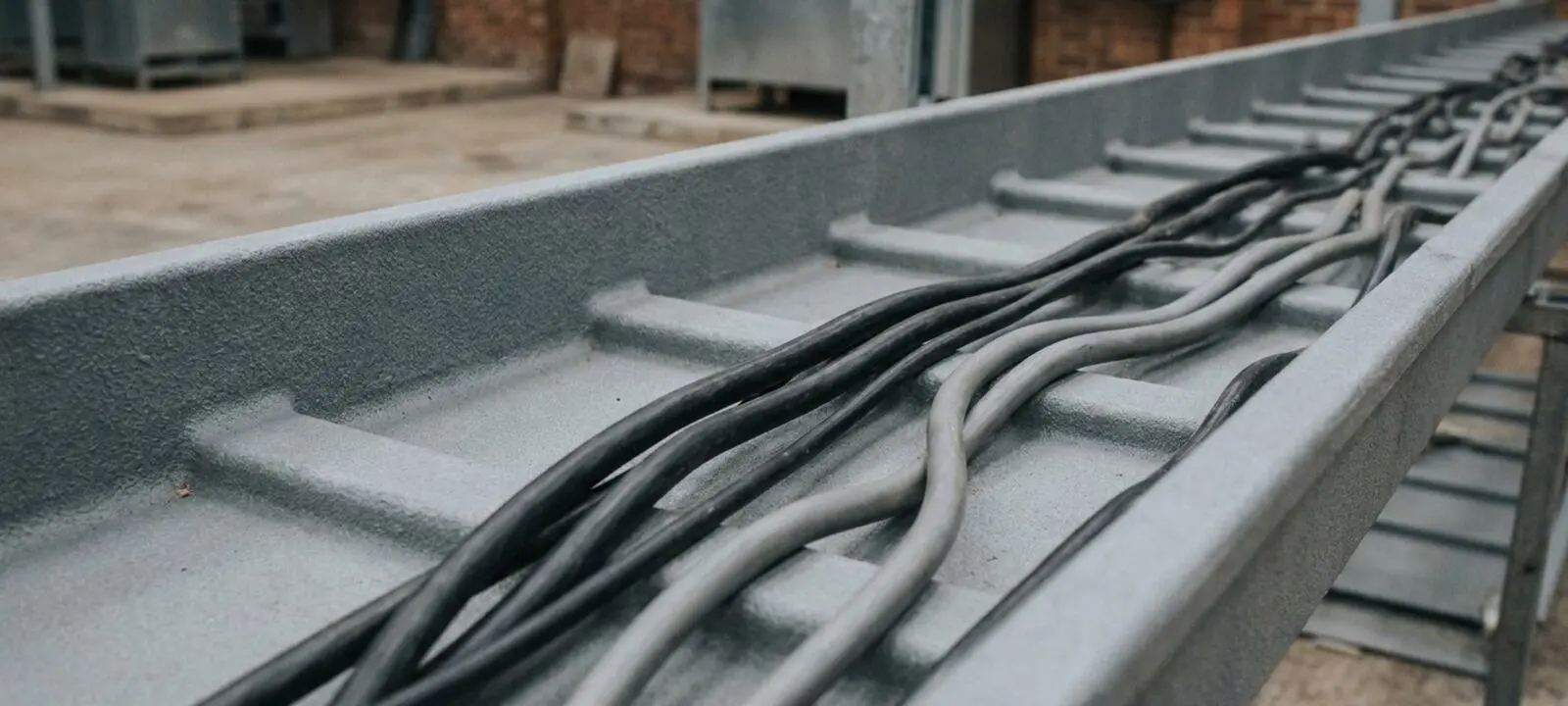
GRP cable tray and cable ladder are non-conductive, corrosion-resistant containment systems made from glass-reinforced plastic. At UIS, we design the route, fabricate the supports and install the system with our own teams.


Containment that does not conduct.
GRP cable tray and cable ladder are cable containment systems made from glass-reinforced plastic: perforated or solid-bottom tray, ladder with rungs for heavier cables, and the channel, brackets and covers that support them. They do not corrode, they do not conduct and they are non-magnetic, so they are specified for chemical, water-treatment, coastal, rail and high-voltage environments where steel containment corrodes or needs bonding.
If you are specifying containment for a corrosive, hazardous-area or weight-constrained environment, you need more than a supplier who drops pallets at the site gate.
-
We design the route
We plan the run, the tray or ladder size, and the supports and their spacing for the cable load.
-
We make the supports
We fabricate the supports in-house, so they are made for the structure the run fixes to.
-
Our own team on site
The people cutting and fixing the GRP on your site work for us, not a labour-only gang we have never met.
GRP cable containment specification at a glance.
Tray or ladder, load and span, environment, fire and hazardous areas: how a GRP containment run is specified.
- System
- Perforated tray, solid-bottom tray, cable ladder, channel and brackets, and covers
- Decided by: Cable size and number: ladder for heavier power cables, tray for lighter and smaller ones
- Load and span
- A safe working load in kg/m at a stated support span
- Decided by: The cable weight now and planned additions, from the manufacturer's load data
- Standard
- BS EN 61537 for cable tray and cable ladder systems
- Decided by: The system's test data for load, span and electrical properties
- Resin
- Standard polyester, or vinyl ester for aggressive chemicals; UV-stable grades outdoors
- Decided by: Chemicals, wash-down, sunlight and temperature
- Fire
- Fire-retardant and low-smoke grades
- Decided by: Tunnels, buildings and escape routes, per the fire strategy
- Fixings
- Stainless steel or GRP
- Decided by: Corrosion: the fixings have to last as long as the tray
- Hazardous areas
- Anti-static grades, earthed to the area classification
- Decided by: ATEX zones: standard GRP is an insulator that can hold a static charge
Where GRP containment is used
- water and wastewater treatment, where steel tray corrodes in the wet
- chemical and process plant
- coastal and exposed sites, and rooftop runs open to the weather
- rail and transport
- substations and high-voltage runs, where non-magnetic containment avoids induced currents
Where it is used
- GRP for Substations and Power SitesNon-conductive GRP platforms, ladders, handrails and palisade fencing around live equipment.
- GRP for Rail SitesGRP depot walkways, station stairs and treads, and fencing that does not conduct near traction power.
- GRP for Data CentresGRP roof walkways to the cooling plant, step-overs, riser flooring and plant platforms.
What decides the price
Containment is priced on the route. The main drivers are:
- the length of the run
- the tray or ladder size
- the supports and their spacing
- bends and junctions
- covers and fixings
- the working height and the access
From drawings to installed containment.
We detail the route, fabricate the tray and fixings, and install them on your live site.
Consultation and drawings review
You send us your general arrangements, the engineer's loadings, and where it is going in, whether that is a corrosive area, a hazardous area, or a live site. We return a detailed, itemised quotation on a commercial package within 1 to 2 weeks, covering the system, the fittings, and the supports against your drawings, so there are no surprise charges from a separate installer later.
Survey and detailing
For a retrofit route we carry out a geometrical survey and 3D scan, then overlay the cable route, bends, risers, and any bespoke supports in CAD before fabrication starts. You see the route mapped against the building as it actually is.
Specification of profiles and fixings
We specify the correct GRP profiles, fittings, and fixings for your load case and environment, to the relevant British Standards, with BS 4592-0:2006+A1:2012 where the package also includes industrial flooring or walkway grating. Your structural engineer sets the loadings; we design and fabricate to whatever they have specified.
Fabrication
We cut and fabricate the package in our Rotherham workshop, including any bespoke steel support brackets or secondary steelwork the route needs. We make the bracketry that holds your containment in the same workshop that installs it.
Delivery and installation by our own team
We coordinate delivery to suit your programme, on a just-in-time basis where on-site storage is tight, so materials arrive when the run is ready to go in. Our CSCS, SSSTS, PASMA, and IPAF teams then install on site, cutting and drilling the GRP to fit without hot works, under method statements and lift plans where access calls for them. You deal with our own people throughout, not a labour-only crew brought in over the top.
Inspection, handover, and aftercare
We inspect the installation, resolve any snags, and hand over with the project O and M pack, including the fire classification documentation confirmed against the GRP grade specified for your project and the BS EN 16165 pendulum slip-resistance data where the package includes trafficable surfaces. A defect-liability period of 12 months applies to all steelwork, in line with standard JCT terms (unless your contract sets different terms), and after handover we stay available for advice, maintenance guidance, or further work.
Why GRP containment skips the earthing snag list.
GRP cable tray is non-conductive and non-magnetic, so the containment does not need bonding into the earthing system and will not carry induced currents near high-voltage runs or instrumentation. It is corrosion-resistant, so it carries cable in chemical, water-treatment, and coastal environments where steel tray corrodes, and at around a fifth of the weight of steel it eases handling over long runs and takes crane and loading demand off the programme. We recommend it where corrosion, weight, or electrical sensitivity make steel the wrong answer, not as a blanket replacement.
Request a quote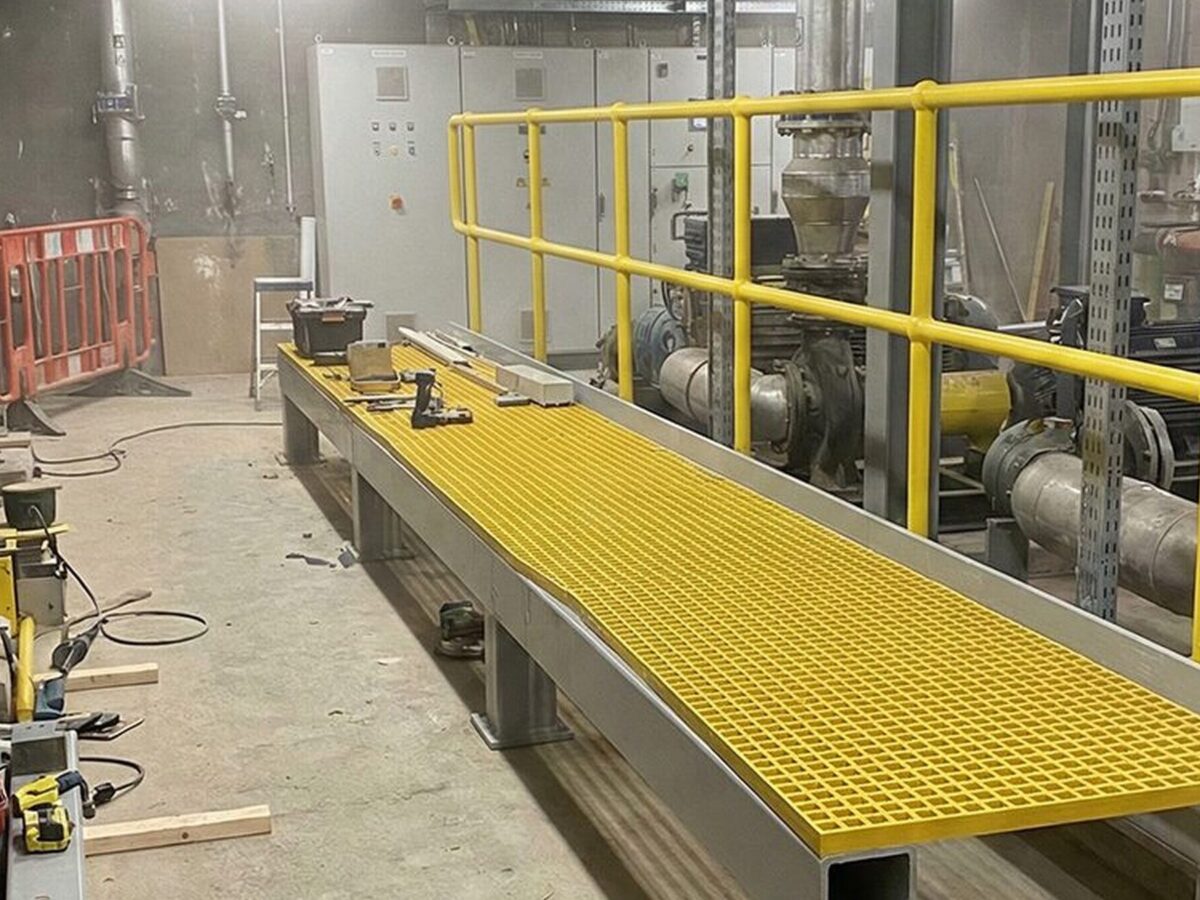
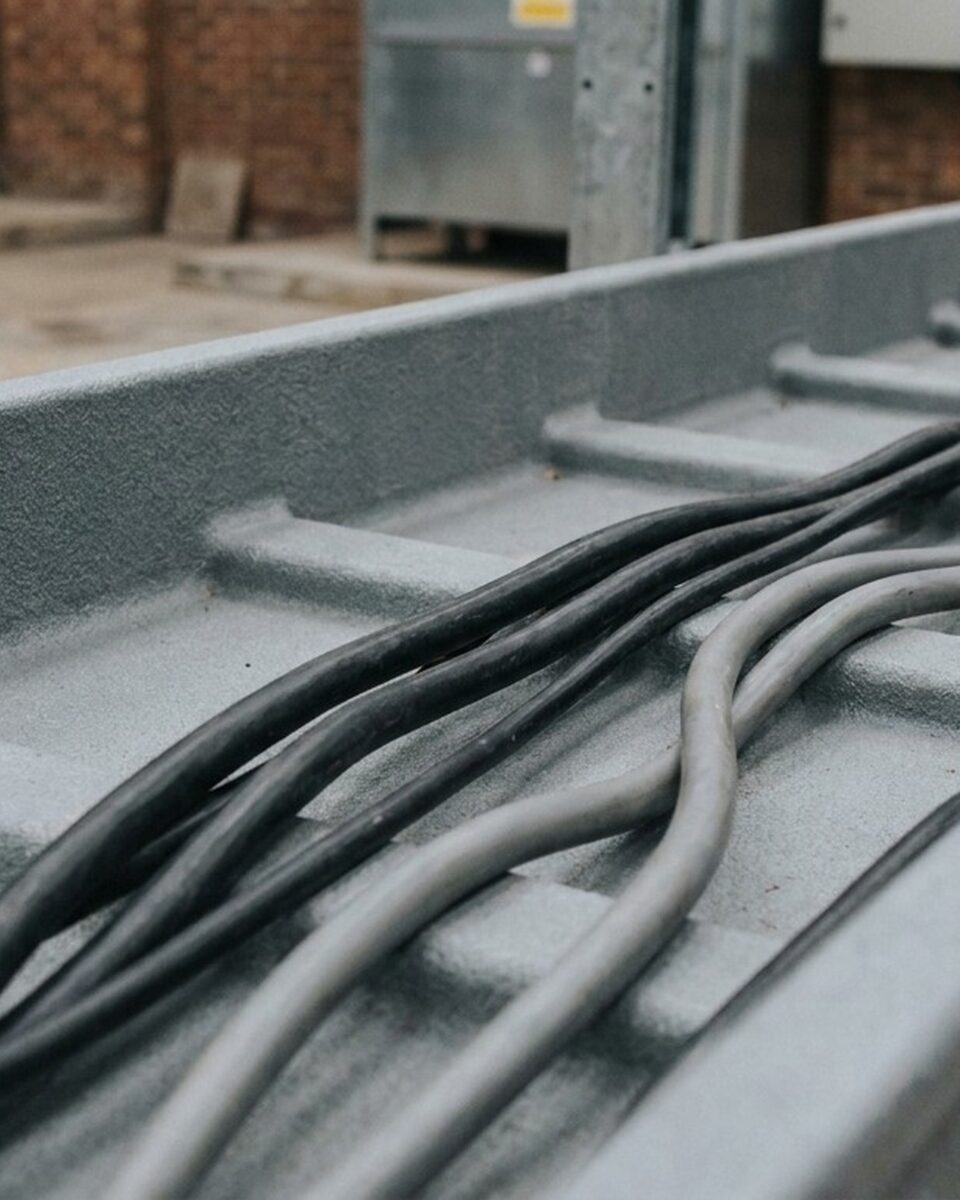
Tray, ladder and supports.
← Drag / swipe to browse · click to expand →
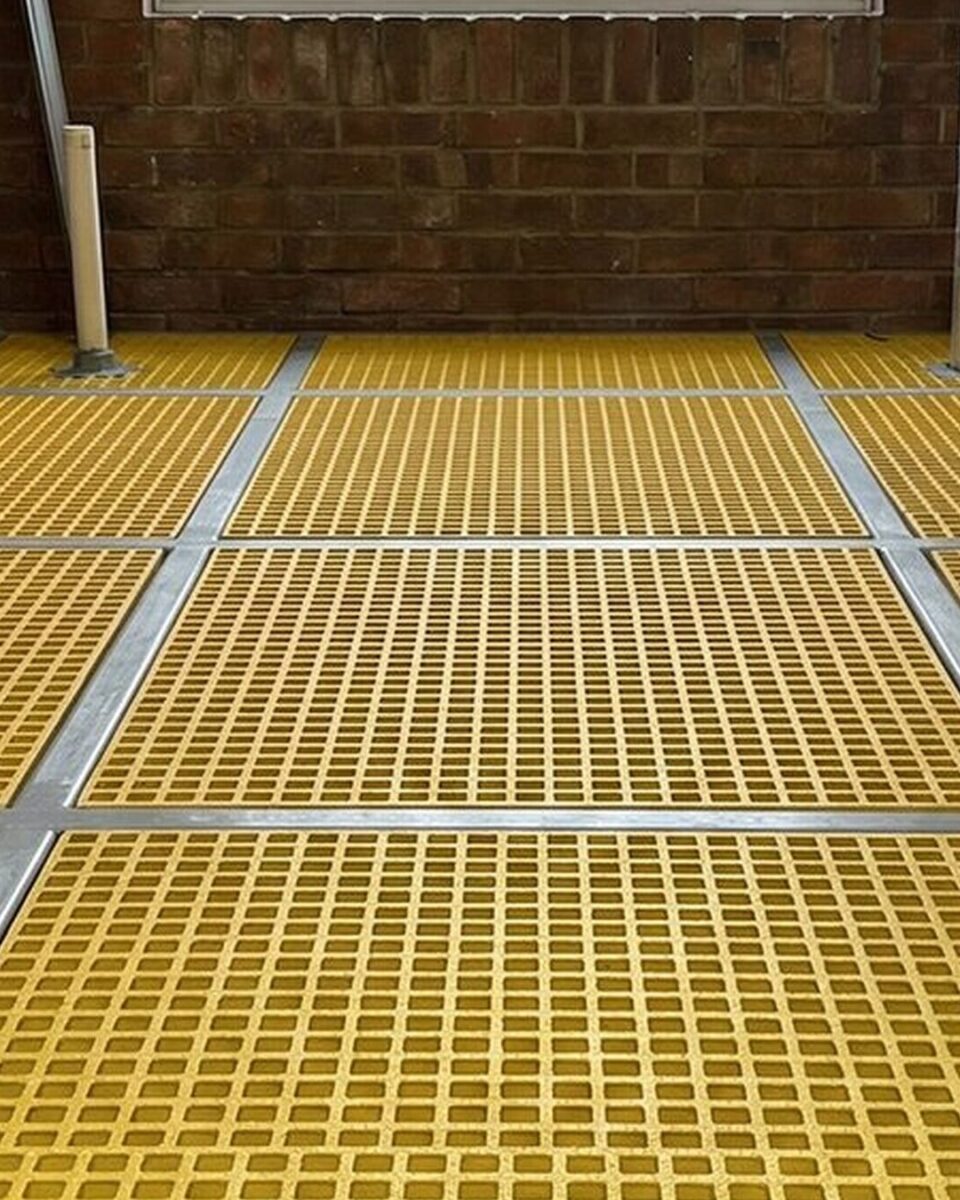
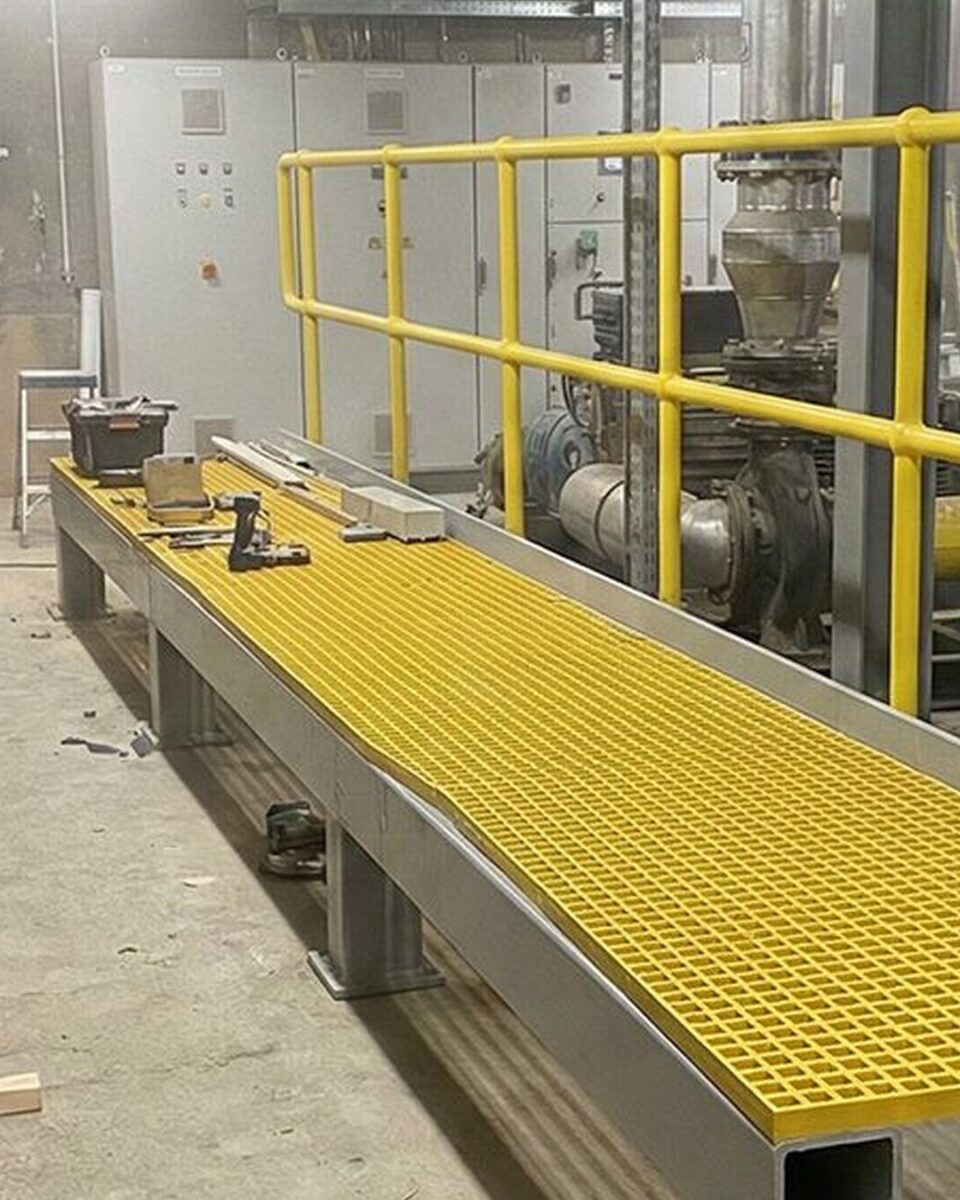
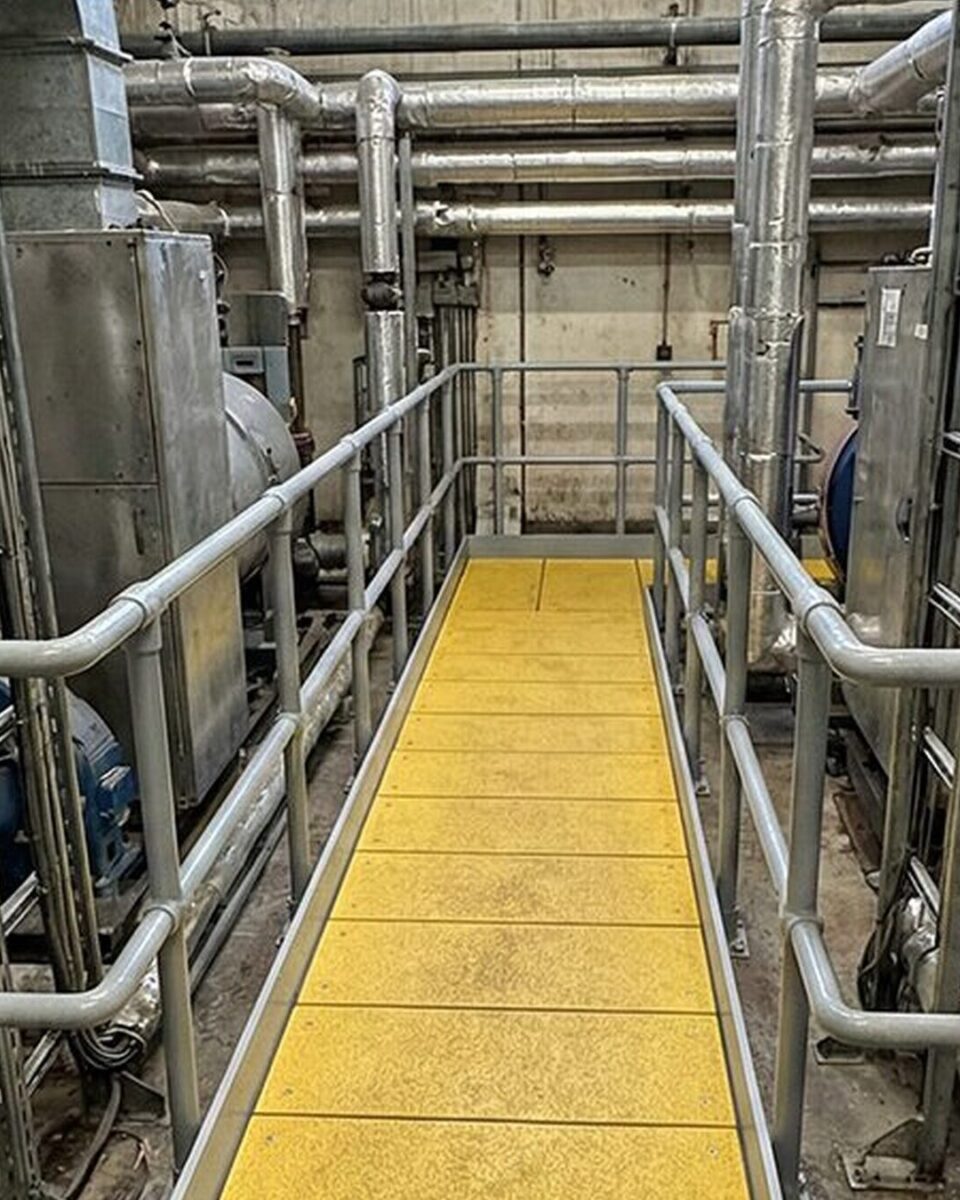
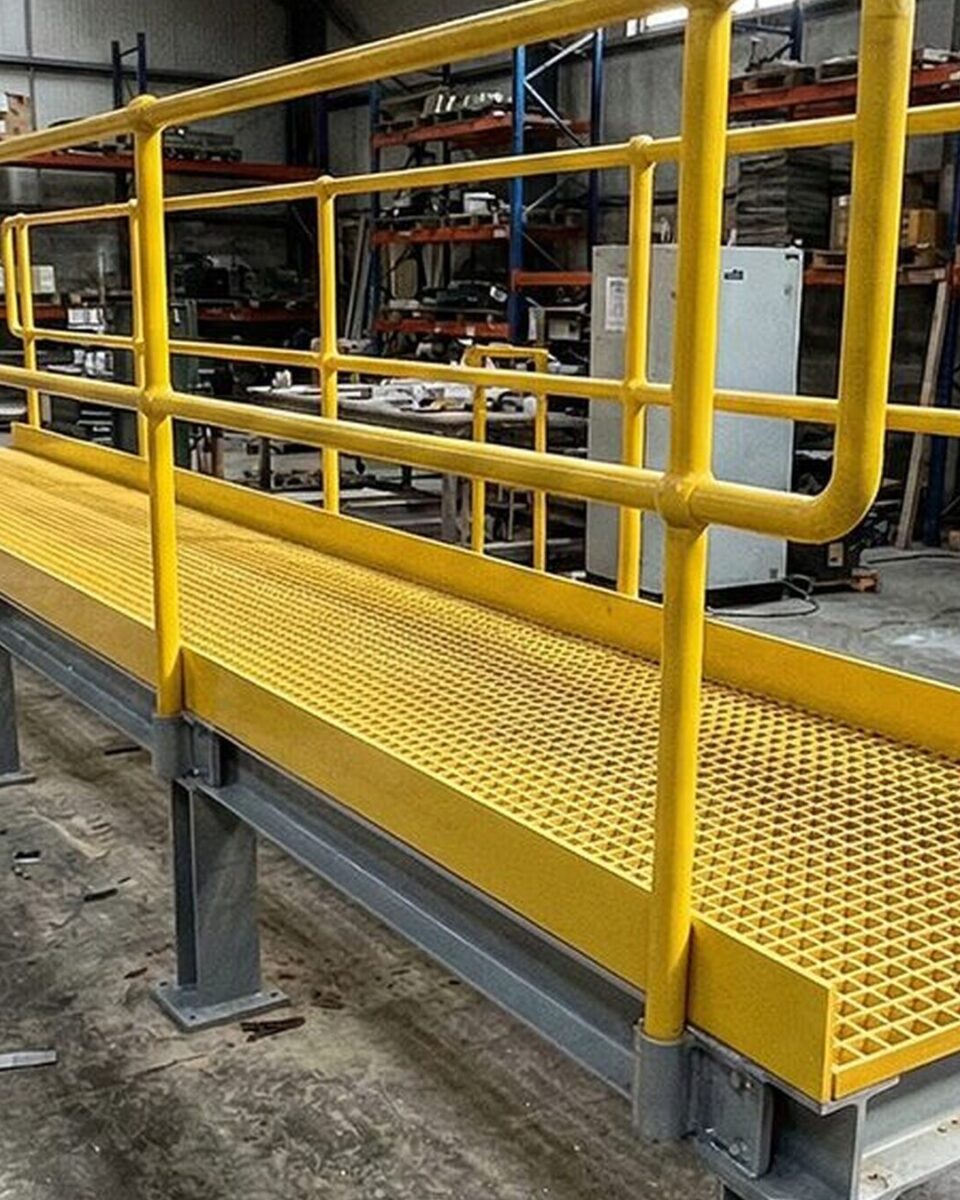
One team, not a parts supplier plus a fitter.
Non-conductive containment that comes off your earthing snag list, fitted without a hot-works permit.
About UIS-
01
One accountable team, not a parts supplier plus a separate installer
We keep design, detailing, fabrication, and installation under one roof, done by our own people rather than subcontractors. There is no handover between a manufacturer who supplies the tray and a labour-only crew who fit it, so when something needs putting right, nobody can blame the other party. Because it is all us, we are responsible for the whole package, from the first drawing to handover and the defect-liability period after, and we control the quality at every step.
-
02
Supports and spans set to the cable load
We size the tray or ladder and set the support spacing from the cable weight, the span and the environment, using the manufacturer's load data, so the system carries the cables you have now and the ones planned for later.
-
03
Cut and fixed on a live site without a hot-works permit
We cut and drill the GRP to fit on site with a diamond blade under dust extraction, no welding, flame, or sparks, so the run goes in without the hot-work permits, fire watches, and fume controls that cutting steel on site demands. The material is around a fifth of the weight of steel, which eases manual handling over long runs and takes crane and loading demand off the programme. We have installed plant-deck steelwork on night shifts inside a live supermarket at Oban, with the lifts planned by our own Appointed Person, which is the kind of occupied site this work goes into.
-
04
Carded teams who can get onto your live, permit-controlled site
We employ our site teams directly, not through agencies or labour-only subbies: CSCS across the workforce, an SSSTS-qualified supervisor on every project, and PASMA and IPAF certification for tower and powered-access work. Our in-house Appointed Person plans any lift the access needs, rather than handing it to the crane-hire contact. You can check the method statements and qualifications before anyone reaches the gate.

"I've worked with UIS for several years on some high profile and very complex projects. Their attitude and work ethic are second to none - providing high quality services and products which are delivered safely and on time every time. Overall they are a pleasure to do business with and wouldn't hesitate recommending UIS for any steelwork or metalwork packages."
Cable tray questions.
GRP is non-conductive, non-magnetic, and corrosion-resistant, so it carries cable in chemical, water-treatment, and coastal environments where steel tray corrodes, and it does not need bonding into the earthing system or carry induced currents near high-voltage runs. It is around a fifth of the weight of steel, which eases handling over long runs and takes crane and loading demand off the programme. It is also cut and drilled to fit on site without hot works. We recommend it where corrosion, weight, or electrical sensitivity make steel the wrong answer, not as a blanket replacement.
We design, detail, fabricate, and install the complete system in-house, with our own team rather than subcontractors. You hold one company to the whole package across design, fabrication, installation, handover, the O and M pack, and the defect-liability period, with one point of contact throughout.
Yes. For a retrofit we carry out a geometrical survey and 3D scan, then overlay the route, bends, risers, and bespoke supports in CAD before fabrication, so the detail matches the building as it actually is. Where the containment needs steel support brackets or secondary steelwork, we fabricate those in the same Rotherham workshop.
The fire classification of GRP depends on the resin grade specified for the project, so we confirm it against the grade selected for your job and issue the documentation in the O and M pack rather than printing a single blanket figure. Hazardous-area and fire-performance suitability is confirmed against the specified grade for your application. Tell us the environment and the requirement, and we specify a grade that meets it.
As a rule, cable ladder suits heavy power distribution over long spans, and cable tray suits lighter routing and instrumentation, but the load case is set by your structural or electrical engineer. We design and fabricate to the loadings they specify rather than publishing generic capacity figures, and we will advise on the right format once we have your drawings and the load requirement.
BS EN 61537 covers cable tray and cable ladder systems, including their safe working load at a given span and their electrical properties. Ask for the system's test data against it, and size the run from the manufacturer's load tables for the cables you are installing.
It depends on the tray, its load class and the weight of cable it carries. The manufacturer's load data gives the safe working load at each support span; we set the spacing from that, with allowance for cables planned later, and add supports at bends and junctions.