GRP Stair Treads & Nosings
Universal Industrial Services surveys, supplies and installs GRP anti-slip stair treads and nosings onto existing steel and concrete stairs, nationwide from its Rotherham base.
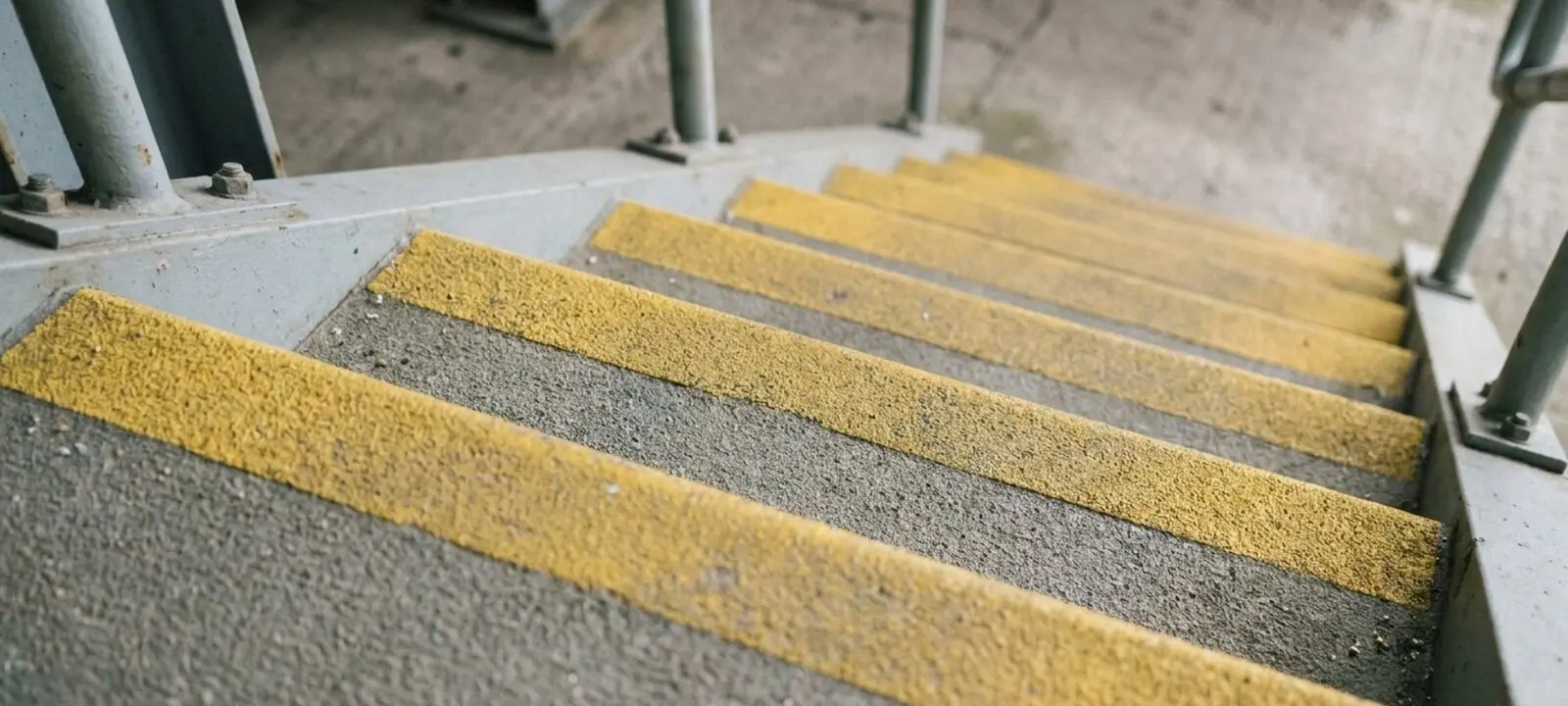


What we deliver.
If a slip on a worn flight has landed on your desk, or a safety audit has flagged steps that have gone smooth, the fix has to do one thing: remove the hazard without creating a new one. In our experience, a box of covers screwed down in a hurry shifts under load or stands proud at the front edge, which a surveyor then records as a fresh trip hazard. We survey the existing stair, specify the right GRP tread and high-visibility nosing for it, and install both with our own teams, so one company owns the result from the first measurement to the documentation pack.
Our own teams survey each flight first, then mechanically fix every tread cover and nosing so it cannot shift or sit proud.
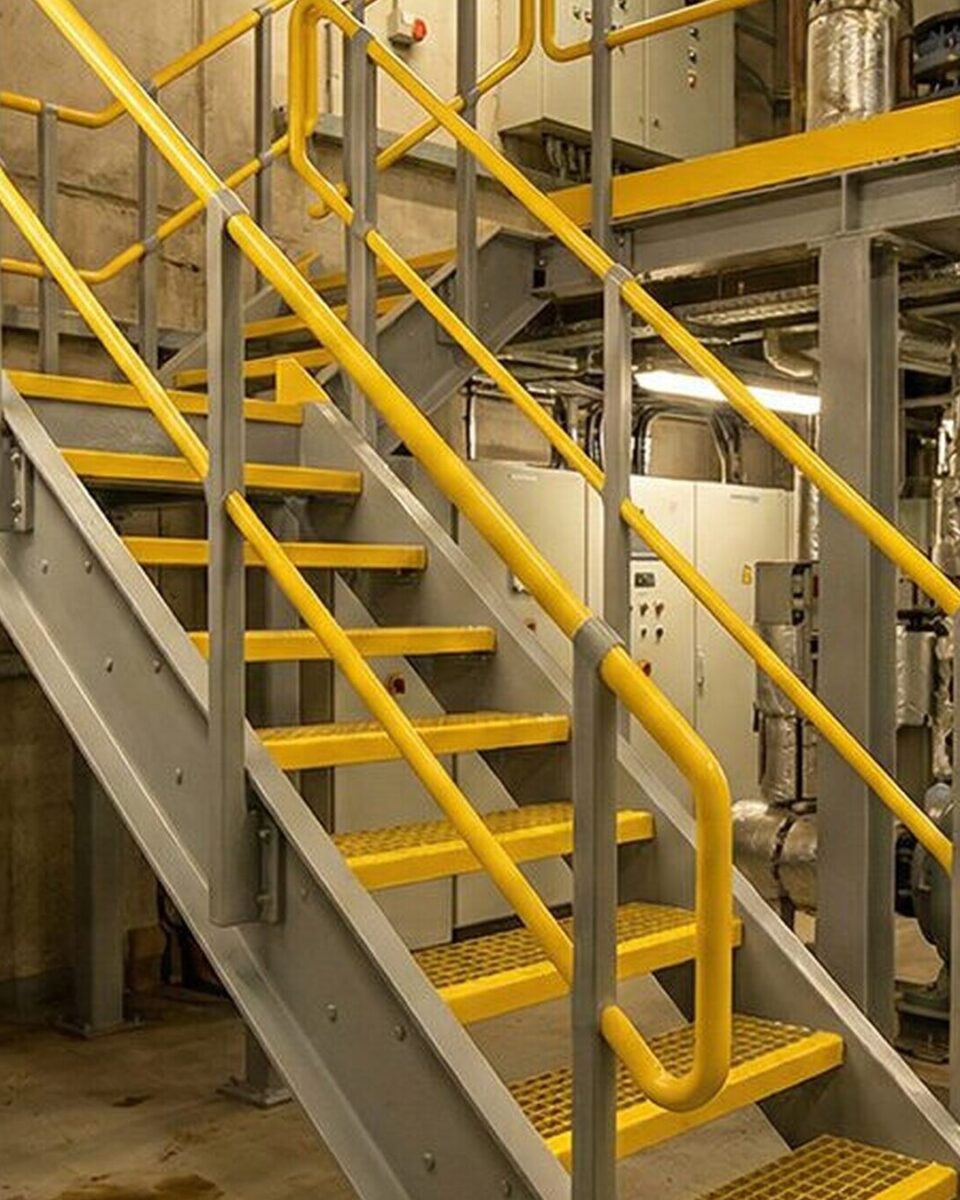
From survey to fitted tread.
We survey the stair you have, supply the treads cut to fit, and install them without closing the site.
Site survey
We come to the stairs and measure them. Each step is checked for wear, camber and substrate, whether steel, concrete or timber, so the covers are specified for the flight you have rather than a standard size. For a complex refurbishment we can 3D-scan the stair and overlay the proposed treads in CAD.
Specification and quotation
On the survey we specify the correct GRP tread, nosing profile and fixings for your substrate and setting, including Part M and BS 8300 nosing detailing where the steps are public-facing. For a commercial package we return a detailed, itemised quotation within 1 to 2 weeks of the survey, with no separate fitter's cost to follow.
Supply and cut to fit
Once the profile is specified, we supply the GRP treads and high-visibility nosings and cut and prepare each one to the survey dimensions, so every cover fits its step instead of being trimmed roughly in place.
Installation
Our own teams mechanically fix the treads and nosings to the existing stair under full method statements and risk assessments. We agree the programme around your operation and can work out of hours or on night shifts to keep the stairs in use.
Handover and documentation
At completion we hand over the O&M pack, including the BS EN 16165 pendulum slip-resistance values and, where the project calls for it, the fire classification documentation, so the specification is auditable from day one.
Aftercare
We run a defect liability period of 12 months from completion, in line with standard JCT terms: if anything is not right in that first year, we come back and put it right, and we stay available for maintenance advice afterwards.
Why GRP treads outlast re-coated steel.
We are a steel fabricator and installer first, and we supply and fit GRP where it is the right material, on the same sites and to the same standards. On a stair, GRP earns its place as a gritted, high-visibility anti-slip surface that can be mechanically fixed over worn steel or concrete steps, with the pendulum slip-resistance values documented to BS EN 16165 rather than asserted.
Request a quote
Project & sample images.
← Drag / swipe to browse · click to expand →
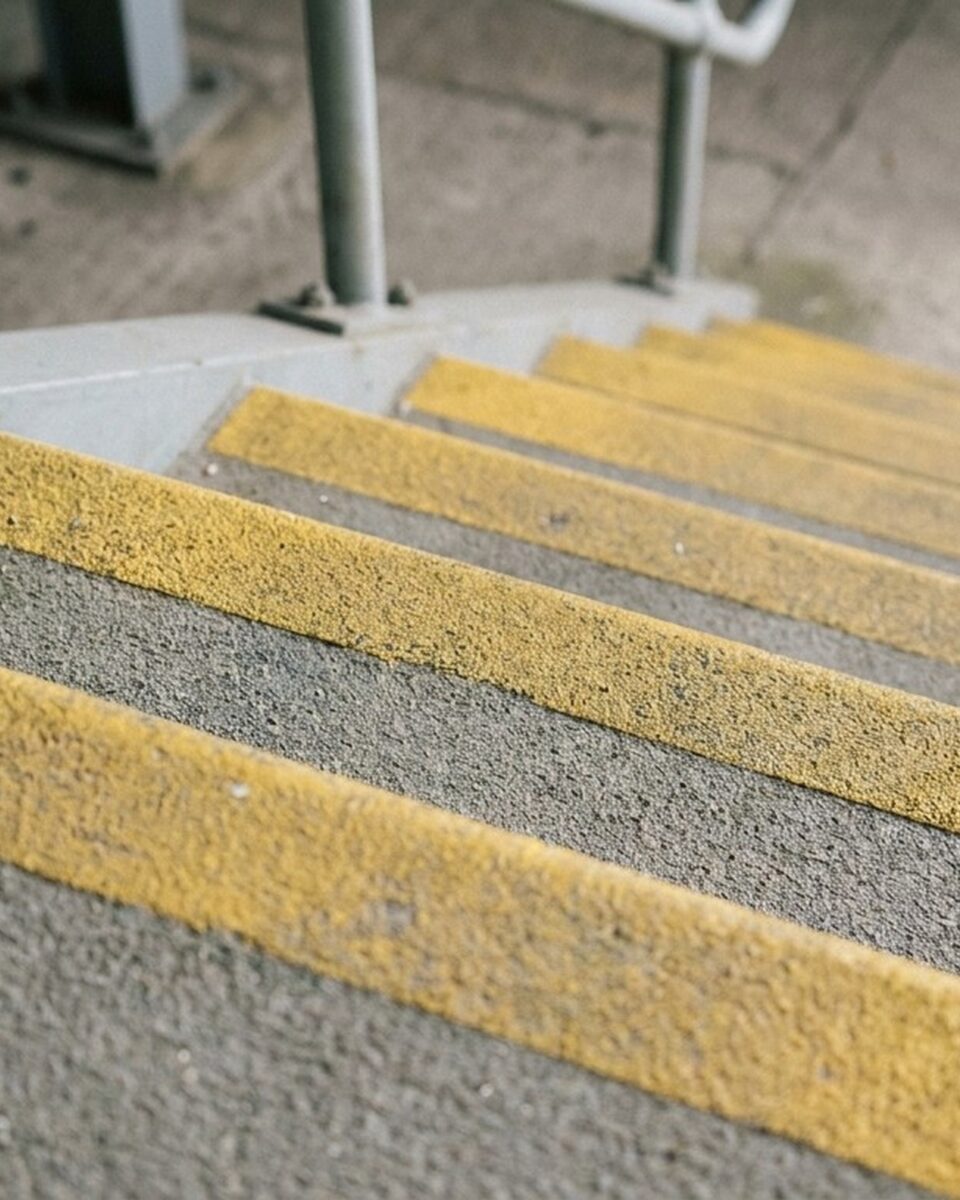
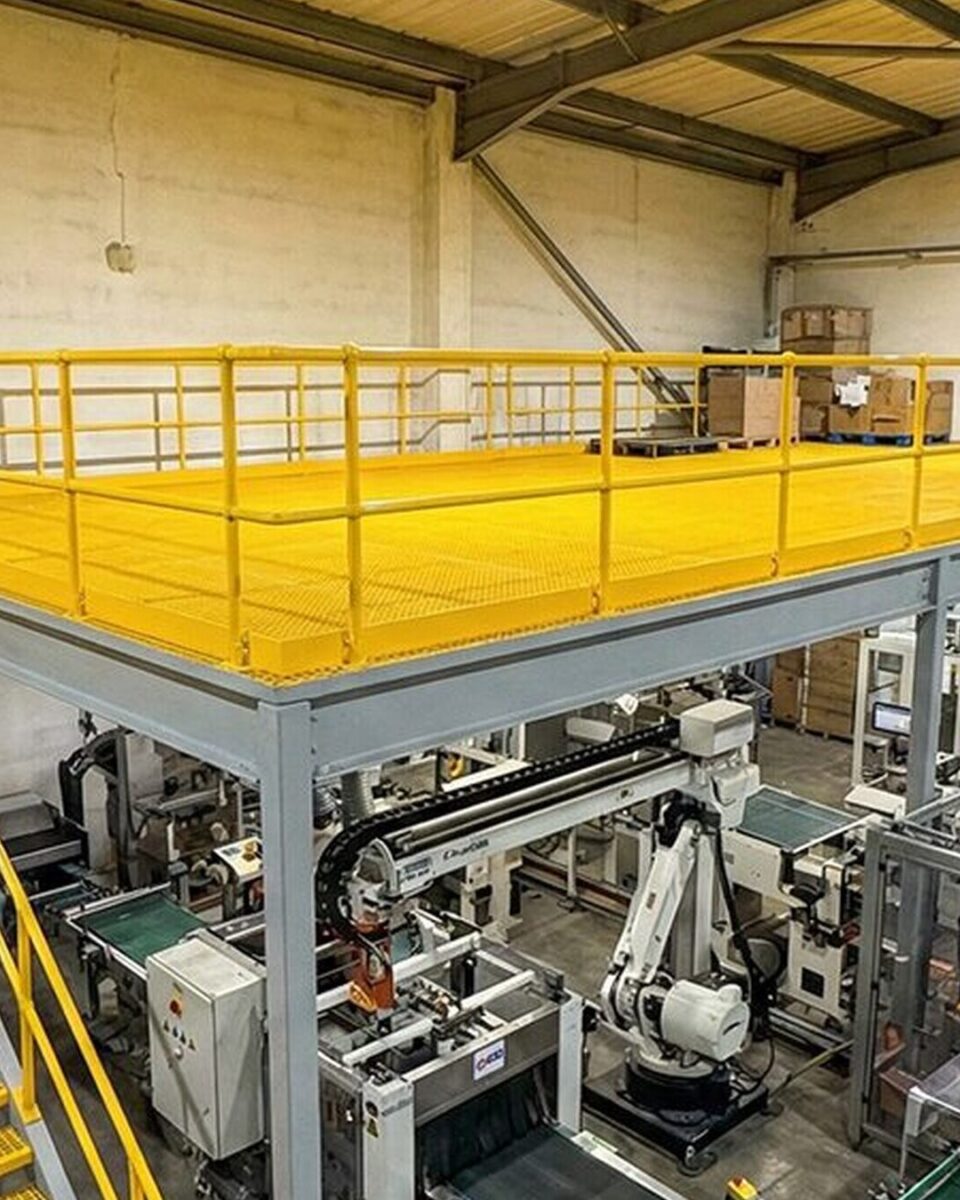
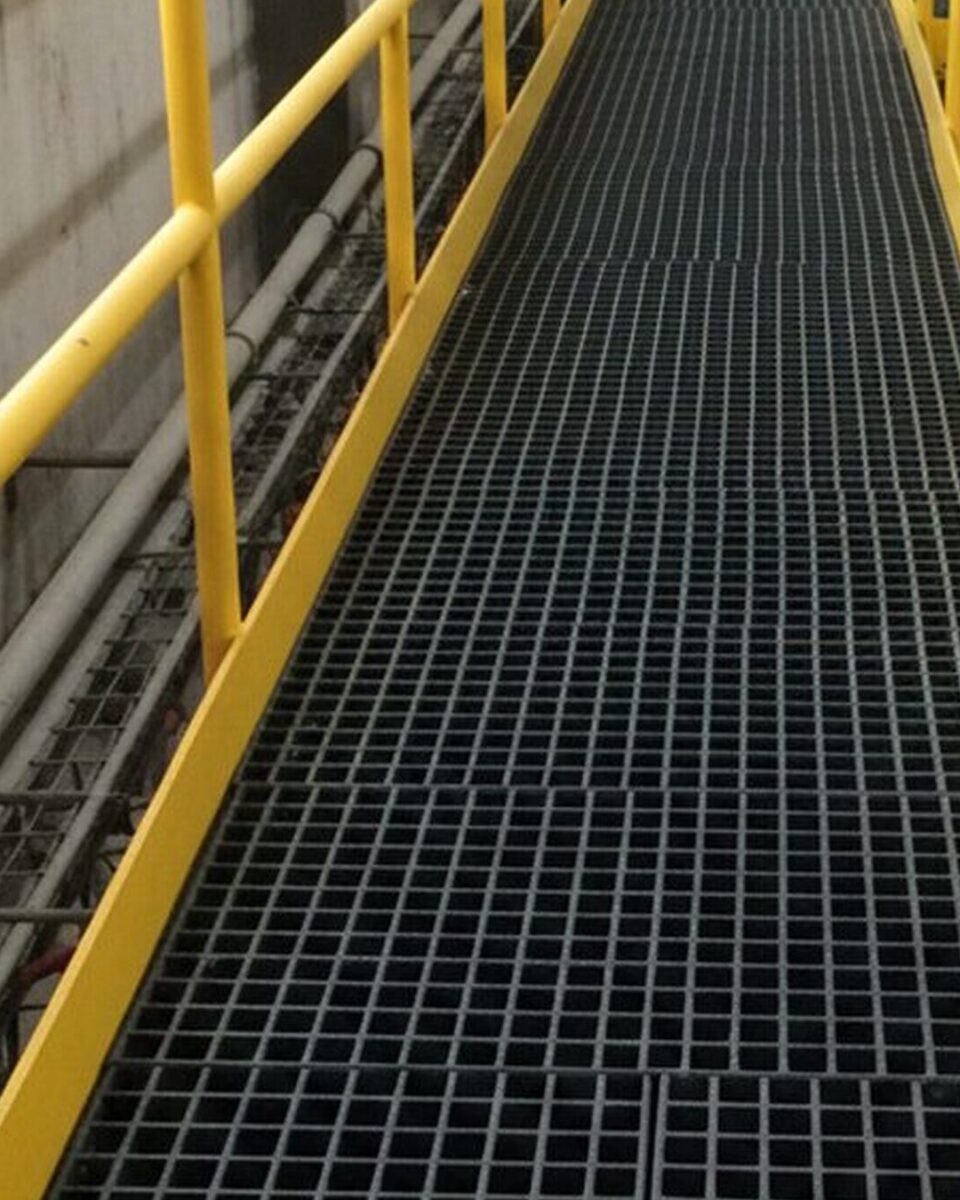
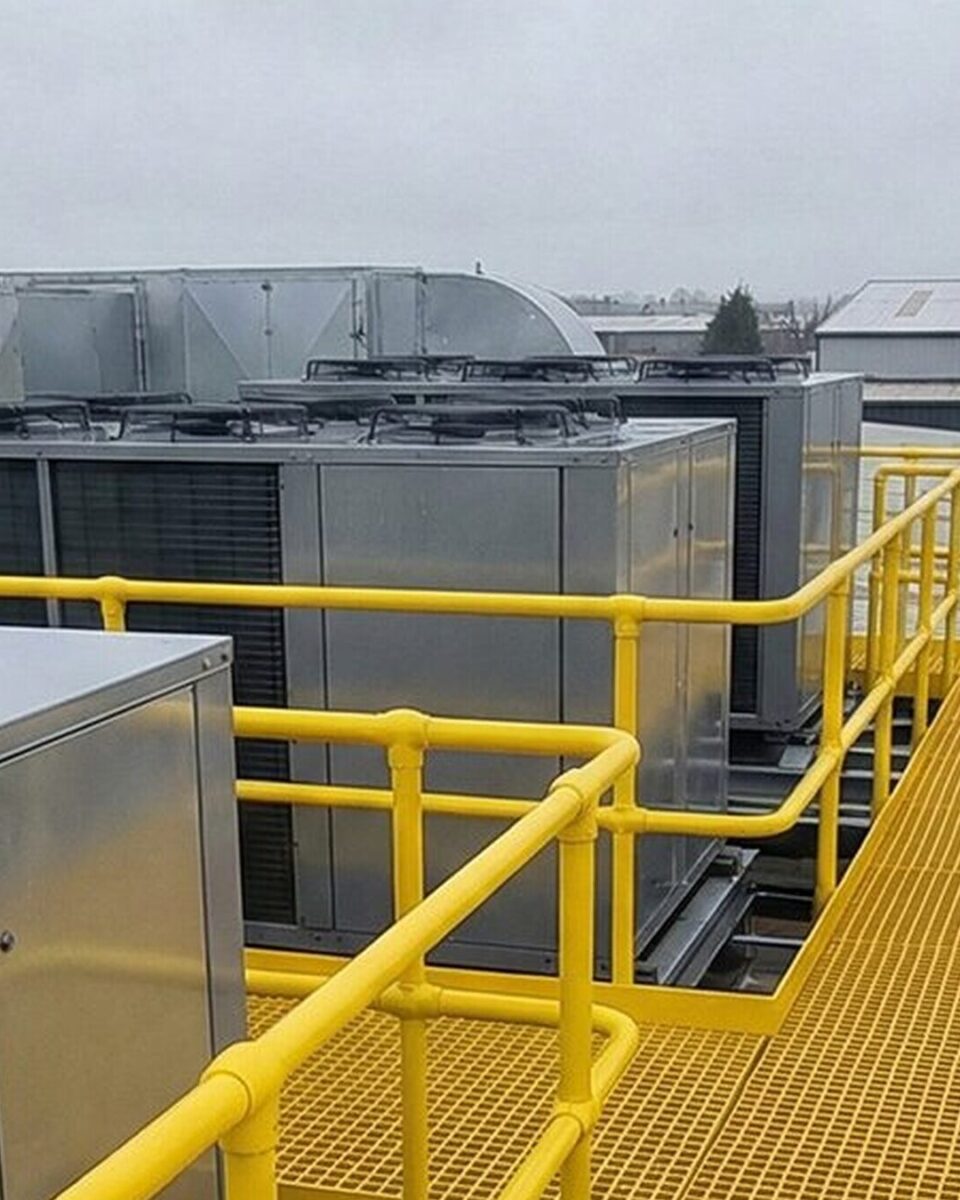
Treads fitted to the stair you actually have.
One team owns the survey, the fix and the slip-resistance paperwork.
About UIS-
01
A cover fitted to the stair you actually have
Worn steel and concrete steps are rarely true: they camber, dish in the traffic lane, and wear unevenly. Before we quote, we survey the flight and measure each step, and for an awkward refurbishment we 3D-scan the stair and overlay the proposed treads in CAD. Our fitters then mechanically fix the correct GRP tread cover and nosing profile to that substrate with the right fixings, so the covers match the steps you have rather than being trimmed to fit on the day. That is the difference between a tread that stays put and one that moves the first time a loaded trolley runs over it.
-
02
Slip resistance you can put in front of an auditor
Our GRP treads and nosings meet BS 4592-0:2006+A1:2012 for industrial stair treads, as gritted working surfaces, and we issue the pendulum slip-resistance values to BS EN 16165 with the project O&M pack at handover. We put that measured specification in the file, so it is there when your insurer or your HSEQ audit asks for the slip performance on those steps, rather than a claim on a web page.
-
03
One team owns the survey, the fix and the paperwork
Buy the covers from one supplier and find a fitter for them, and you become the coordinator the moment something does not line up. We keep the whole job under one roof, surveying, supplying, cutting to fit and installing with our own people, and we hand over one itemised quotation and one documentation pack. Because we measure and fit, you get no separate fitter's invoice later and one firm to hold to account if a step is wrong.
-
04
Certified people who work your site without closing it
Every operative on your stairs carries a CSCS card, every job runs under an SSSTS-qualified supervisor, and our site teams hold PASMA and IPAF tickets, working to full method statements and risk assessments. We employ these teams directly rather than subcontracting them in. On site, our crews install regularly on live, occupied premises: at a trading supermarket in Oban we put in the access steelwork, stairs and handrails on night shifts so the store never had to stop. We keep a stairway in a working building in use the same way, fitting around your operation.

"I've worked with UIS for several years on some high profile and very complex projects. Their attitude and work ethic are second to none - providing high quality services and products which are delivered safely and on time every time. Overall they are a pleasure to do business with and wouldn't hesitate recommending UIS for any steelwork or metalwork packages."

Questions clients ask us.
Yes. We supply the pendulum slip-resistance values to BS EN 16165 as part of the project O&M pack at handover, so the slip specification for those steps is documented and auditable, not just claimed.
Yes. We survey the existing substrate first and mechanically fix the covers to the steps you have, so we reuse a sound flight rather than demolishing it. Where steps are badly worn or cambered, the survey is what stops a cover shifting or sitting proud at the edge.
We detail and install high-visibility nosings to the accessibility requirements of Building Regulations Part M and BS 8300 for public and commercial stairs. We confirm the exact detail against your project at survey.
Usually, yes. Our CSCS and SSSTS teams work to full method statements and risk assessments on live sites, and we can install out of hours or on night shifts. At a trading supermarket in Oban we installed access steelwork, stairs and handrails on night shifts without stopping the store.
We do both, with our own people: we survey, supply, cut to fit and install, so you have one point of contact and one documentation pack. We specify the correct profiles and fixings for your stairs rather than leaving you to source a separate fitter.
Recent project deep-dives.
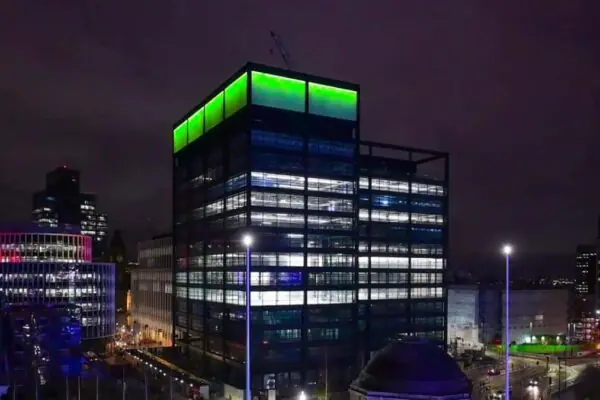
One Centenary Way
On this Project, we were contracted by our construction partners Sir Robert Macalpine, to design, supply, and Install numerous bespoke metal...
Read case study →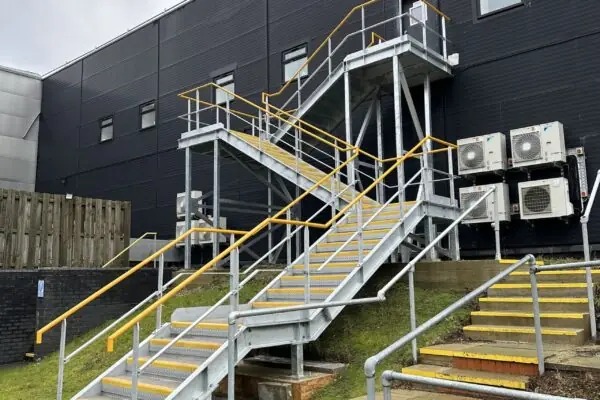
Access Stairway at Thermo Fisher Scientific
We are proud to announce the successful completion of another project here at UIS for Thermo Fisher Scientific in Horsham. Our team was t...
Read case study →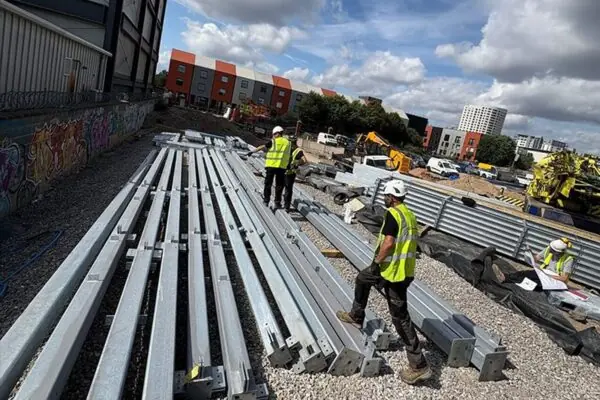
40T Walkway in Leeds
Big things are happening over in Leeds! One of our teams is beginning to install a 40T walkway. Our dedicated site team has completed the...
Read case study →