GRP Handrails
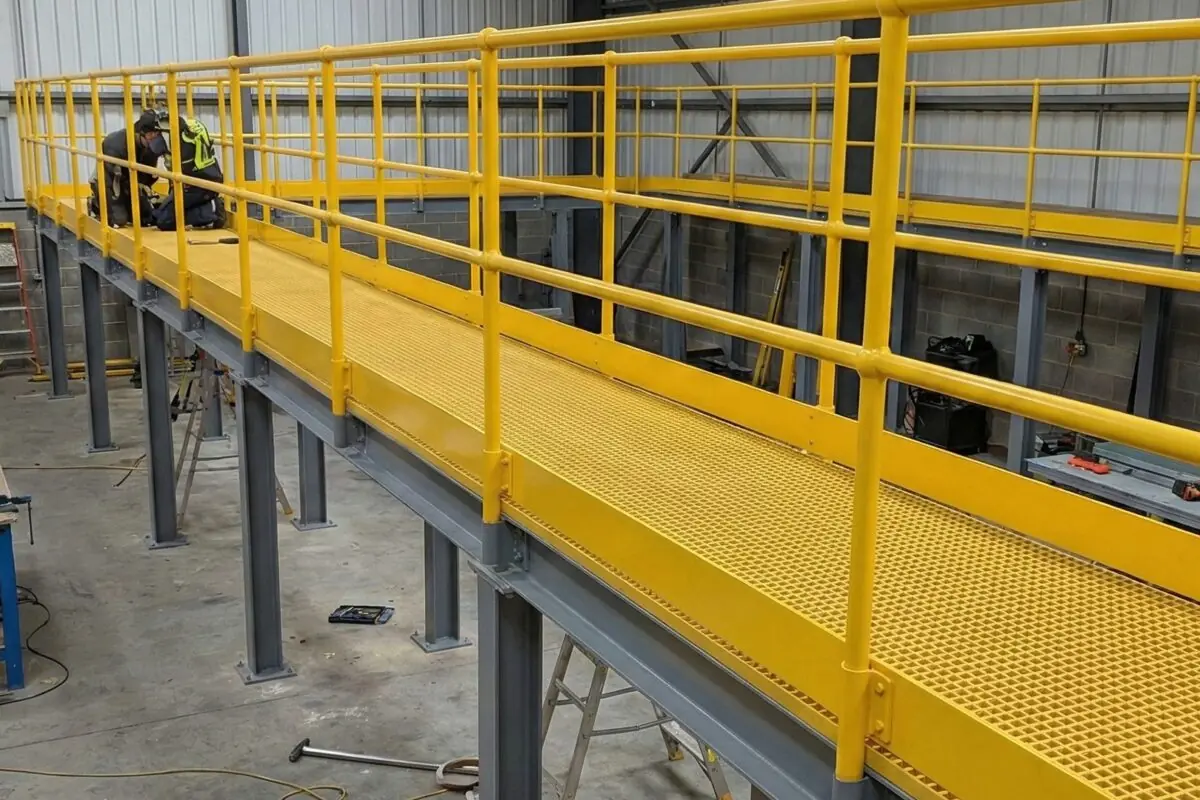
GRP handrails are guardrail systems of pultruded GRP rails, stanchions and toe boards that will not corrode or conduct. At UIS, we specify, fabricate and install them on walkways, platforms and stairs across the UK.
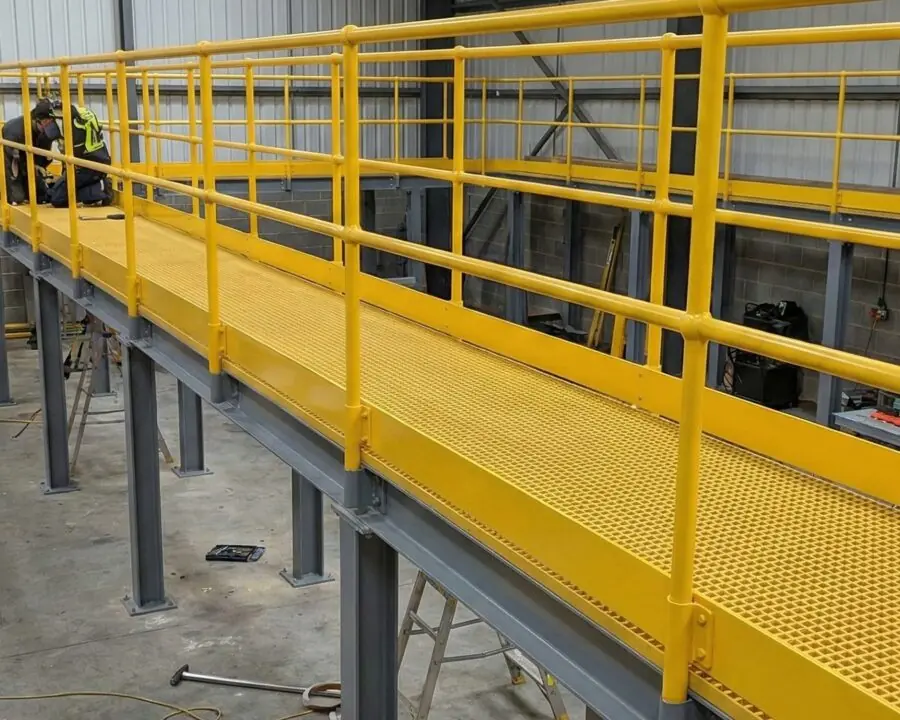


Edge protection that will not corrode.
A GRP handrail system is guardrailing built from pultruded glass-reinforced plastic top rails, knee rails, stanchions and toe boards, joined with GRP fittings and stainless steel bolts. It gives the same edge protection as steel with no corrosion, no conductivity and a fraction of the weight, which is why it is used on walkways, platforms, stairs, rooftops and around live electrical plant.
If an audit has flagged your steel handrails as corroded, or your specification calls for non-conductive GRP, you are deciding who carries the risk. Buy loose tube and fittings online and the cutting, fixing and compliant installation all stay with you.
-
Surveyed and specified
We survey the site and specify the right profiles, fittings and fixings for the environment and the load class.
-
Fabricated to fit
We fabricate the system to fit the run, with the returns, gates and post centres worked out before anything arrives on site.
-
Accountable to handover
Our own teams install it, so we answer for it from the first survey to the signed-off handover and the aftercare that follows.
GRP handrail specification at a glance.
A GRP handrail is only as strong as its load class, its post centres and its fixings. These are the choices that decide whether it passes.
- Top rail
- Pultruded GRP handrail profile, at least 1,100 mm above the walking surface on platforms and walkways, and 900 mm above the pitch line on stairs and ramps (Approved Document K, BS EN ISO 14122-3)
- Knee rail
- Intermediate GRP rail, with no more than 500 mm clear between rails (BS EN ISO 14122-3)
- Toe board
- GRP kick plate at least 100 mm high, so tools and debris cannot go over the edge (BS EN ISO 14122-3)
- Stanchions
- GRP box or round posts: base-plated, face-fixed or cast in
- Joints
- Moulded GRP fittings with stainless steel bolts, or fabricated connections
- Accessible routes
- A graspable handrail of 32 to 50 mm diameter, under Approved Document M
Load classes and post centres
| Area of use | Horizontal line load on the top rail | Typical post centres |
|---|---|---|
| Light pedestrian routes in industrial buildings (BS 4592-0 General Duty) | 0.36 kN/m (BS 6180) | Up to around 1,200 to 1,250 mm |
| Industrial walkways and platforms (Heavy Duty) | 0.74 kN/m (BS 6180) | Around 1,000 mm |
| Crowded and assembly areas | Up to 3.0 kN/m (BS 6180) | Closer, to suit the profile and grade |
BS 6180 sets the load by how the area is used, not by the material, so a GRP rail in a 0.74 kN/m location has to carry the same 0.74 kN/m as a steel one. The line load, the infill distributed load and the infill point load are checked separately, never added together.
Where children under five may use the area, infill openings must not pass a 100 mm sphere (Approved Document K), and BS 6180 caps deflection at 25 mm at any point of the barrier. Guardrails on permanent access to plant follow BS EN ISO 14122-3.
What to put in a GRP handrail specification
- the BS 6180 or BS EN ISO 14122-3 load class for the area, with the line and infill loads
- the barrier height and the maximum post centres
- how the posts fix (base plate, face fixing or cast in) and what they fix into
- the deflection limit at the top rail
- test data for the assembled system of posts, rails, infill and fixings, not just a profile grade certificate
That last point matters: a BS EN 13706 grade proves the material, not the assembled rail.
Where it is used
- GRP for Water and WastewaterGRP walkways over tanks and channels, platforms at valves and penstocks, and ladders into chambers.
- GRP for Rail SitesGRP depot walkways, station stairs and treads, and fencing that does not conduct near traction power.
- Replacing Corroded Steel with GRPRusted steel grating, handrails and stair treads replaced with GRP, often on the existing frame.
- GRP for Main ContractorsAll the GRP on a project, from riser flooring to roof walkways, detailed, made and installed by one subcontractor.
- GRP for Car ParksGRP anti-slip stair treads, roof-deck walkways and pedestrian handrails that road salt does not rust.
What decides the price
Handrail is priced on the run, so we quote from a drawing or a site measure rather than a list price. The main drivers are:
- the length and height of the run
- the load class and the post centres
- the fixing substrate
- gates and returns
- the access on site
From survey to fitted handrail.
We survey, design, fabricate and install the handrail with no hot works on your live site.
Survey and specification
We visit the site, confirm the environment and the engineer's loadings, and specify the correct GRP profiles, stanchions and non-conductive fixings. For a retrofit into existing access steelwork, we carry out a geometrical survey and 3D scan and overlay the proposed handrail onto the scan in CAD, so the fabrication matches the structure you actually have.
Design, detailing and quotation
We detail the system to the relevant standards, BS 4592 for industrial GRP and BS 6180 where the rail guards, and return an itemised quotation. We return quotations on larger commercial packages typically within 2 weeks, and what we quote is what you pay, because single-source delivery removes the surprise costs that come from subcontractors and coordination failures.
Supply and fabrication to fit
We supply the GRP sections and cut and assemble the handrail and stanchion system to fit, ready for site. The pultruded and moulded sections come from our material supplier; we specify them, fabricate the system from them, and prepare the mechanical fixings that keep the assembly non-conductive at every joint.
Installation with zero hot works
Our own CSCS, SSSTS and PASMA teams install the system with mechanical bolt-together fixings, on live or occupied sites and on night shifts where the site cannot stop. There is no hot works permit to chase and no welding near your plant, and the supervisor keeps you informed against the agreed programme throughout.
Handover, documentation and aftercare
We inspect and sign off the installation and issue the operation and maintenance pack, with the BS EN 16165 pendulum slip-resistance values and the per-project fire classification. The work carries a 12 month defect liability period in line with standard JCT terms (unless your contract sets different terms), and we stay available afterwards: if something is not right in the first year after practical completion, we come back and sort it.
Where a GRP handrail is the right material.
Glass reinforced plastic resists corrosion and chemical attack, carries no current, and weighs a fraction of steel. That makes it the right handrail material in chemical and water treatment plants, on rooftop plant decks, in coastal exposure, and anywhere near live electrical apparatus where an earthed steel rail is a hazard rather than a safeguard. Outside those settings steel is usually the better answer.
Tour our workshop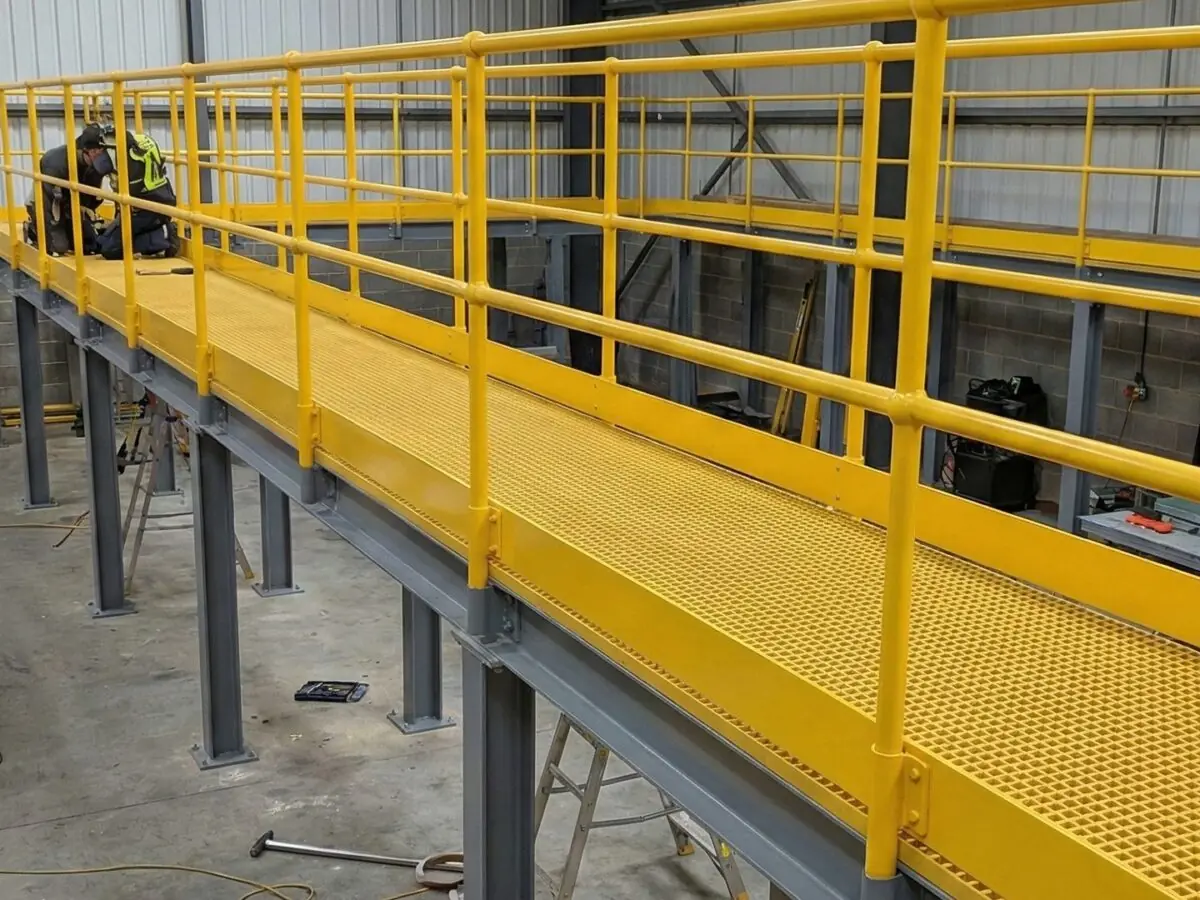
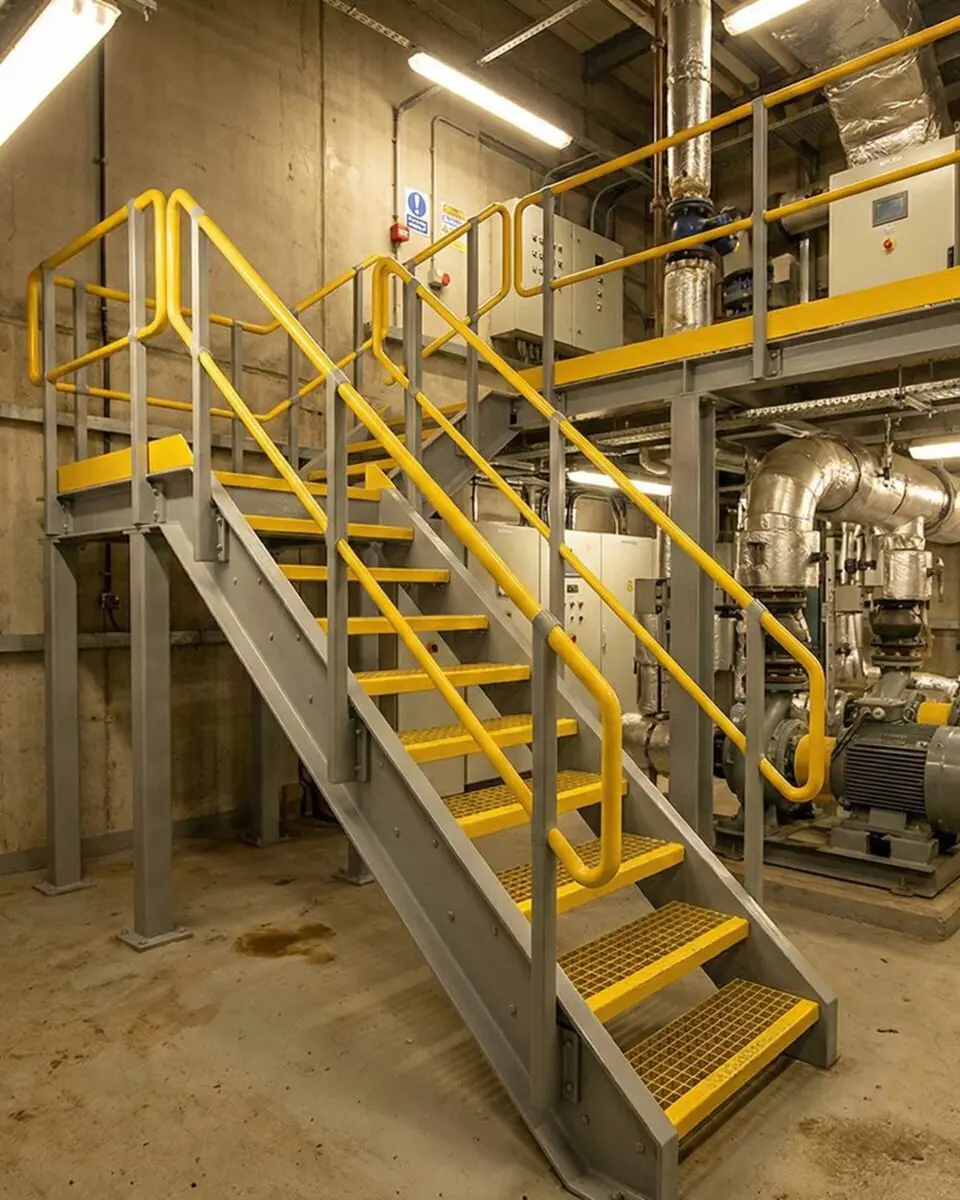
Handrail and guardrail systems.
← Drag / swipe to browse · click to expand →
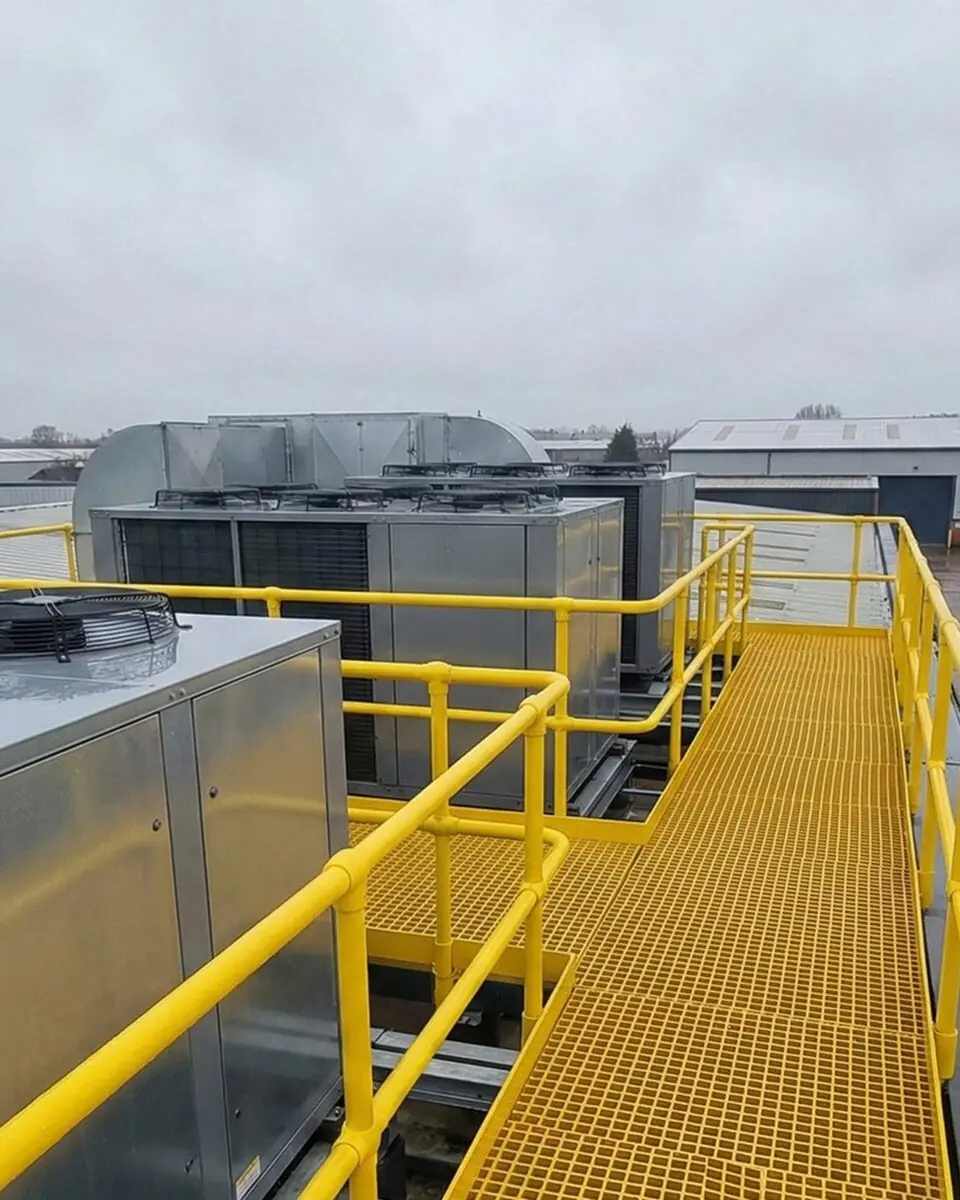

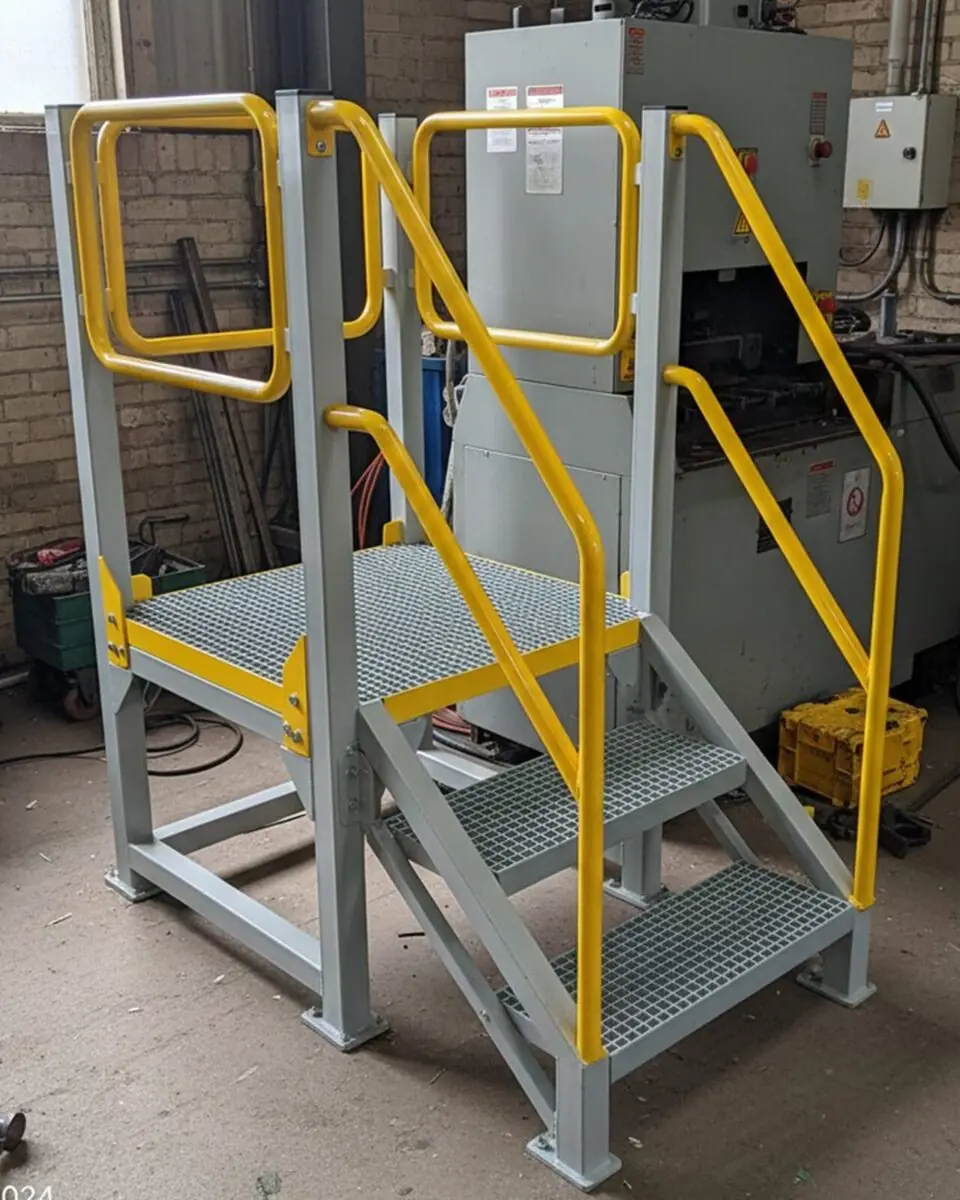
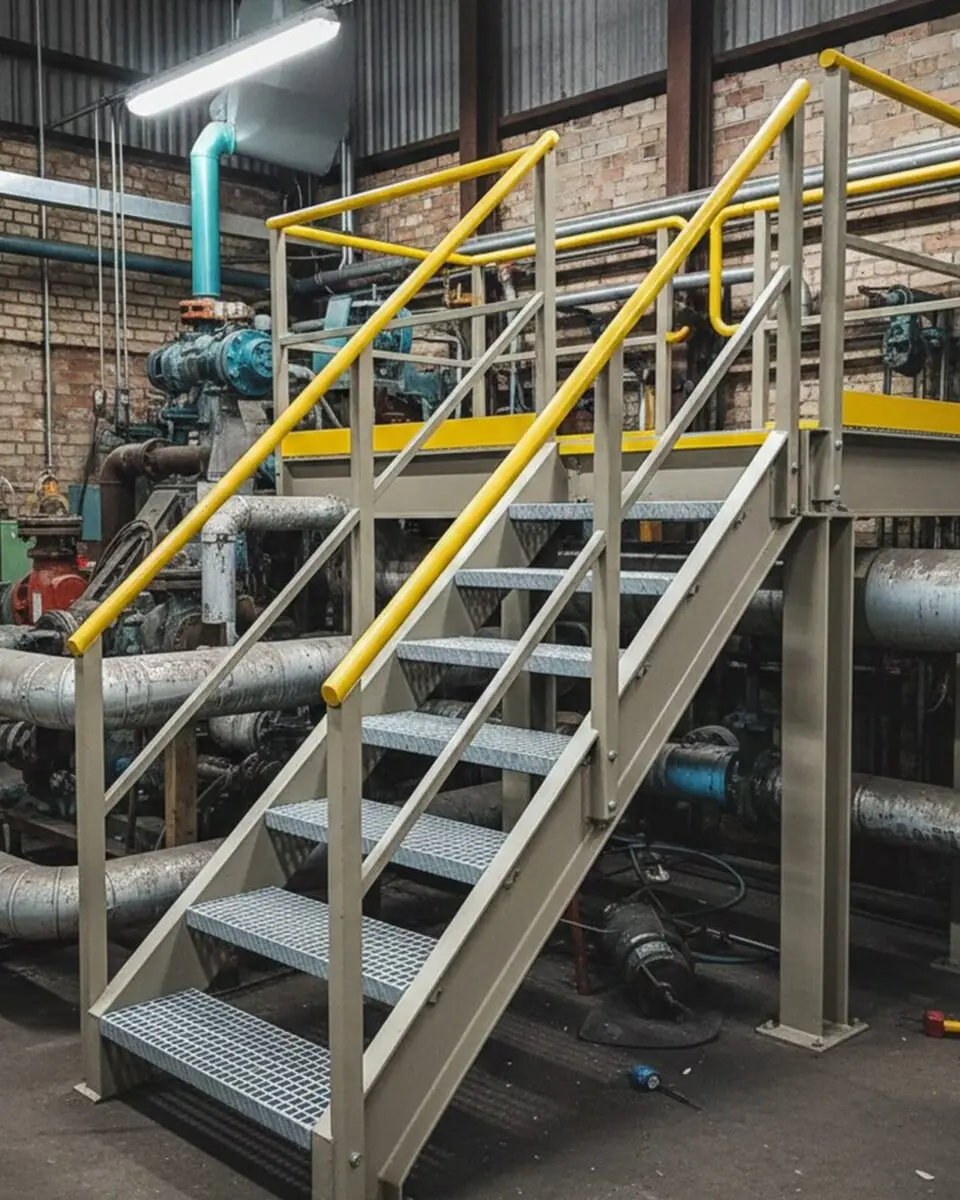
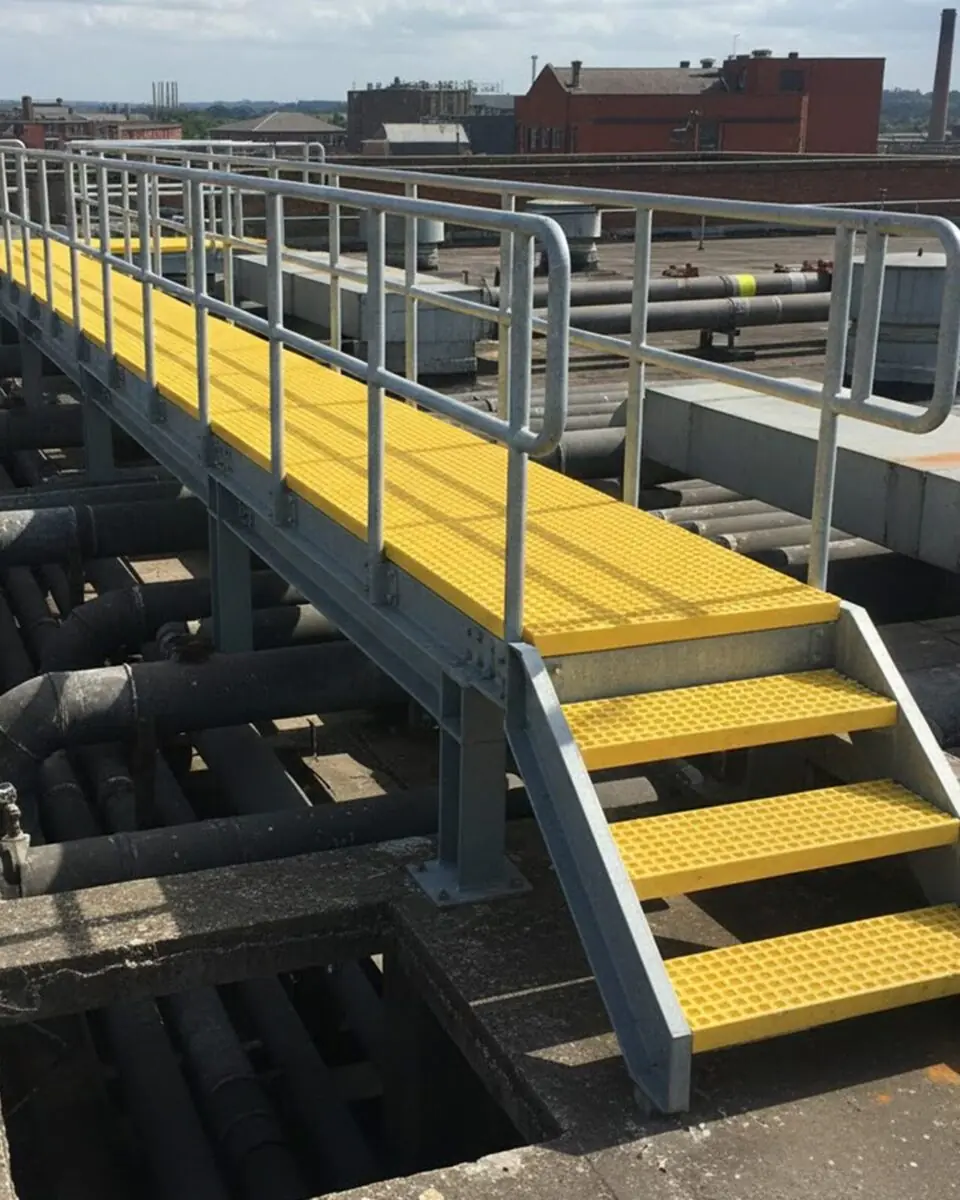
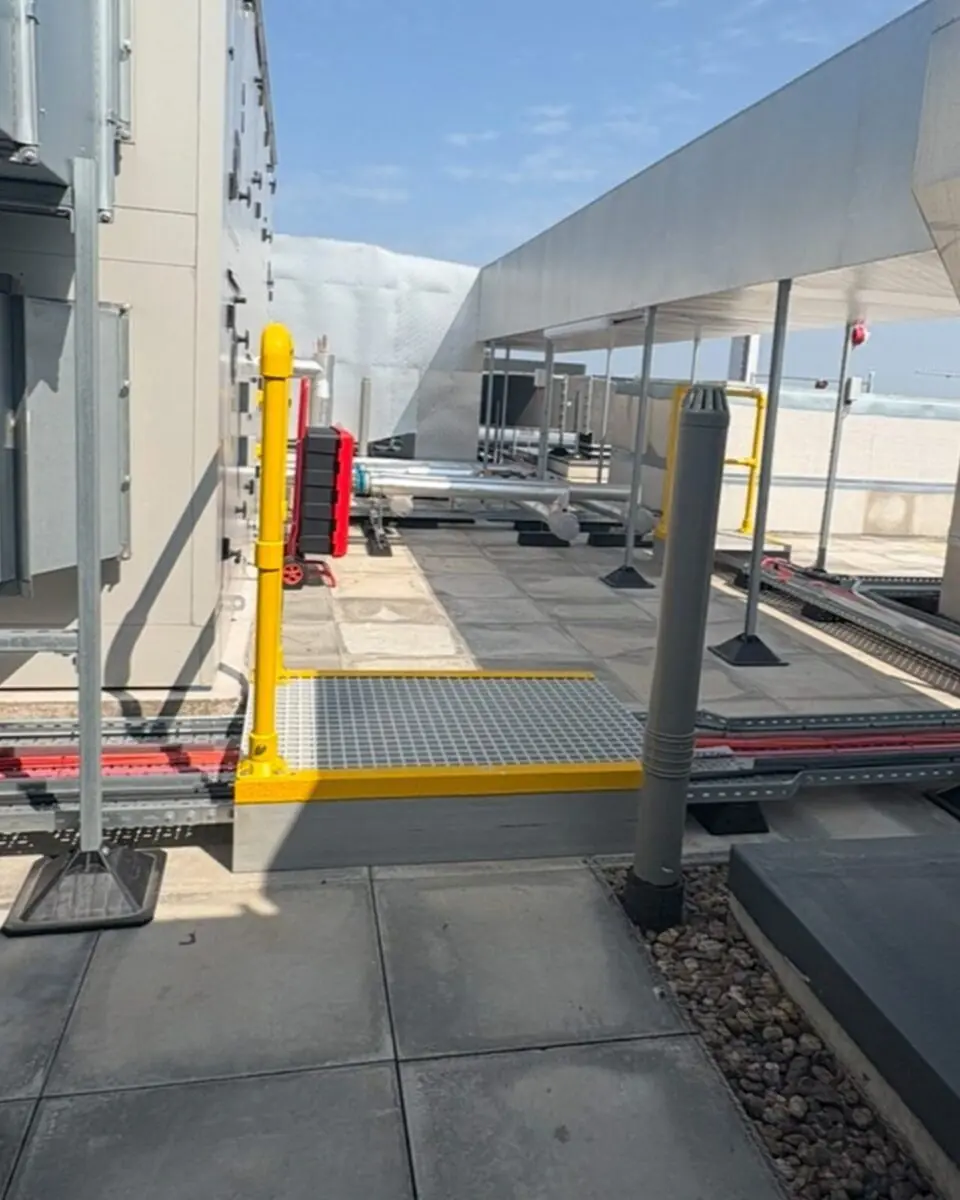
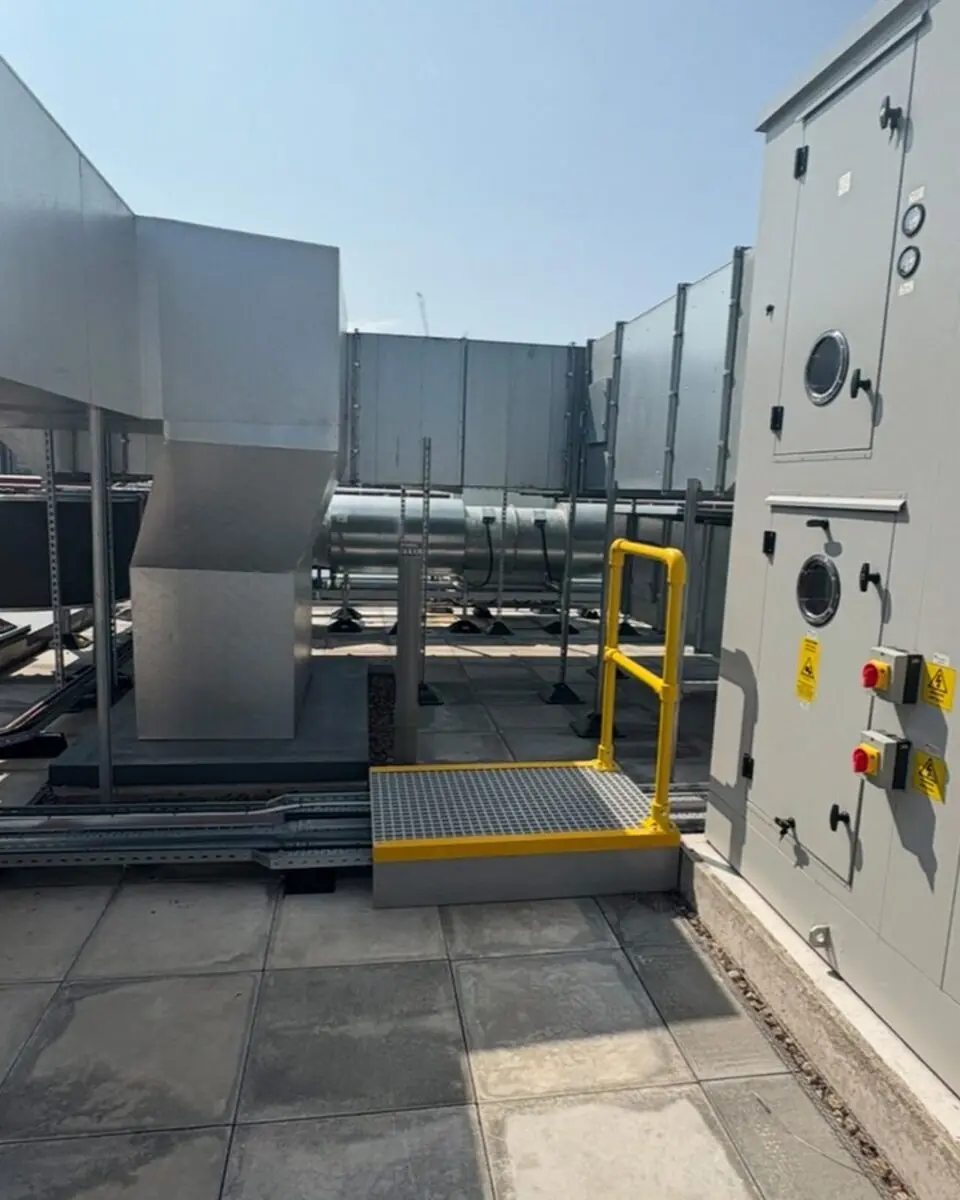
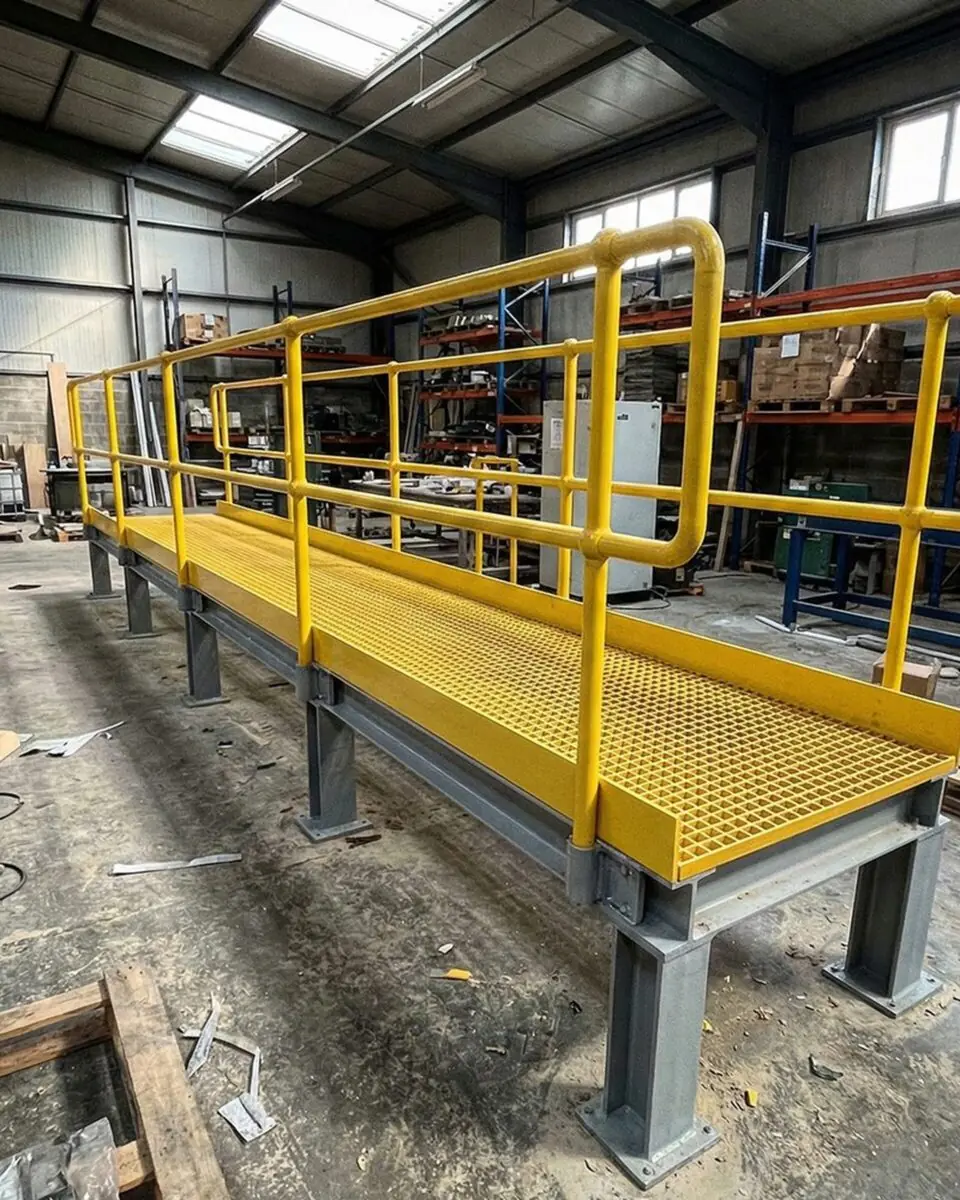
Why the whole package sits with one team.
One team owns the survey, the fabrication and the fit, with the documentation your audit will ask for.
About UIS-
01
One team owns the whole package
The suppliers that dominate this market sell you GRP tube and fittings and stop there, which leaves you to find a fitter, coordinate the cut-and-fix on site, and own any gap between the off-the-shelf parts and the building you actually have. We work the other way. We supply the GRP, specify the profiles and fixings for your environment, cut and assemble the system to fit, and install it with our own teams under one point of contact and no subcontractors. Our own teams do not mould the GRP; we specify it, fabricate it to fit, and install it, which is where the single-source accountability you are buying actually lives.
-
02
Specified against the load class, not a datasheet
We start from the BS 6180 or BS EN ISO 14122-3 load class for the area, then set the post centres, the fixing detail and the deflection limit to suit it, because a GRP rail is only as strong as the way it is posted and fixed. The profile grade alone does not prove the assembled rail.
-
03
Installed on live, occupied sites with no hot works
Our teams bolt the system together with mechanical fixings rather than welded joints, so the whole installation proceeds without a hot works permit and without the fire risk and fume that welding brings onto a working site. They install on operational facilities as standard, including night shifts where the site cannot stop trading or running, and every installation is covered by method statements and risk assessments. That means edge protection can usually go in around live plant or a trading floor without a shutdown, and without a welding torch anywhere near your apparatus.
-
04
An accreditation pack that lifts into your pre-qualification
For a main contractor the credentials matter as much as the rail. We fabricate to BS EN 1090 Execution Class 2 with UKCA marking, run a certified ISO 9001 quality system, and hold CHAS Elite, Alcumus SafeContractor and ConstructionLine Gold, the top-tier government-backed pre-qualification level. Every operative carries a CSCS card, an SSSTS-qualified supervisor runs every project, and site teams are PASMA and IPAF certified. We publish GBP 10m public liability and GBP 10m employers' liability because your procurement team needs the figures for the submission, not because they look impressive on a banner.

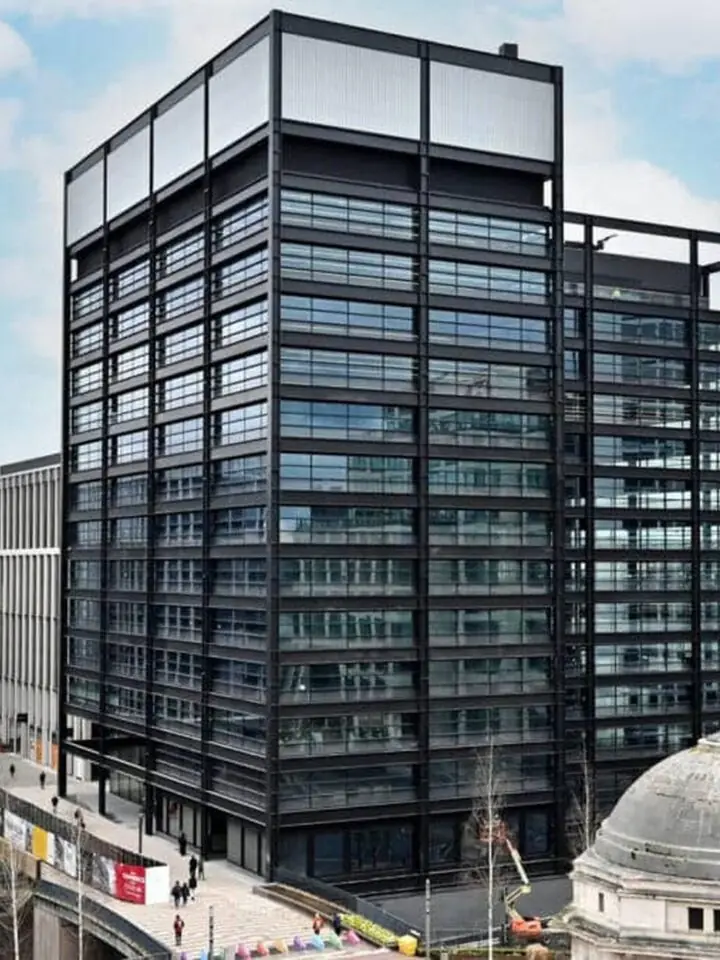
"I've worked with UIS for several years on some high profile and very complex projects. Their attitude and work ethic are second to none - providing high quality services and products which are delivered safely and on time every time. Overall they are a pleasure to do business with and wouldn't hesitate recommending UIS for any steelwork or metalwork packages."
Handrail questions.
GRP resists corrosion and chemical attack, carries no current, and is far lighter than steel, so it is the right handrail material in chemical and water treatment plants, on rooftop plant decks, in coastal exposure, and near live electrical apparatus where an earthed metal rail is a hazard. Outside those environments, steel is usually the better answer, and we will tell you so.
Yes. The loadings are set by your structural engineer, and we design and fabricate the system to meet them, referencing BS 6180 where the handrail also acts as a guarding barrier and BS 4592 for industrial GRP. The system is engineered to the specified loadings rather than bought to a generic catalogue rating.
Yes. GRP handrail bolts together with mechanical fixings, so there is no welding and no hot works permit, and our teams work on operational facilities as standard, including night shifts where the site cannot stop. Every installation runs under method statements and risk assessments by CSCS, SSSTS and PASMA carded teams.
We supply, specify, fabricate to fit and install as one team, with a single point of contact and no subcontractors. We do not mould the GRP ourselves; we specify the correct pultruded and moulded profiles and fixings, fabricate the system from them, and install it.
You receive the operation and maintenance pack, which includes the BS EN 16165 pendulum slip-resistance values and the fire classification for the GRP grade specified on your project. The work also carries a 12 month defect liability period in line with standard JCT terms (unless your contract sets different terms).
Under Approved Document K and BS EN ISO 14122-3, at least 1,100 mm above the walking surface on platforms and walkways, and 900 mm above the pitch line on stairs and ramps. The 1,100 mm height is also where the horizontal line load is applied in the design check.
It depends on the load class and the profile. For the 0.74 kN/m class used on most industrial walkways and platforms, post centres of around 1,000 mm are common; lighter classes may allow 1,200 to 1,250 mm, and heavier ones need closer posts.
Yes. We survey the existing structure, check what the posts can fix into, and fabricate and install the top rail, knee rail and toe board to suit, including gates and removable sections where access is needed.