GRP Safety Barriers
A GRP safety barrier is fixed, non-conductive guarding that keeps people back from a drop, a hazard or live equipment. At UIS, we design, fabricate and install GRP barriers for industrial and commercial sites across the UK.
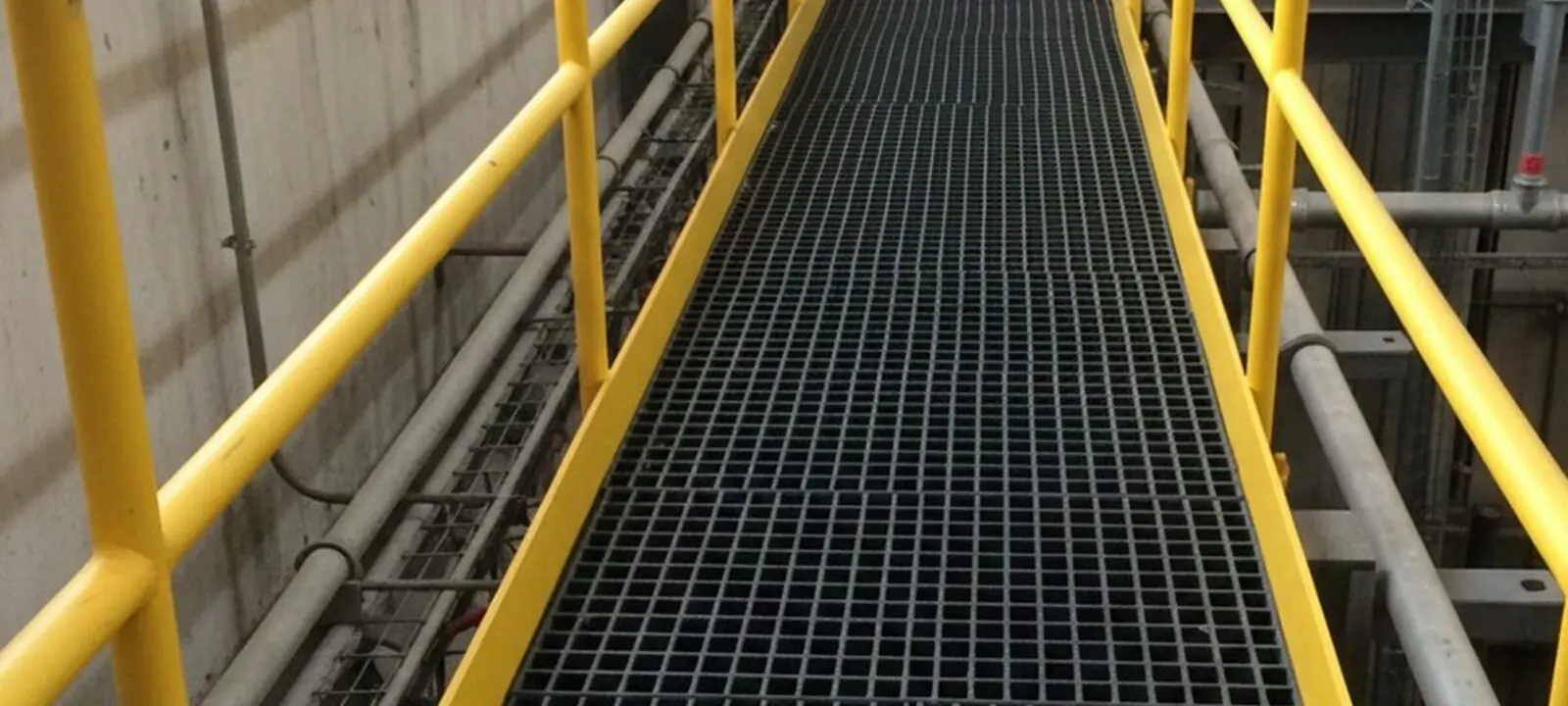


Barriers for corrosive and live areas.
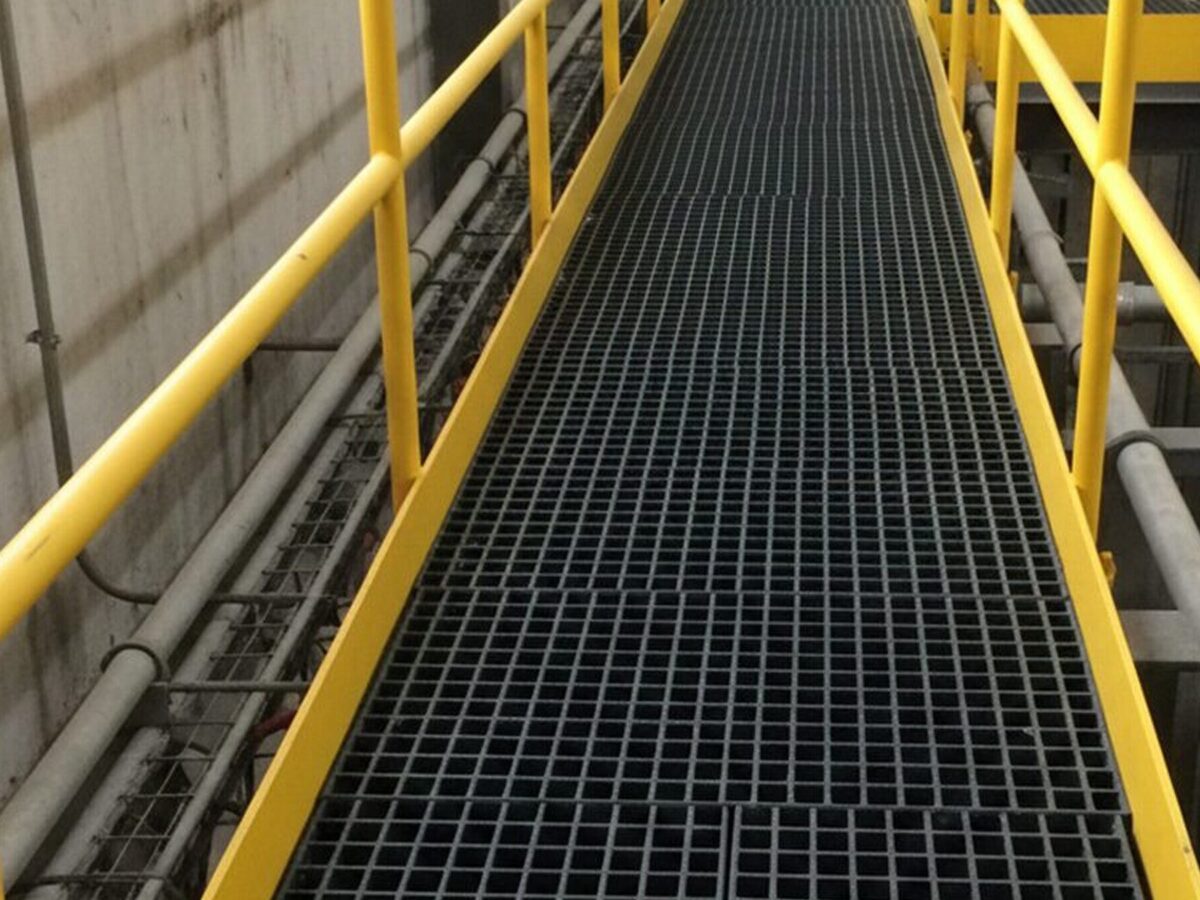
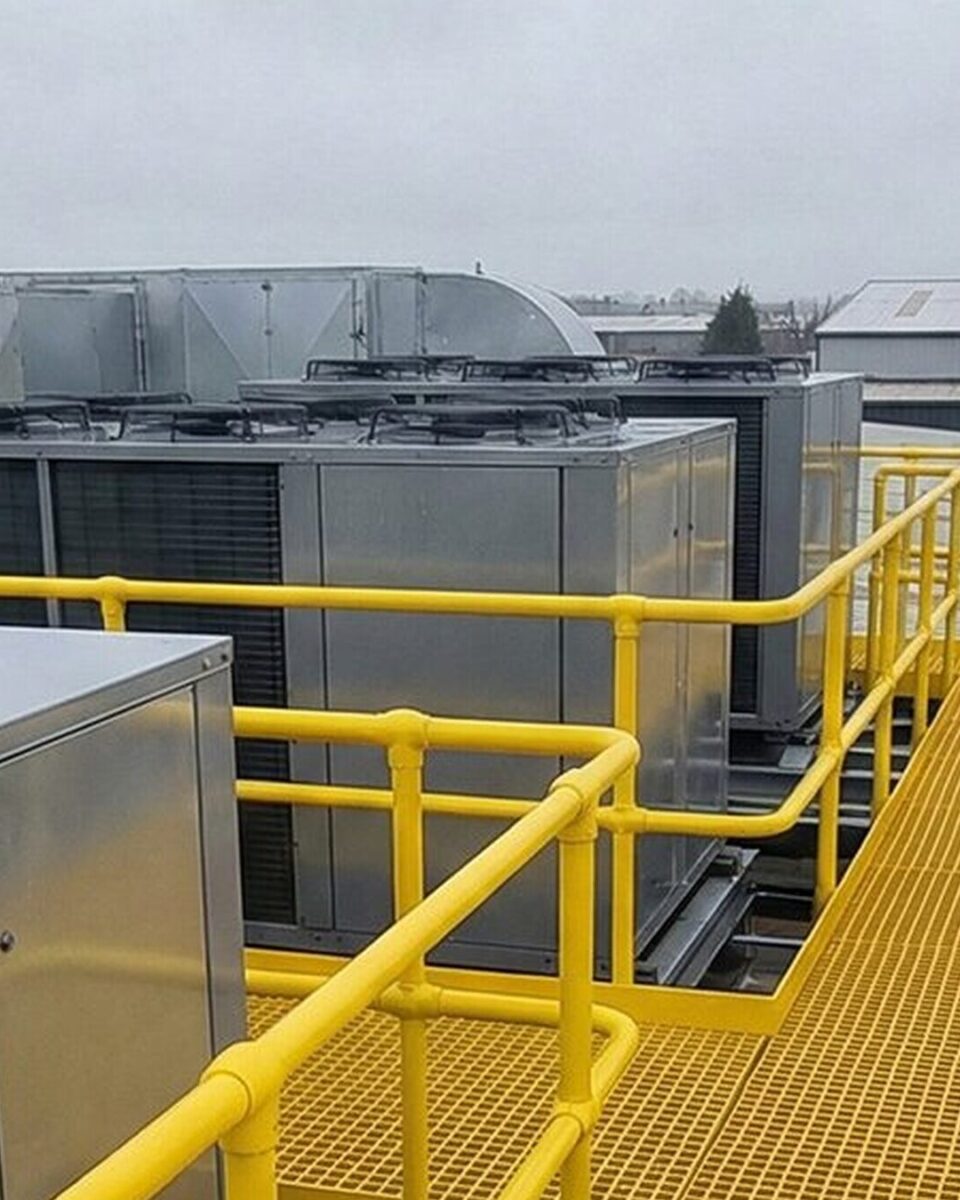
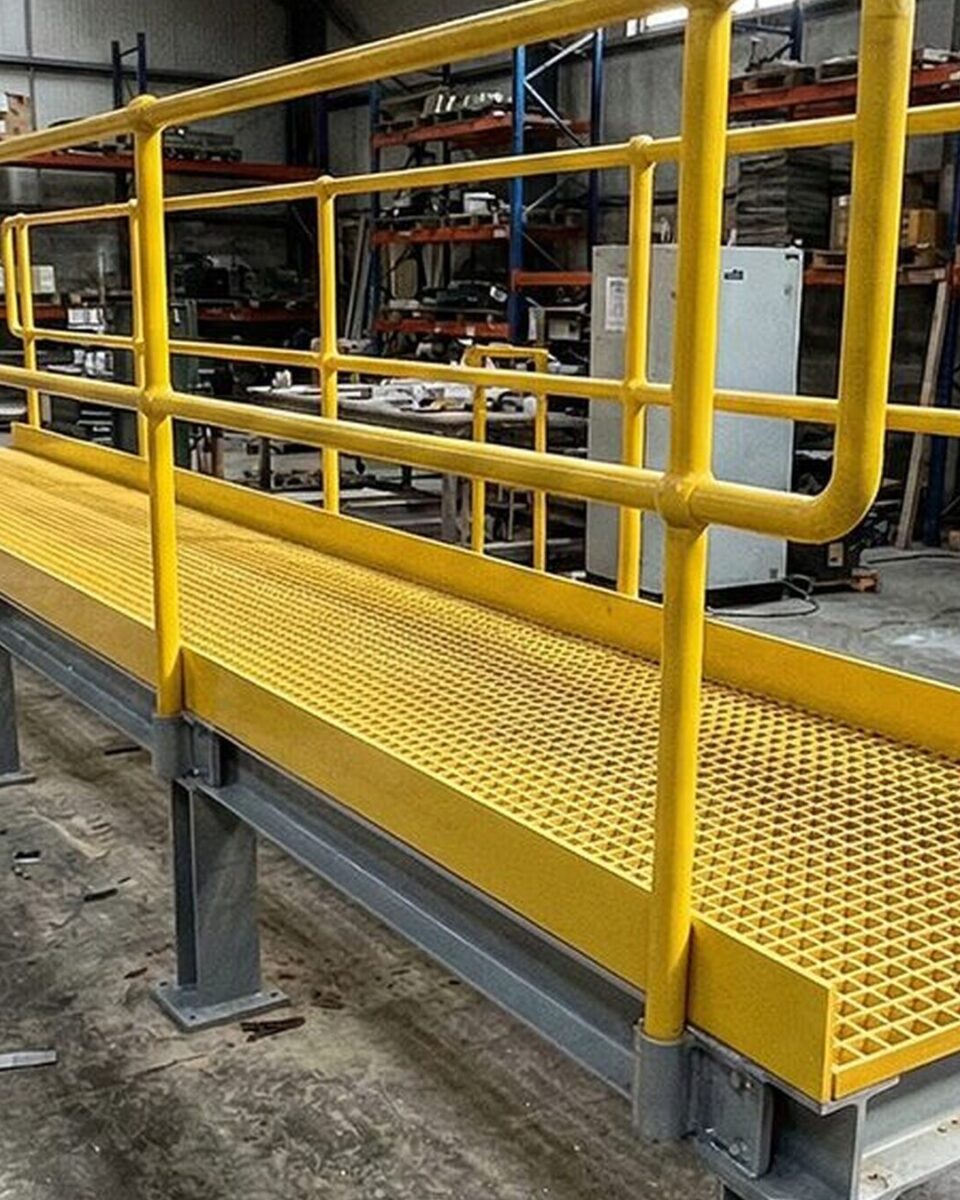
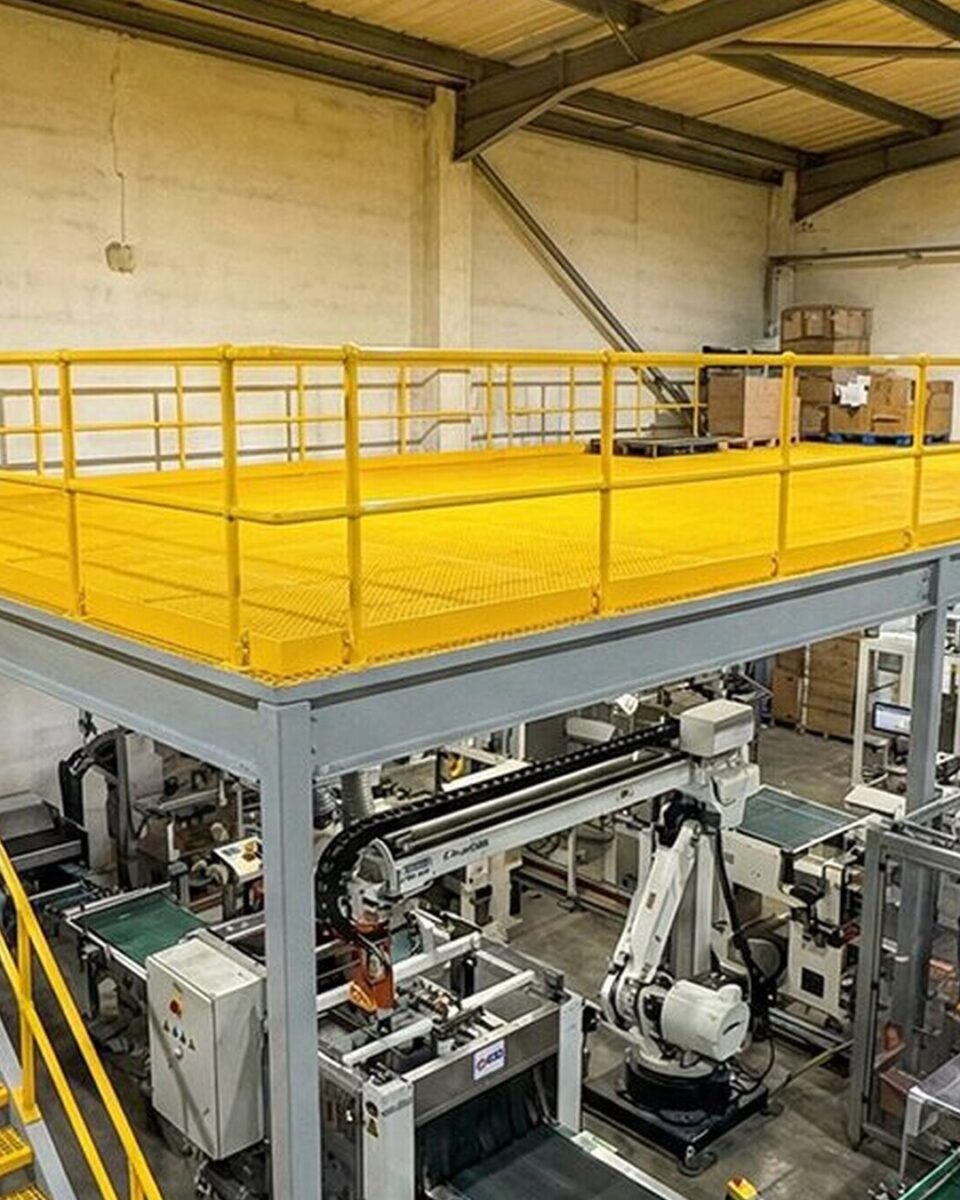
A GRP safety barrier is fixed guarding in glass-reinforced plastic that keeps people back from a drop, a hazard or live equipment. It is built from the same pultruded rails, posts and fittings as a handrail system, often with mesh or panel infill and gates, and it suits chemical, wash-down, coastal and electrical areas where a steel barrier corrodes or conducts.
Replacing a corroded steel barrier that has failed an audit, or specifying non-conductive guarding for a live electrical area? You are choosing a firm to design and fit a compliant system, not a pallet of parts to assemble yourself.
-
Designed around the area
We design the barrier around how the area is used: the load class, the height, the infill and where people need to get through.
-
Installation-led
We are an installation-led steel fabricator, so the barrier is designed by the people who will fix it.
-
Survey to final fixing
We deliver the whole barrier in-house, from the survey to the final fixing, with one company answerable for it.
The checks a GRP barrier has to pass.
A barrier is designed around how the area is used. These are the checks it is designed against, and the choices that follow.
- Height
- At least 1,100 mm at the edge of platforms and walkways, and 900 mm on stairs and ramps (Approved Document K)
- Line load
- The horizontal load along the top rail, set by the area of use under BS 6180: from 0.22 kN/m for light access stairs and gangways up to 3.0 kN/m for crowded spaces
- Infill loads
- A distributed load and a separate point load on the infill, each checked on its own, never added to the line load
- Openings
- Where children under five may use the area (Approved Document K), infill openings must not pass a 100 mm sphere
- Deflection
- Deflection no more than 25 mm at any point under BS 6180, with infill panels checked to L/65 or 25 mm
- Fixings
- Proven for what the posts fix into: a slab, a deck, a kerb or steelwork
Types of GRP barrier
- Edge protection along drops, pits, bunds and tank tops
- Segregation and guarding around switchgear, transformers and live plant
- Mesh-panel guarding where tools or debris have to be kept back
- Removable sections and self-closing gates where maintenance needs access
- Guarding in chemical, wash-down and coastal areas where steel would corrode
Vehicle impact is a separate case. Where a barrier has to stop a vehicle rather than a person, we would normally design it in steel.
Where it is used
What decides the price
We price barriers on the run. The main drivers are:
- the length and height
- the load class
- the infill type
- gates and removable sections
- the fixing substrate
- the access on site
From site survey to fixed barrier.
We design the barrier to your loadings, fabricate it, and install it while your site keeps running.
Site survey and material assessment
We visit your site and look at where the corrosion, electrical or impact risk is actually coming from, then give you a straight recommendation on whether GRP or steel is the right barrier for the environment. For a retrofit into existing plant we carry out a geometrical survey, and where access is tight we 3D-scan the area and overlay the design onto the scan, so the barrier matches the plant you have rather than the plant the old drawings show. Our surveyor comes to you from our Rotherham base near the M18, and you deal with one point of contact from the survey on.
Design, specification and quotation
We design the barrier system to your engineer's specified loading, work it to BS 6180 and the relevant HSE edge-protection guidance, and specify the GRP profiles, access gates, removable sections and floor or wall fixings your layout needs. Your quotation is detailed and itemised, and because we deliver the whole package in-house there are no surprise costs from a separate supplier or a coordination failure. Quotations on major commercial packages follow within 1 to 2 weeks, because a proper take-off against your drawings deserves more than a guess.
Cutting, fabrication and assembly
We specify and supply the pultruded and moulded GRP sections rather than moulding them ourselves, then our own teams cut and assemble them into your finished bespoke barrier system, ready to bolt together on site. Everything is fabricated to your approved drawings, so the system arrives matched to the survey.
Installation by our own teams
Our own carded teams install the barrier under full method statements and risk assessments, bolted together with no hot works so a live or occupied site keeps running. Night-shift and out-of-hours working is available where your operation cannot stop, as we delivered at Oban, and any lifts are planned by our in-house Appointed Person.
Handover, documentation and aftercare
At handover you receive the compliance pack with the project O&M, including the BS EN 16165 pendulum slip-resistance values and the fire classification issued for the GRP grade specified on your project. A 12 month defect liability period runs from practical completion in line with standard JCT terms (unless your contract sets different terms), and if something is not right in that first year we come back and sort it. Aftercare support stays available after that.
The three places GRP outlasts steel.
GRP earns its place in three settings: chemical, wash-down and coastal areas, where galvanised steel rusts out and needs recoating on a schedule nobody has time for; near live electrical risk, where a non-conductive barrier is a safety requirement steel cannot meet; and weight-constrained access, where a lightweight GRP barrier goes in without craneage. Outside those three settings, steel is usually the better answer.
Request a quote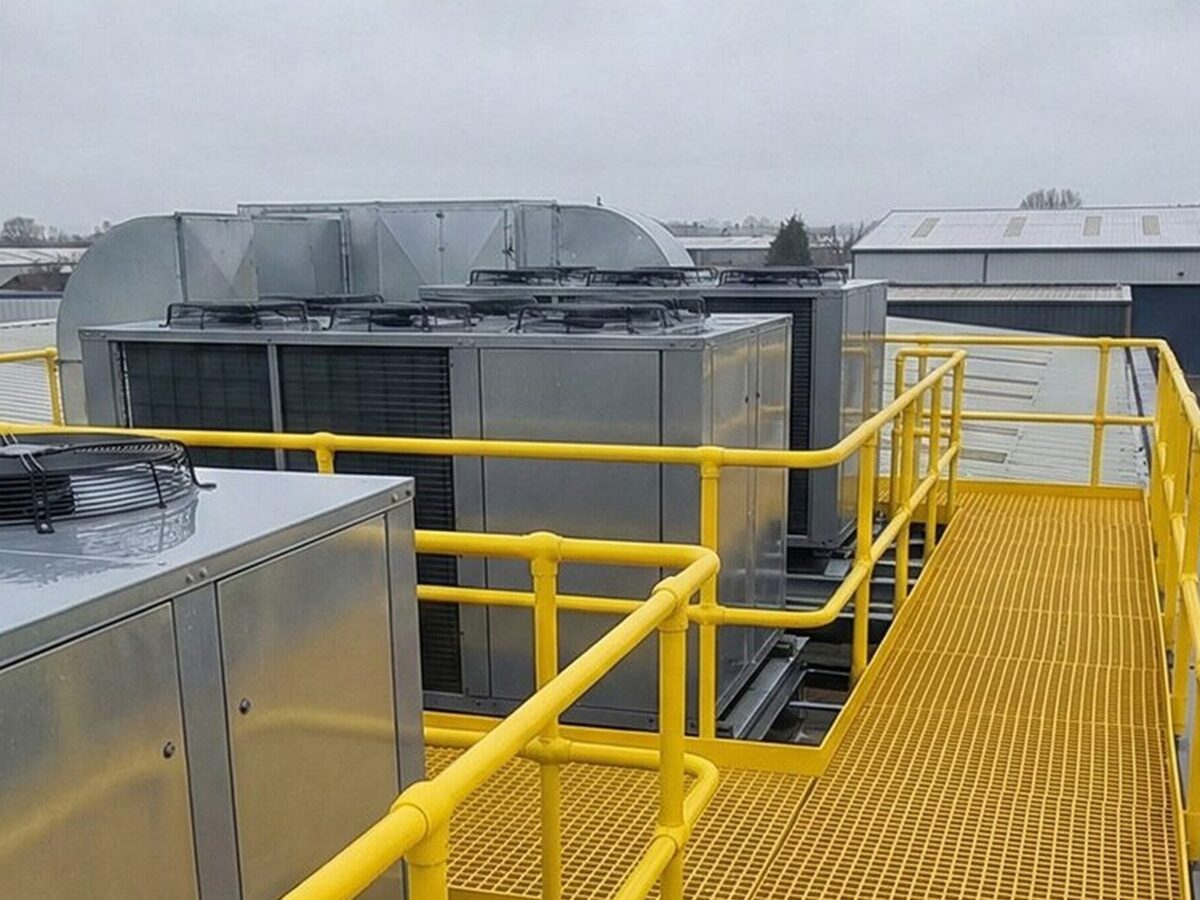
Barrier systems.
← Drag / swipe to browse · click to expand →
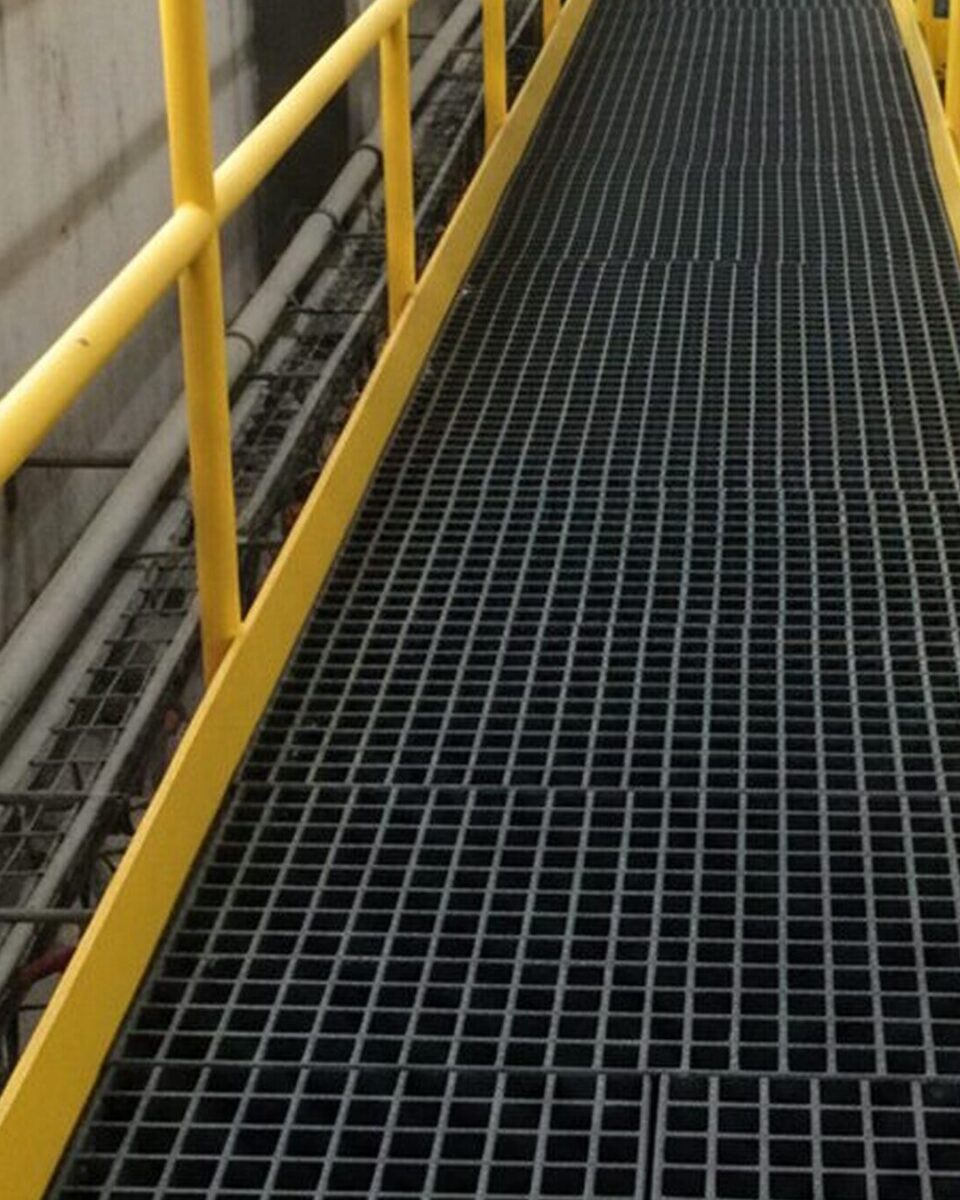
What you get from one accountable team.
One team owns the barrier from drawing to fixing, installed without hot works.
About UIS-
01
One team owns the whole barrier, from drawing to fixing
A flat-packed barrier kit leaves you to assemble it, or to find a separate gang who will, and to referee the two if a post does not line up with your floor fixings. Our single-source delivery removes that gap. We design the barrier, specify the correct profiles, gates and fixings, fabricate the system, and install it with our own teams. We give you one point of contact who owns fitment, safety and programme, so there is no parts-supplier blaming the fitter when something does not fit.
-
02
Barrier runs measured to the site, not a catalogue length
We survey the run, the fixing substrate and the openings, then cut and assemble the posts, rails and kick plates in our Rotherham workshop to suit them, so the barrier fits the floor, plinth or kerb it fixes to and needs little cutting on site.
-
03
Designed and fabricated to the loading your engineer specifies
We design and fabricate the system to the barrier loading your structural engineer specifies, worked to BS 6180 for barriers and the HSE edge-protection framework under the Work at Height Regulations 2005. We do not invent that loading, and we do not publish a generic load rating, because the figure that matters is the one specified for your guarding or impact-protection job, not a number lifted from a catalogue.
-
04
Installed without hot works, while your site keeps running
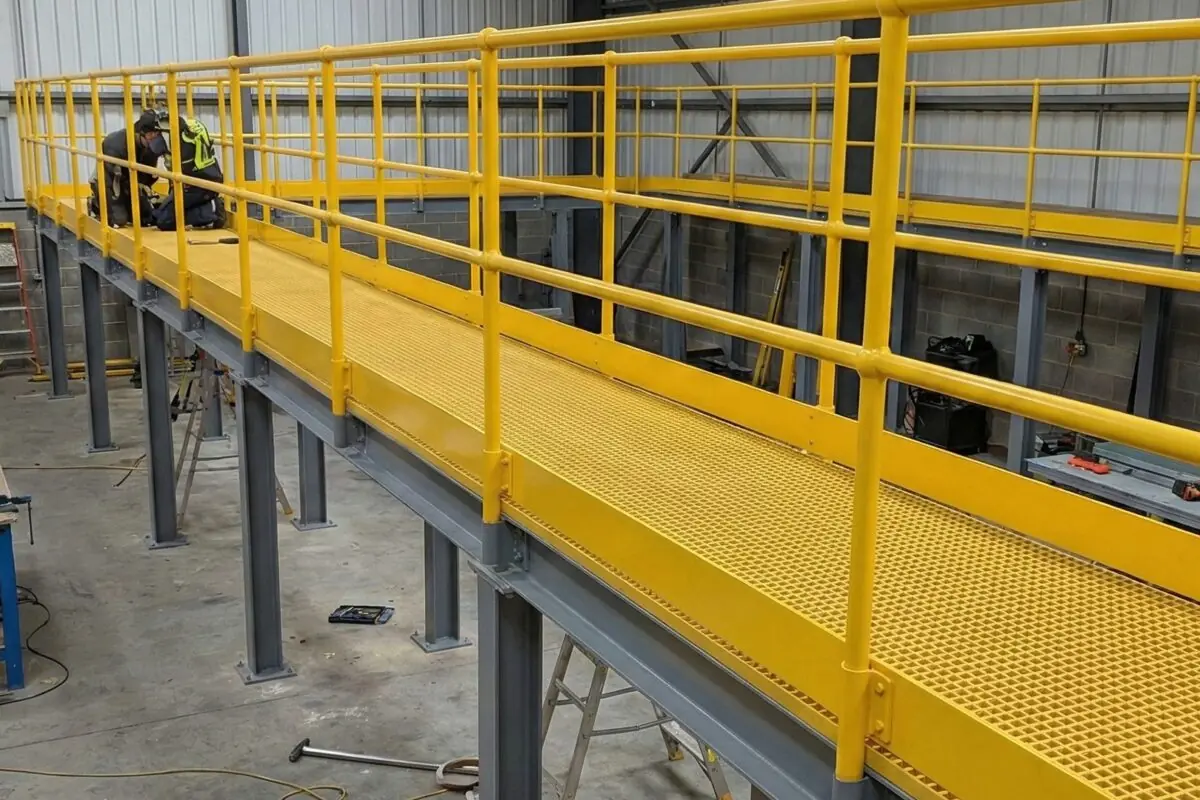
A bolted GRP barrier needs no welding on site, so it goes into a live, occupied or partly energised area without a hot-work permit and without shutting you down. Our site teams hold CSCS, SSSTS, PASMA and IPAF, work to full method statements and risk assessments, and where a lift is needed it is planned by our in-house Appointed Person. Our teams installed plant-deck steelwork inside a working supermarket at Oban in Scotland on night shifts, so sequencing barrier work around a live operation is familiar ground.

"I've worked with UIS for several years on some high profile and very complex projects. Their attitude and work ethic are second to none - providing high quality services and products which are delivered safely and on time every time. Overall they are a pleasure to do business with and wouldn't hesitate recommending UIS for any steelwork or metalwork packages."

Barrier questions.
We design, supply, specify and install the complete system. We are not a supply-only kit vendor: one team produces the drawings, fabricates the barrier, and installs it with our own CSCS-carded operatives, so you have one point of contact and no separate parts supplier or labour gang to coordinate.
GRP earns its place in three settings: chemical, wash-down and coastal areas where galvanised steel corrodes; near live electrical risk where a non-conductive barrier is required; and weight-constrained access where a lighter barrier removes craneage. Outside those, steel is usually the better answer, and we will tell you so.
Yes, when it is designed to the right loading. Your structural engineer specifies the barrier loading, and we design and fabricate the system to meet it, worked to BS 6180. We do not publish a generic load figure, because the loading that matters is the one specified for your application.
Yes. Because every barrier is designed bespoke to your site, we specify and install access gates, removable sections, secure base flanges and the corner configurations your layout needs, rather than fitting a fixed catalogue part.
Yes. A bolted GRP barrier needs no site welding, so it goes in without a hot-work permit. Our teams hold CSCS, SSSTS, PASMA and IPAF, work to full method statements and risk assessments, and we have installed on live sites including a working supermarket at Oban on night shifts.
A handrail is the top rail people hold and lean on; a barrier is the whole guarding assembly that stops people reaching a drop or a hazard, often with mesh or panel infill. BS 6180 covers both, and the line, infill and point load checks apply to the barrier as a whole.
Approved Document K gives at least 1,100 mm at the edge of platforms and walkways, and 900 mm on stairs and ramps, measured from the standing surface or the pitch line. Where children under five may use the area (Approved Document K), infill openings must not pass a 100 mm sphere.
Yes. Non-conductive GRP guarding is used around switchgear, transformers and live plant because it will not carry current. In a hazardous area with a flammable atmosphere, standard GRP is not the answer, because it can hold a static charge: an anti-static grade is needed, earthed to the site's hazardous-area assessment.