GRP Palisade Fencing
GRP palisade fencing is a non-conductive, corrosion-free perimeter fence of glass-reinforced plastic pales, rails and posts. At UIS, we survey, supply and install GRP palisade lines and gates across the UK.
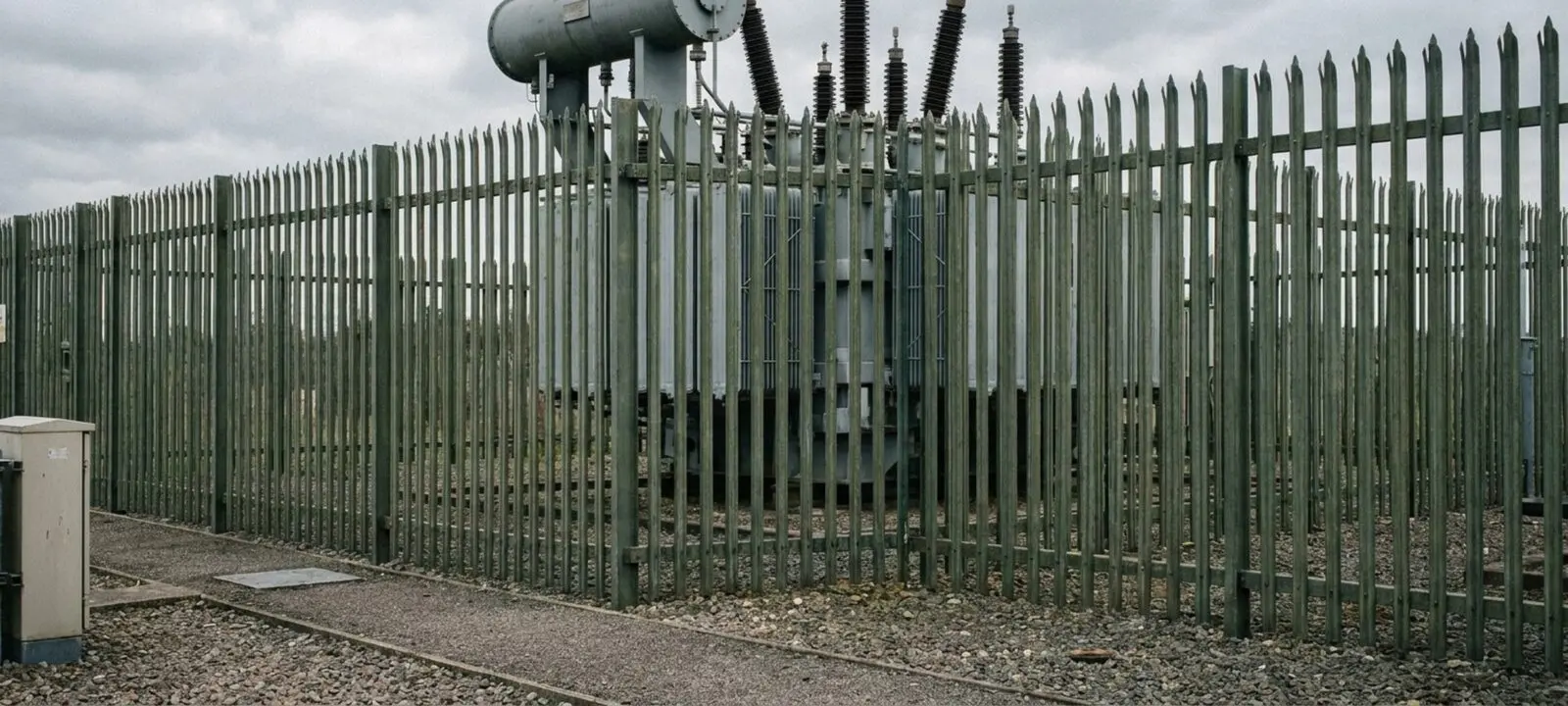


Perimeters that will not corrode.
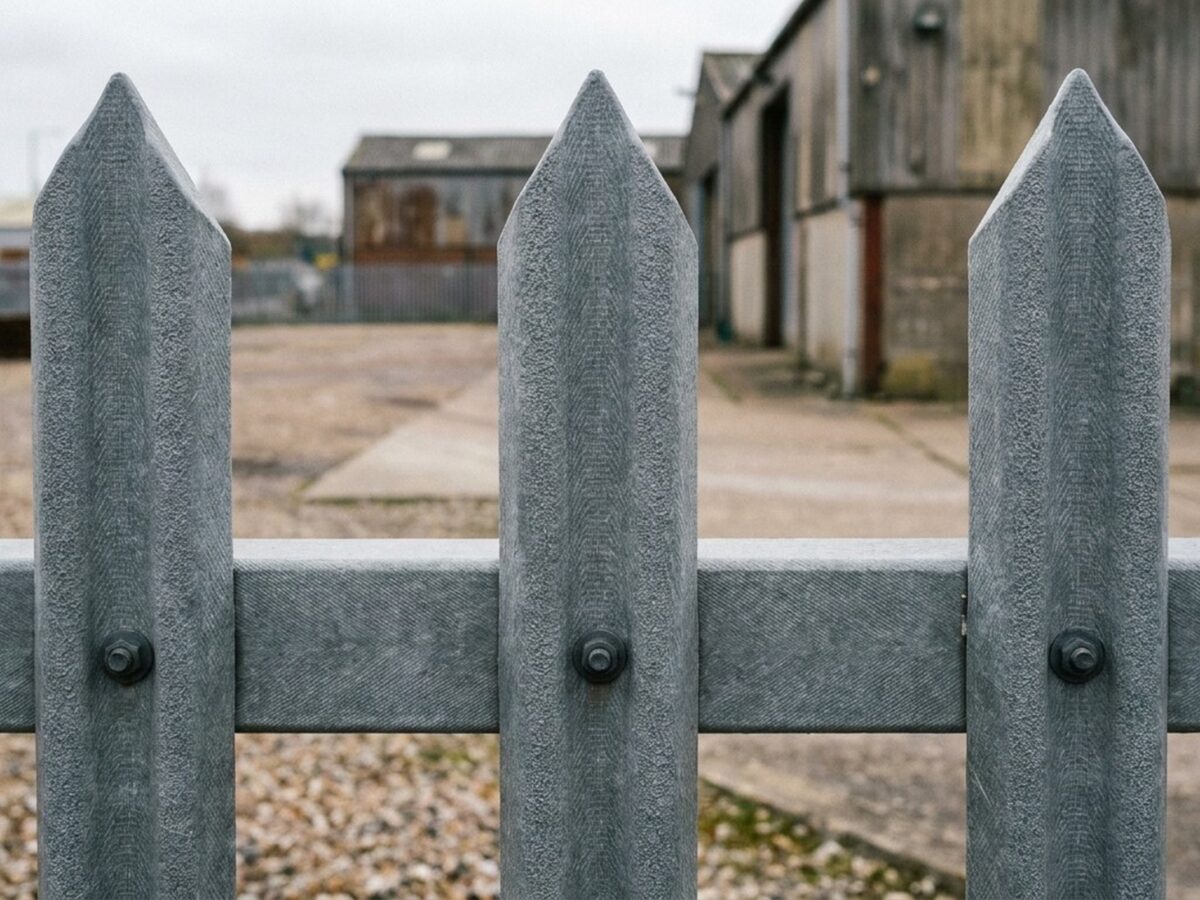
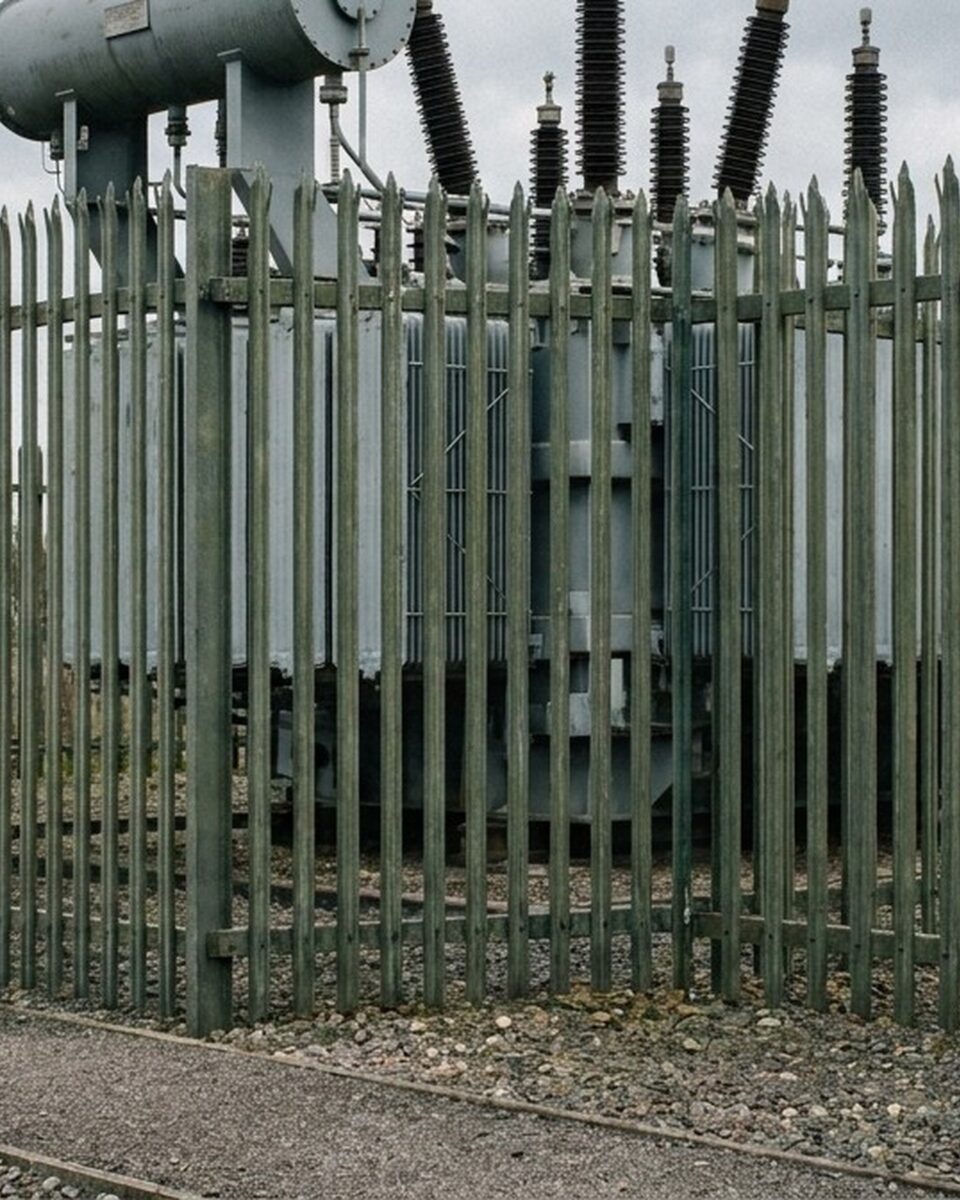
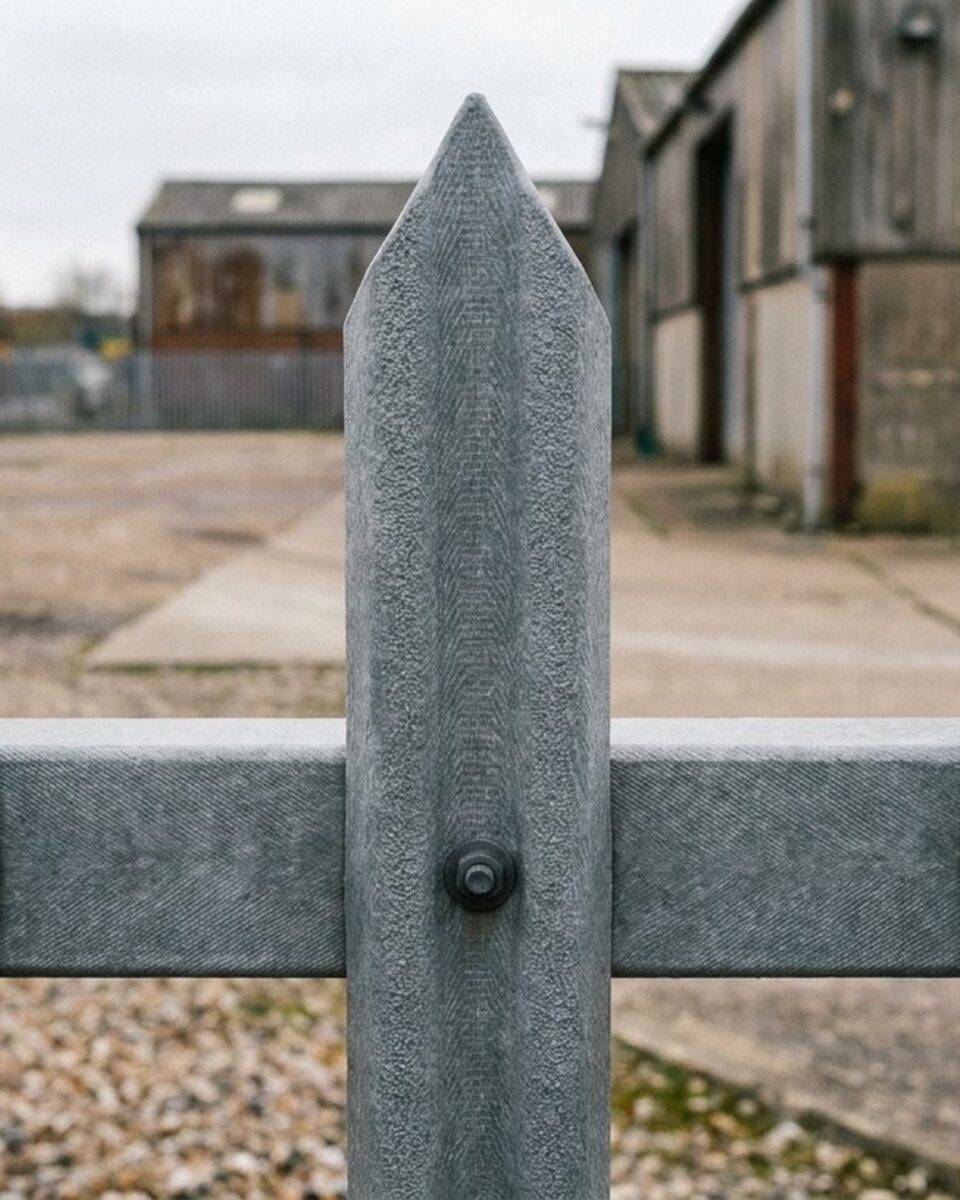
GRP palisade fencing is a perimeter fence of glass-reinforced plastic pales on GRP rails and posts, with matching single and double gates. It does the job of steel palisade around substations, water and treatment works, rail and coastal sites, but it does not conduct, does not corrode and has no scrap value, and it can be cut on site without hot works.
Specifying a non-conductive or corrosion-proof perimeter? You have probably found GRP palisade sold by the metre, with an add-to-basket button and nobody to fit it. We work the other way round.
-
Surveyed and specified
We survey the boundary and specify the profiles, posts and fixings for the ground and the site.
-
Made to fit the line
We supply and cut the GRP line to fit, and fabricate any bespoke steel mountings in-house.
-
One firm to sign-off
Our own teams install it, so a late delivery or a careless install never becomes two suppliers blaming each other across your programme.
GRP palisade specification at a glance.
Height, pales, posts, gates and ground: what a GRP perimeter is specified on.
- Height
- Common heights from 1.8 m to 3.0 m
- Decided by: The security need and the site's risk assessment
- Pales and rails
- GRP pales with pointed or rounded heads, on two or three rails
- Decided by: The security level and the look
- Posts
- GRP posts concreted in, or base-plated onto a slab or plinth
- Decided by: Ground conditions and what is below ground
- Gates
- Single and double-leaf GRP gates with self-closing or locking hardware
- Decided by: Pedestrian and vehicle access routes
- Ground
- Stepped or raked along slopes
- Decided by: The fall of the ground and the gap allowed under the fence
- Colour
- Typically green or grey
- Decided by: Planning and site preference
Where GRP fencing is used
- substations, switching stations and electrical compounds, where a non-conductive fence does not need bonding into the earthing system
- rail depots, stations and landside boundaries
- water and wastewater treatment works
- coastal and chemical sites, where steel palisade rusts out
Metal palisade has scrap value; GRP has none, which takes away one reason to cut it out.
Where it is used
- GRP for Substations and Power SitesNon-conductive GRP platforms, ladders, handrails and palisade fencing around live equipment.
- GRP for Rail SitesGRP depot walkways, station stairs and treads, and fencing that does not conduct near traction power.
- GRP for Housing and Local AuthoritiesGRP anti-slip stair treads, flat-roof walkways and riser flooring for housing blocks and public buildings.
- GRP for Main ContractorsAll the GRP on a project, from riser flooring to roof walkways, detailed, made and installed by one subcontractor.
What decides the price
Fencing is priced on the line. The main drivers are:
- the length and height
- the pale and rail specification
- the post fixing
- gates
- the ground conditions
- the access
From site survey to installed line.
We survey the perimeter, fabricate the line to suit it, and install it with our own teams.
Site survey and specification
We visit the boundary and, on complex or retrofit sites, carry out a 3D scan and overlay the proposed line in CAD, then specify the correct GRP profiles, pale arrangement, and fixings for your security and environmental requirement. On commercial packages, a full quotation against your drawings follows within 1 to 2 weeks.
Design and bespoke fabrication
We design the run, supply and cut the GRP line to fit, and fabricate the steel base plates and any bespoke steel mountings in-house. Where standard dig-in posts or base plates will not suit the ground, our coded welders fabricate bespoke steel base plates to your levels, so the line sits correctly on slopes, retaining walls, and uneven terrain.
Installation by our own teams
Our own teams install the perimeter to programme, working around live operations where the site cannot stop, with full method statements and risk assessments and an SSSTS supervisor on site. We have installed plant-deck steelwork on night shifts inside a live supermarket at Oban without closing the store, and the same discipline applies to a live substation, depot, or treatment works.
Handover and documentation
At practical completion we hand over the perimeter with its O&M pack, including the fire classification documentation issued for that specific project, so the specification is auditable from day one. Your quotation is itemised, so what we quote is what you pay, and if site conditions change we stop and get your approval before any extra work.
Aftercare
We back the work with a 12-month defect liability period from practical completion, in line with standard JCT terms (unless your contract sets different terms). If anything is not right in the first 12 months we come back and put it right, and we stay available for maintenance advice on the line afterwards.
The perimeters where GRP beats steel.
We choose GRP on the perimeters where steel struggles. It does not conduct, so it suits the earthing zones around live electrical and rail; it does not rust, so with a resin chosen for the chemicals present it is a good fit for coastal, water-treatment, and chemical sites where galvanised steel rusts out; and at roughly a fifth of the weight of steel, it installs faster and with less disruption. Where corrosion and conductivity are not the issue, steel is usually the better and more economical answer, and we will tell you so.
Request a quote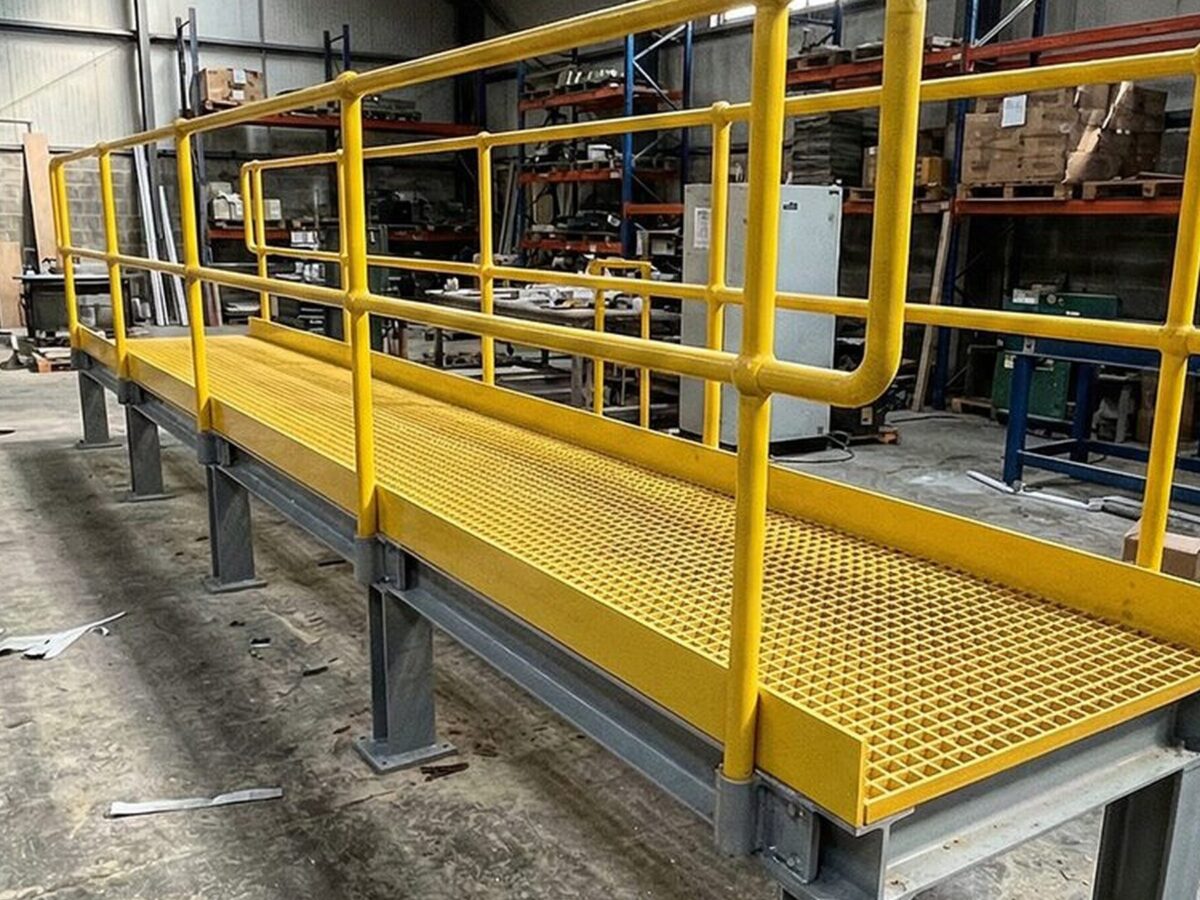
Palisade lines and gates.
← Drag / swipe to browse · click to expand →
Why we own the line, not a merchant plus a gang.
Installers who treat GRP as GRP, with the pre-qualification pack already in place.
About UIS-
01
We own the line ourselves, not a merchant plus a gang
We have seen where split supply-and-fit packages slip: the kit arrives late or a gate short, the labour-only gang stands idle on day rate, and at handover nobody owns the compliance file. We keep the design, supply, and installation of the GRP line, and the fabrication of its steel mountings, under one roof. Your perimeter is one company's responsibility and one point of contact, not a merchant plus a gang you have to coordinate yourself.
-
02
Installers who treat GRP as GRP, not as steel
We cut, drill, and fix the GRP with the right fixings, because a palisade line only stays non-conductive and structurally sound when it is installed correctly, not improvised on site by a gang used to metal. We employ our installation teams directly, CSCS-carded and led by an SSSTS-qualified supervisor on every job, so the people protecting the integrity of the line are our people, accountable to us.
-
03
A perimeter with no scrap value to steal
Metal palisade has resale value as scrap; GRP has none, which takes away one reason to cut it out. It also cuts and adjusts on site with a diamond blade under dust extraction and no hot works, so gates, returns and repairs do not need a permit.
-
04
The pre-qualification pack is already in place
Our fabrication is certified to BS EN 1090 Execution Class 2 with UKCA marking, behind an ISO 9001 quality management system. We hold CHAS Elite, Alcumus SafeContractor, and ConstructionLine Gold, and carry GBP 10m public and GBP 10m employers' liability. We hand that accreditation and insurance documentation straight into your PQQ pack, which a supply-only merchant simply cannot.

"I've worked with UIS for several years on some high profile and very complex projects. Their attitude and work ethic are second to none - providing high quality services and products which are delivered safely and on time every time. Overall they are a pleasure to do business with and wouldn't hesitate recommending UIS for any steelwork or metalwork packages."
Fencing questions.
Both, as one package. We design, specify, supply, and install the perimeter with our own teams, fabricating the steel mountings in-house, so you are not buying a kit from one supplier and finding an installer from another. One firm owns the line from survey to sign-off.
Yes. Access points are part of the same package: we design, fabricate, and install matching steel access gates, and where the perimeter must stay fully non-conductive we supply and fit GRP gates to suit. A secure line is only as strong as its access points, so we do not leave the gate interfaces to a separate subcontractor.
Yes. Our teams hold CSCS, SSSTS, PASMA, and IPAF certification and work to full method statements and risk assessments. We installed plant-deck steelwork on night shifts inside a live supermarket at Oban without closing the store, and the same discipline applies to a live substation, depot, or treatment works.
When the perimeter has to be non-conductive or corrosion-resistant. GRP does not conduct, so it suits the earthing zones around live electrical and rail; it does not rust, so with a resin chosen for the chemicals present it is a good fit for coastal and chemical sites where galvanised steel corrodes; and it is roughly a fifth of the weight of steel, so it installs faster. Where neither is a factor, steel is usually the better and more economical answer.
Your O&M pack. It includes the fire classification documentation issued for your specific project, because that depends on the GRP grade specified rather than a single blanket figure. The pack makes the specification auditable from the day the line is handed over.
We survey and, on complex sites, 3D-scan the boundary, then specify the right mounting for the ground. Where standard dig-in posts or base plates will not suit slopes, retaining walls, or uneven terrain, our coded welders fabricate bespoke steel base plates to your levels so the line sits correctly.
Common heights run from 1.8 m to 3.0 m, with 2.4 m a frequent choice for compounds and utility sites. The height comes from the site's security needs and risk assessment, and the posts, rails and foundations are set to suit it.
Yes. GRP palisade does not conduct, so the fence line does not need bonding into the earthing system the way a metal fence near live equipment does, and it does not corrode. The fence design still follows the site operator's own perimeter and security requirements.