GRP Staircases
Universal Industrial Services designs, supplies, fabricates and installs complete GRP staircases across the UK from its Rotherham base.
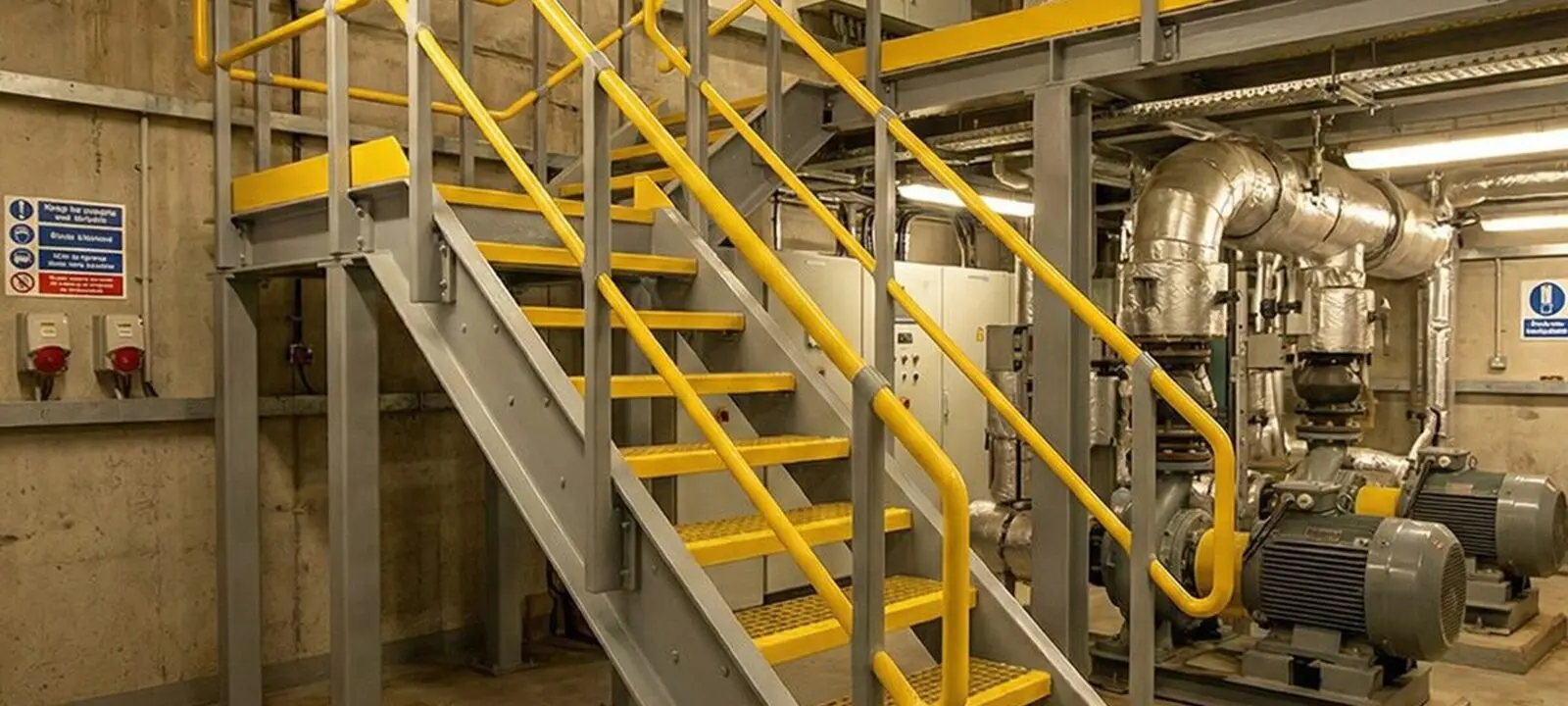


What we deliver.
If a galvanised stair is weeping rust at every weld, a slip test has failed on an external escape stair, or you cannot get a crane onto a live or remote site to lift steel in, GRP is worth putting on the table. On corrosive sites, we put the stair on GRP: it does not corrode in coastal salt or process chemistry, it does not conduct near switchgear, and it weighs roughly a fifth of the steel equivalent. From day one, we own the design, the specification, the fabrication and the installation, so the stringers meet the existing plinth on the day and nobody is left pointing at anybody else. That is the part we built the business around since 1994.
As steel fabricators first, we recommend GRP only where corrosion, weight, electrical risk or restricted access make steel the wrong material.
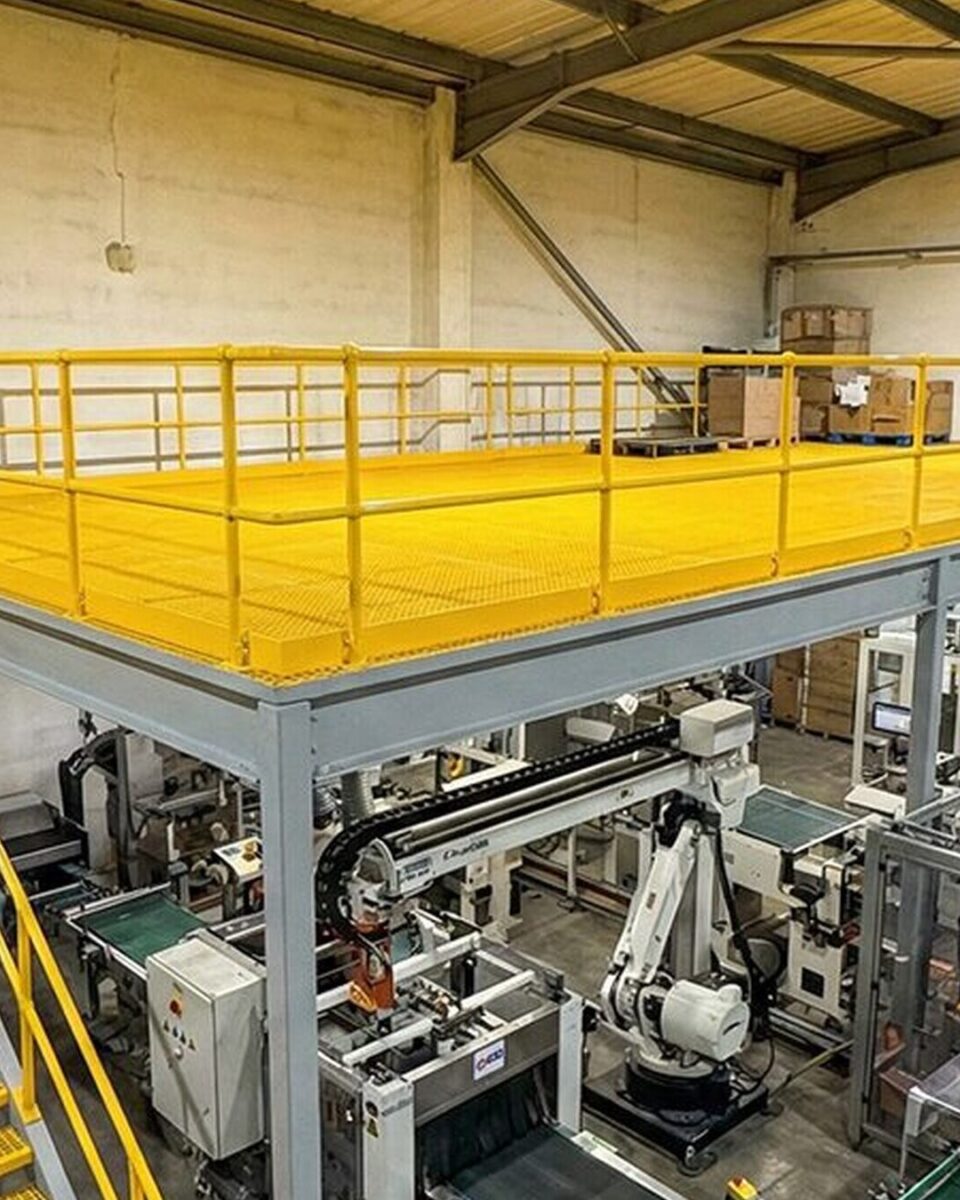
From material steer to installed staircase.
We steer the material choice, then design, fabricate and install the complete staircase.
Consultation and material steer
You tell us the environment, the access and the loadings, and we tell you plainly whether GRP or steel is the right answer for this stair. That advice comes before the quote, not after it.
Site survey and detailed quote
On site, we survey the access and constraints, using a 3D scan and CAD overlay on retrofit work, then quote against your drawings. Quotations on large commercial packages come back within 1 to 2 weeks, itemised, so the number holds when a surveyor sees the slope or the parapet rather than rising once work starts.
Design, detailing and specification
We design the staircase to your structural engineer's loadings, detail it, and specify the correct GRP profiles, treads, nosings and fixings for the environment. Before fabrication, we issue the drawings for your approval.
Fabrication at Rotherham
At our Rotherham workshop, we cut and assemble the pultruded GRP sections into the finished staircase, prefabricated off-site to compress the on-site programme. We supply and specify the GRP; we do not mould it, and we say so.
Installation by our own team
Our own CSCS-carded fitters install the stair, with a SSSTS-qualified supervisor on every job and full method statements. Our teams have installed flooring, handrails and stairs inside a live supermarket at Oban on night shifts, so a stair can go in around your operations, including out of hours where the site cannot stop.
Handover, O&M pack and aftercare
On completion, we hand over the compliance documentation, including the BS EN 16165 pendulum slip values and the fire classification for the grade specified, in the O&M pack. A defect liability period of 12 months runs on all the steelwork, in line with standard JCT terms, and we stay on afterwards as your named aftercare contact.
When the stair belongs on GRP.
We put the stair on GRP where corrosion, electrical risk, weight or restricted access make steel the wrong material: it does not corrode in coastal salt or process chemistry, it does not conduct near switchgear, and it weighs roughly a fifth of the steel equivalent. Outside those conditions, steel is usually the better answer, and because we fabricate both we earn the same either way.
Request a quoteProject & sample images.
← Drag / swipe to browse · click to expand →
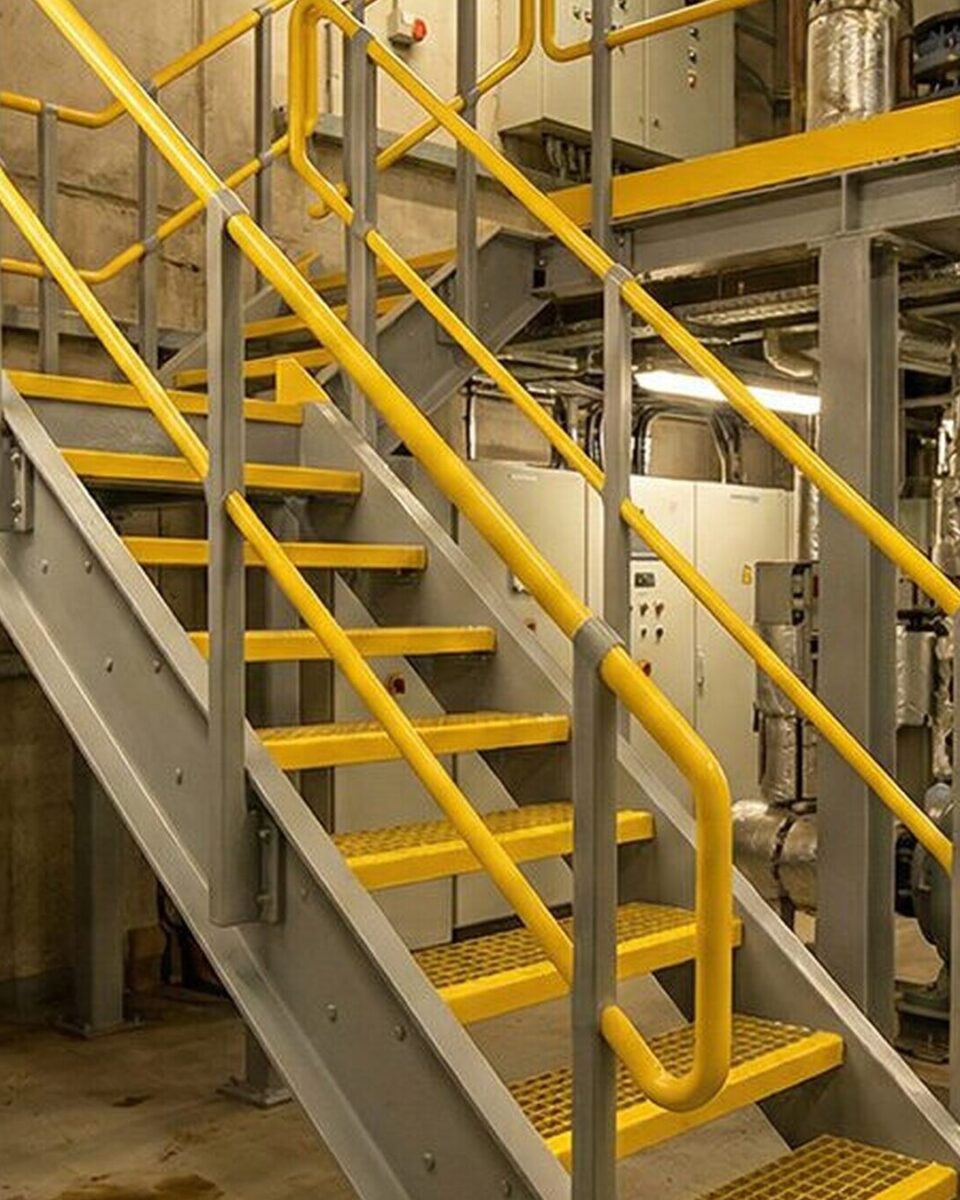
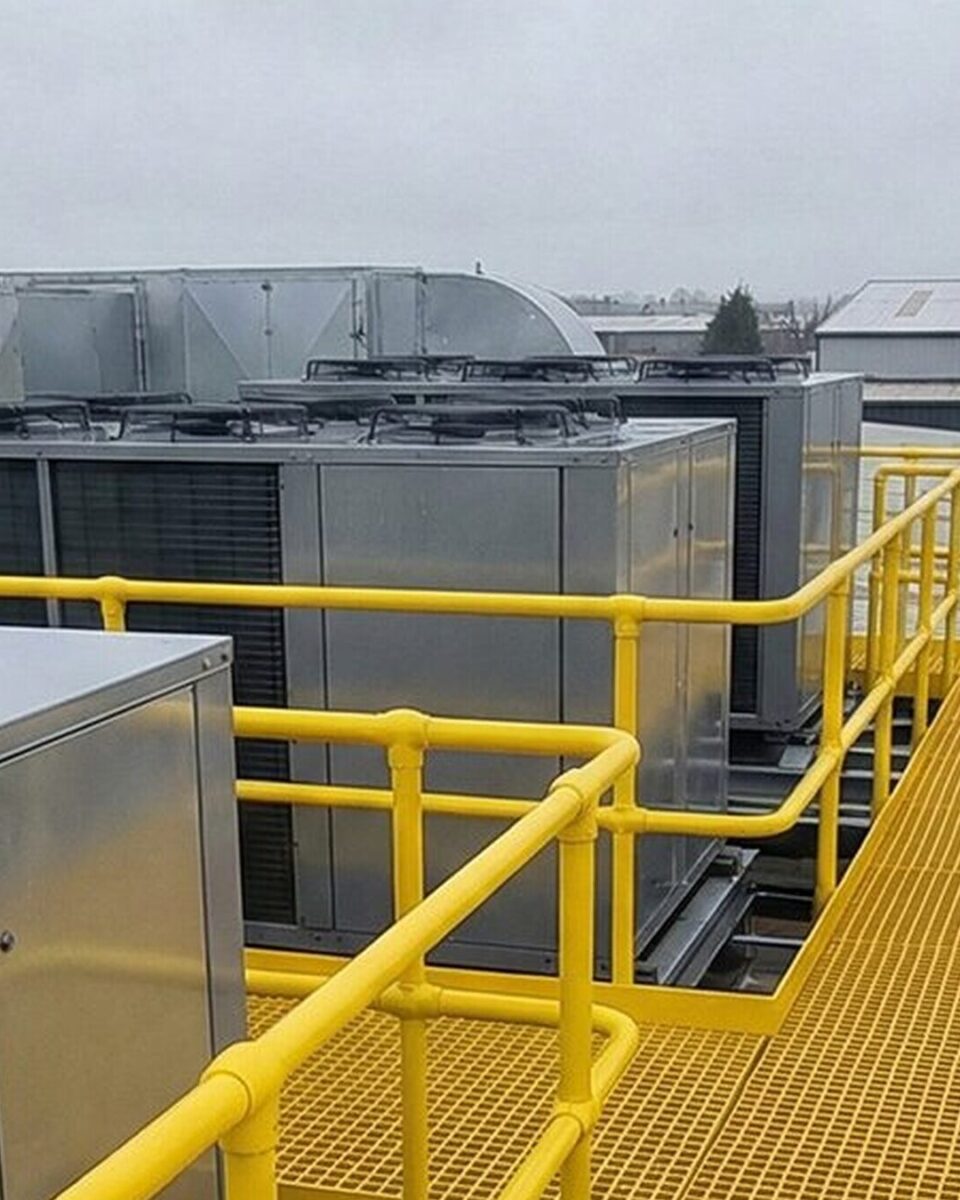
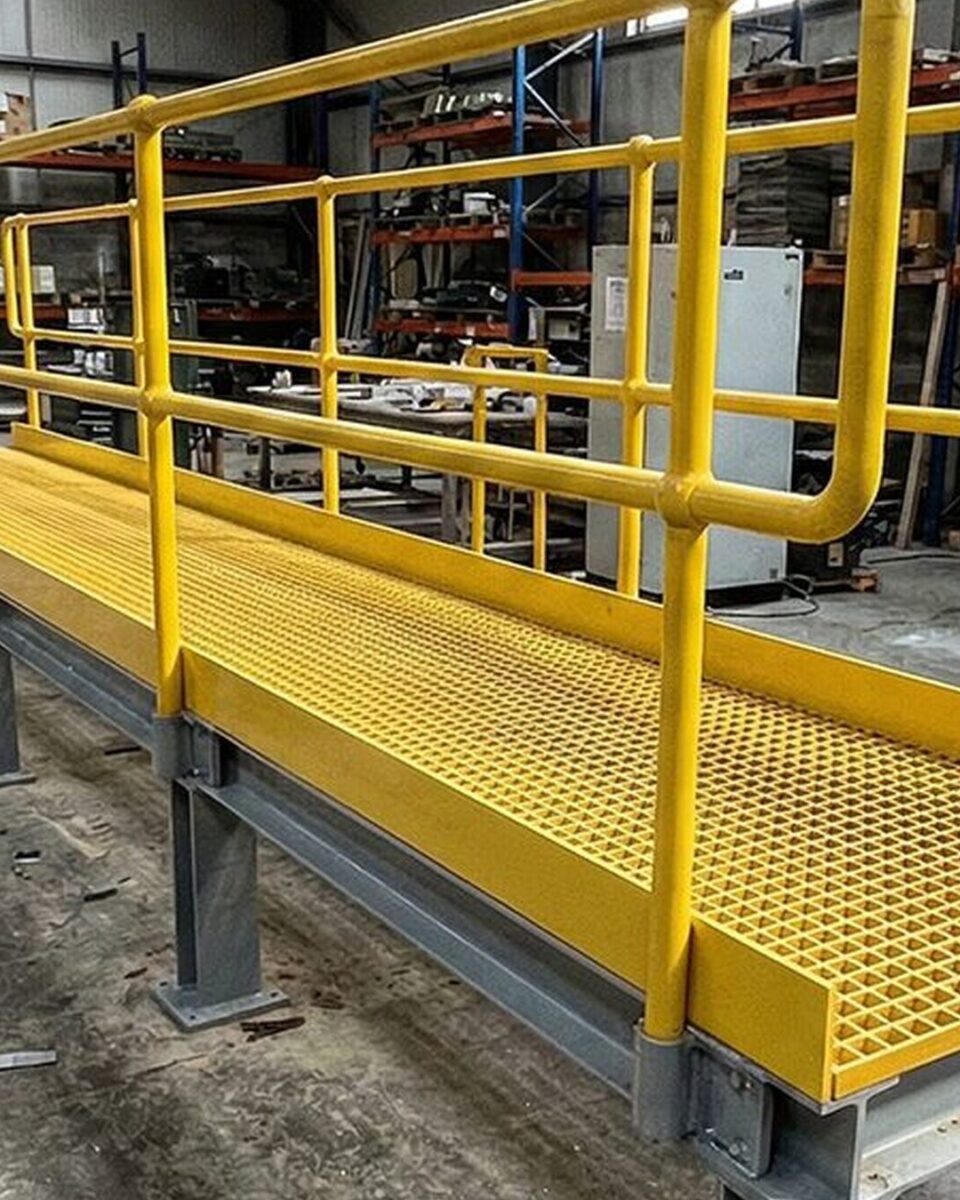
Why the whole staircase sits with one team.
We design and fabricate at Rotherham and install with our own team, and we say so when steel is the better stair.
About UIS-
01
One team owns the whole staircase
Our team designs the stair, specifies the correct GRP profiles, treads and fixings, cuts and assembles the pultruded sections, and installs the finished staircase with our own fitters. We neither mould the GRP ourselves nor subcontract the site work, so the company that drew it is the company that bolts it up. Keeping the survey, the fabrication and the fit under one roof means a fitment query no longer bounces between a catalogue supplier and a labour-only fitter.
-
02
We will tell you when GRP is the wrong answer
Because we fabricate and install steel as well, we have no reason to talk you onto GRP for its own sake. We choose GRP where corrosion, electrical risk, weight or restricted access drive the total cost of owning the stair: chemical and water-treatment plant, rooftop plant decks, coastal exposure, and access near instrumentation. Outside those, we will say steel is usually the better answer, because we earn the same fabricating either material.
-
03
The safety case arrives on paper, with measured slip values
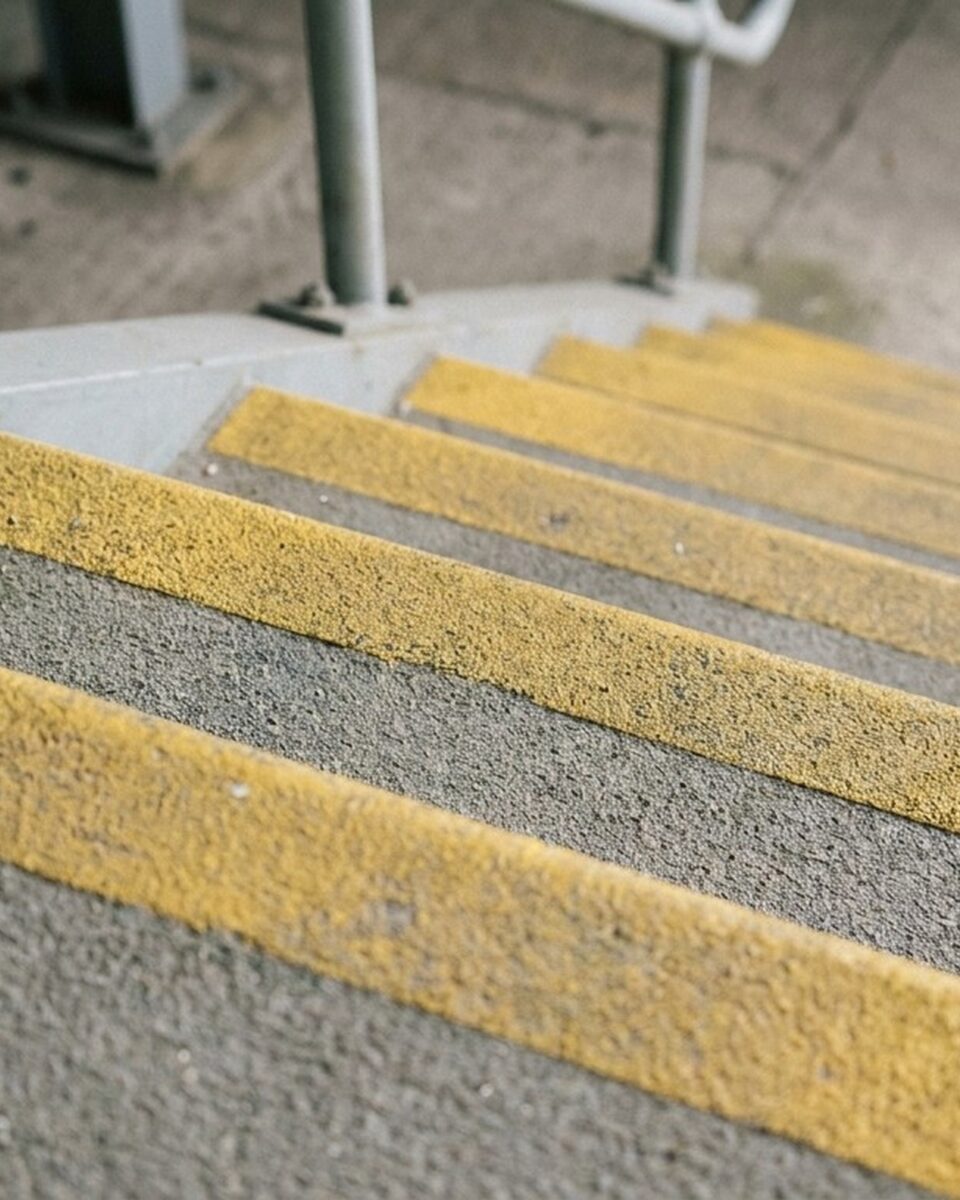
We build GRP stair treads to BS 4592-0:2006+A1:2012, design the staircase geometry to BS 5395, and design the balustrade to BS 6180 for barrier loading. At handover we issue BS EN 16165 pendulum slip-test values with your O&M pack, alongside the fire classification for the grade specified. The slip resistance is measured rather than asserted, so the safety file is auditable from day one.
-
04
Light enough to carry in where a crane cannot reach
Our teams manoeuvre prefabricated GRP staircase components into position by hand on embankments, rooftops and tight-access plant areas, because at roughly a fifth of the weight of steel they rule out a tower crane or a road closure. That is the same reasoning that let us design and install an access stairway into Thermo Fisher Scientific's lab in Horsham, where an embankment ran alongside the building. The lighter sections install faster and with less disruption to the work going on around them.

"I've worked with UIS for several years on some high profile and very complex projects. Their attitude and work ethic are second to none - providing high quality services and products which are delivered safely and on time every time. Overall they are a pleasure to do business with and wouldn't hesitate recommending UIS for any steelwork or metalwork packages."

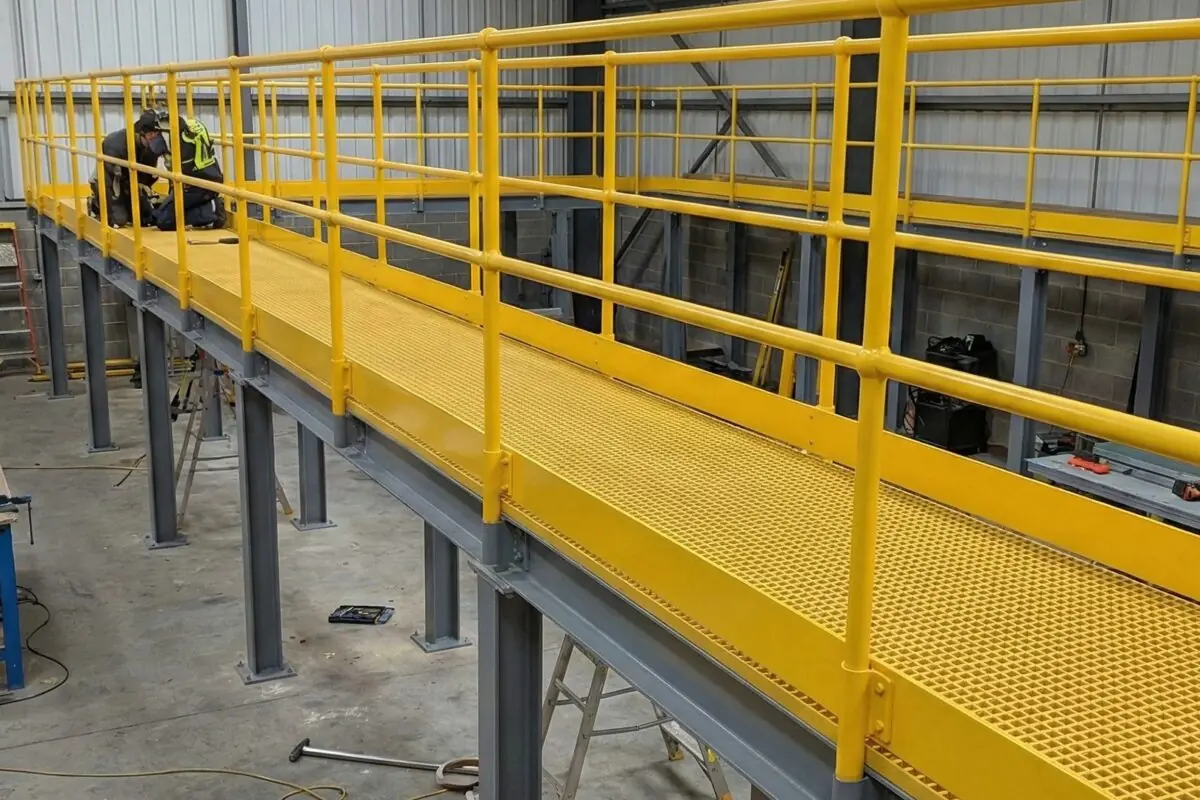
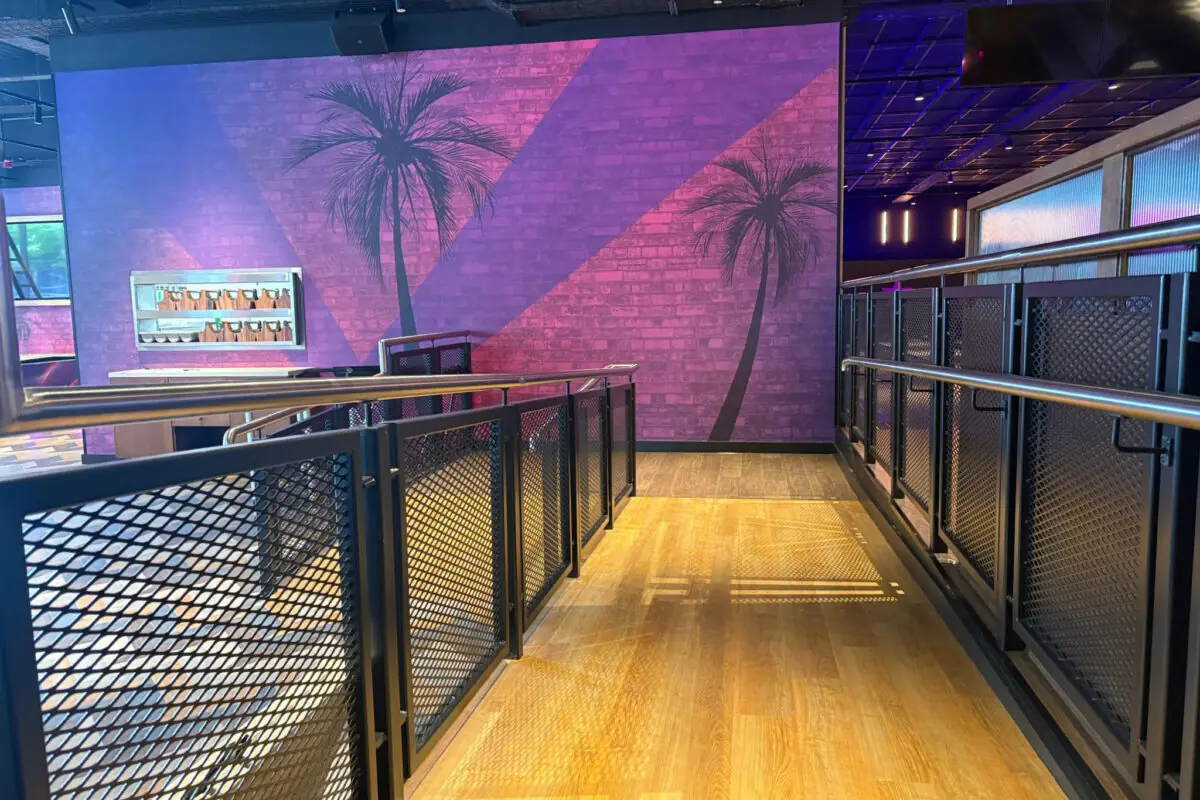
Questions clients ask us.
We do the lot. We design the staircase, specify the profiles, treads and fixings, cut and assemble the GRP sections at Rotherham, and install the finished stair with our own fitters. You deal with one accountable team from the first drawing to the aftercare, rather than a supplier and a separate fitter.
At handover we issue BS EN 16165 pendulum slip-test values for the treads specified on your project, in the O&M pack. That gives your safety file measured, auditable slip data to put in front of an auditor. The treads themselves are built to BS 4592, the industrial flooring and stair-tread standard.
Fire performance depends on the GRP grade specified for your project. We specify a grade to suit the building and its requirement, and we issue the fire classification for that grade in the O&M pack rather than printing a single blanket rating that would not hold across every grade. Tell us the building at consultation and we will match the grade to it.
Yes. Our own teams work to full method statements and have installed flooring, handrails and stairs inside a live supermarket at Oban on night shifts. Because GRP weighs roughly a fifth of what steel does, the components can often be carried into position by hand, which keeps disruption and lifting plant to a minimum on an operational site.
We recommend steel whenever corrosion, electrical risk, weight and restricted access are not the deciding factors. GRP earns its place in corrosive, non-conductive and no-crane situations; for many internal and standard structural stairs, steel is stronger value and the better answer. As steel fabricators and installers, we are happy to point you that way, and our steel access platforms cover it.
Recent project deep-dives.
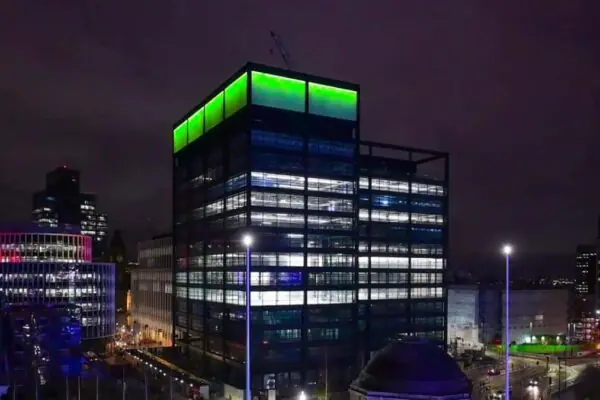
One Centenary Way
On this Project, we were contracted by our construction partners Sir Robert Macalpine, to design, supply, and Install numerous bespoke metal...
Read case study →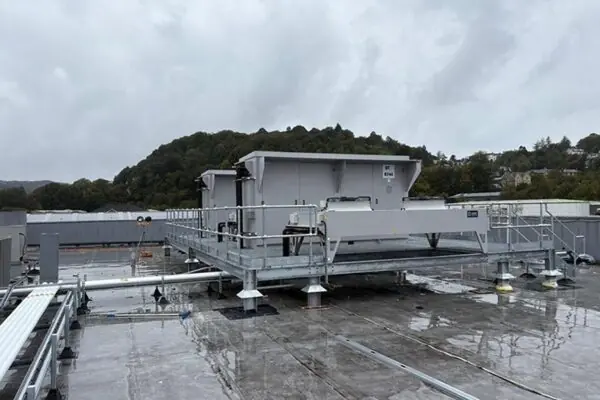
Oban Plant Deck Platform, Scotland
We're proud to announce the successful completion of our latest project - the installation of a plant deck platform in Oban, Scotland....
Read case study →