GRP for Water and Wastewater
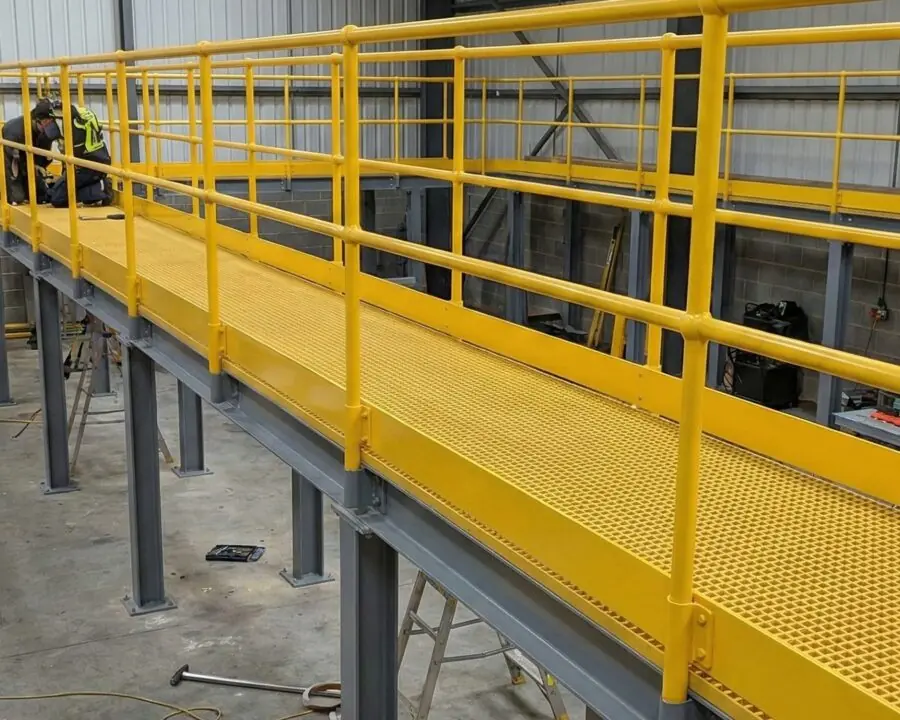
GRP is used on water and wastewater sites for walkways, platforms and ladders, because it does not corrode in the wet. At UIS, we design, fabricate and install GRP for treatment works, using our own site teams.


Why use GRP on a treatment works?
GRP is used on treatment works because it does not corrode in the wet, splash and gases that rust steel. GRP walkways, platforms and handrails over tanks and channels keep their strength without the recoating that steel needs.
If you are replacing rusted steel walkways on a works, or adding walkways to a new process stream, the GRP walkways and platforms have to stay safe over open water, go in while the plant keeps running, and be light enough to carry in where a crane cannot reach.
-
Does not corrode
GRP walkways and handrails do not rust in constant wet and splash, so nobody has to recoat them over open tanks.
-
Light enough to carry in
GRP weighs roughly a fifth of the steel equivalent, so our site team can carry panels and sections to the tank edge by hand.
-
Designed, made and fitted by us
We survey the site, detail the GRP walkways and their supports, make both in Rotherham and install the finished walkways, so one company is responsible for the whole job.
What we build on treatment works
What we build on water and wastewater sites, the standard each item is built to, and how GRP compares with coated and stainless steel.
- Tank and channel walkways
- Open-mesh GRP grating on GRP or steel frames, with guardrails where the edge is open
- Set by: Width and load from your engineer, routes from your operators
- Valve and penstock platforms
- Small GRP platforms with stairs or ladders, sized around the equipment
- Set by: The space needed to operate and maintain the equipment
- Step-overs
- GRP stairs over pipework and channels, with handrails both sides
- Set by: The height and width of what is being crossed
- Chamber and wet-well ladders
- Fixed GRP ladders, with rest platforms on taller runs
- Set by: The depth of the chamber
- Grating covers
- GRP grating cut to close openings and channels
- Set by: The load and the size of the opening
- Work at Height Regulations 2005
- Avoid work at height where you can, and use guarded walkways and platforms where you cannot
- Source: legislation.gov.uk
- BS EN ISO 14122
- Platforms, walkways, stairs, guardrails and fixed ladders for access to plant
- Source: BSI (check the current edition)
- BS 4592-0
- Industrial flooring and walkways, including GRP grating
- Source: BSI
- Confined Spaces Regulations 1997
- Entry into chambers and wet wells, which the ladder is one part of
- Source: legislation.gov.uk
- Dangerous Substances and Explosive Atmospheres Regulations 2002
- In a classified hazardous zone, such as a digester or sludge area, standard GRP can build up static charge. Your DSEAR assessment decides whether an anti-static GRP grade is needed.
- Source: legislation.gov.uk
This is general information, not engineering or legal advice. Your engineer and your site standards set the requirements for each asset.
How GRP compares with steel
Coated or stainless steel
- In the wet
- The coating breaks down and has to be redone, working at height over the tanks
- Weight
- Heavier sections, often needing lifting plant at the tank edge
- Best for
- Long spans and heavy point loads
- Check first
- The coating system and how it will be maintained
GRP
- In the wet
- Does not corrode, so there is no coating to redo
- Weight
- Roughly a fifth of the steel equivalent, carried in by hand
- Best for
- Wet, corrosive areas and places a crane cannot reach
- Check first
- The fire grade, UV exposure and the loads your engineer sets
On long spans or heavy loads, we often keep a steel frame and put GRP grating and handrails on top of it.
We price water-site work from a survey or your drawings. These are the main things that affect the price:
- the length and layout of the walkways
- the number of platforms, step-overs and ladders
- whether the support frame is new or existing
- access for people and materials on a live site
- working hours and permits
Our GRP product pages
Each of these has its own page with the full specification.
- GRP walkwaysA safe route across a roof, plant room or process area
- GRP access platformsRaised access to plant, or crossing pipework and upstands
- GRP laddersFixed access up a structure
- GRP stairsA new stair to a platform, mezzanine or roof
- GRP grating and flooringA new or replacement floor, moulded or pultruded
- GRP handrailsEdge protection along walkways, platforms and stairs
From survey to handover.
We survey, detail, fabricate and install the GRP ourselves, so one company is responsible for the whole job.
Survey and measure
We walk the routes with your operators and agree what they need to reach and how often. On an existing structure we can 3D-scan it, so our drawings match what is on site.
Drawings and quotation
Our draughtsmen detail the GRP and any support steelwork to the loads your structural engineer gives us. We then send an itemised quotation that includes fabrication and installation. On major commercial packages the quotation comes back within 1 to 2 weeks.
Fabrication
We fabricate the support steelwork and cut the GRP panels and sections to size in our Rotherham workshop, so most of the cutting is done before delivery.
Installation
Our own site team installs the GRP under an SSSTS-qualified supervisor, to a method statement written for the job. We cut the GRP to size in our workshop, so there is little cutting on site. Where a panel does need trimming, we cut it with a diamond blade under dust extraction, away from live areas where possible, and no hot-works permit is needed.
Handover
At handover we give you the O&M pack, with the manufacturer's test data for the products we installed. The 12-month defect liability period runs from practical completion, in line with standard JCT terms, unless your contract sets different terms.
Why GRP suits treatment works
GRP walkways, platforms and ladders do not corrode in the wet, and they weigh roughly a fifth of the steel equivalent. Nobody has to recoat them over open tanks, and our site team can carry the panels in by hand.
Request a quote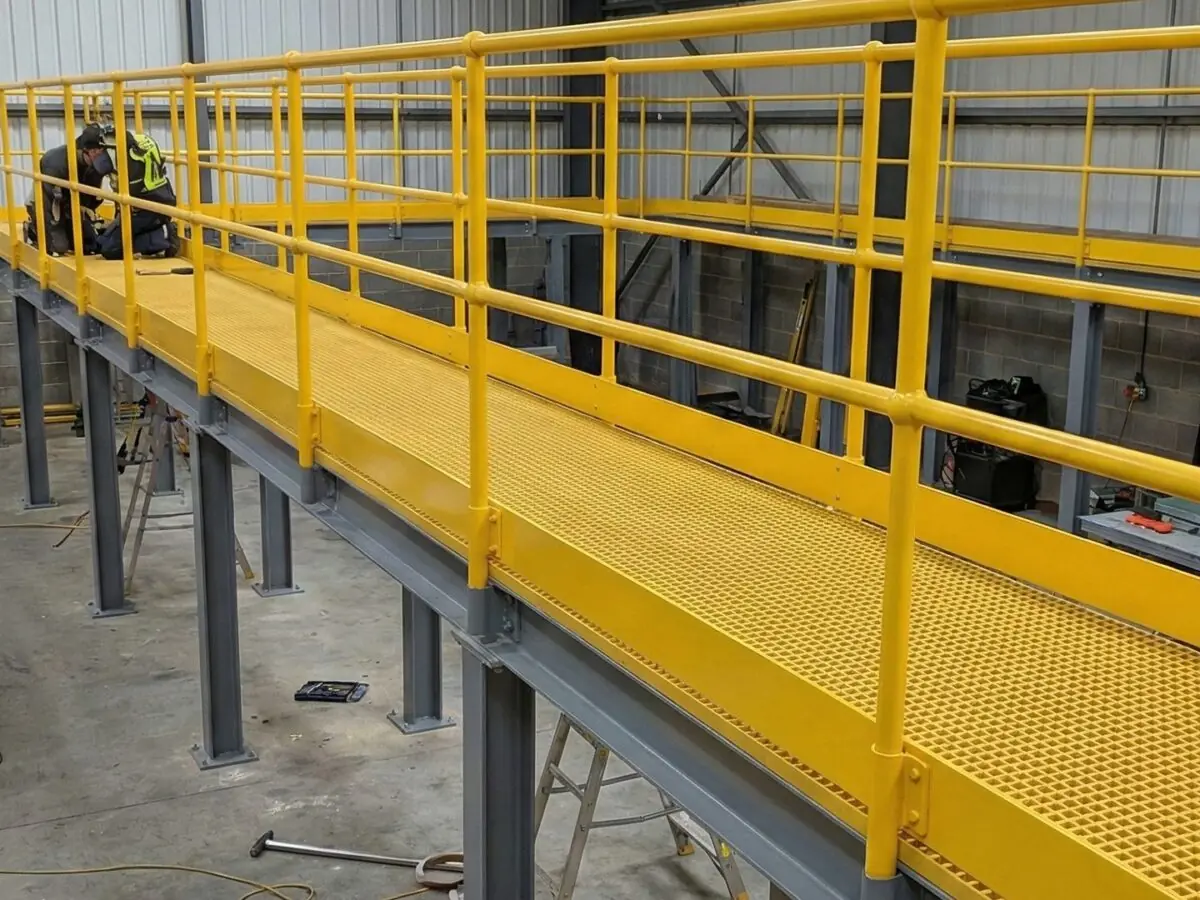
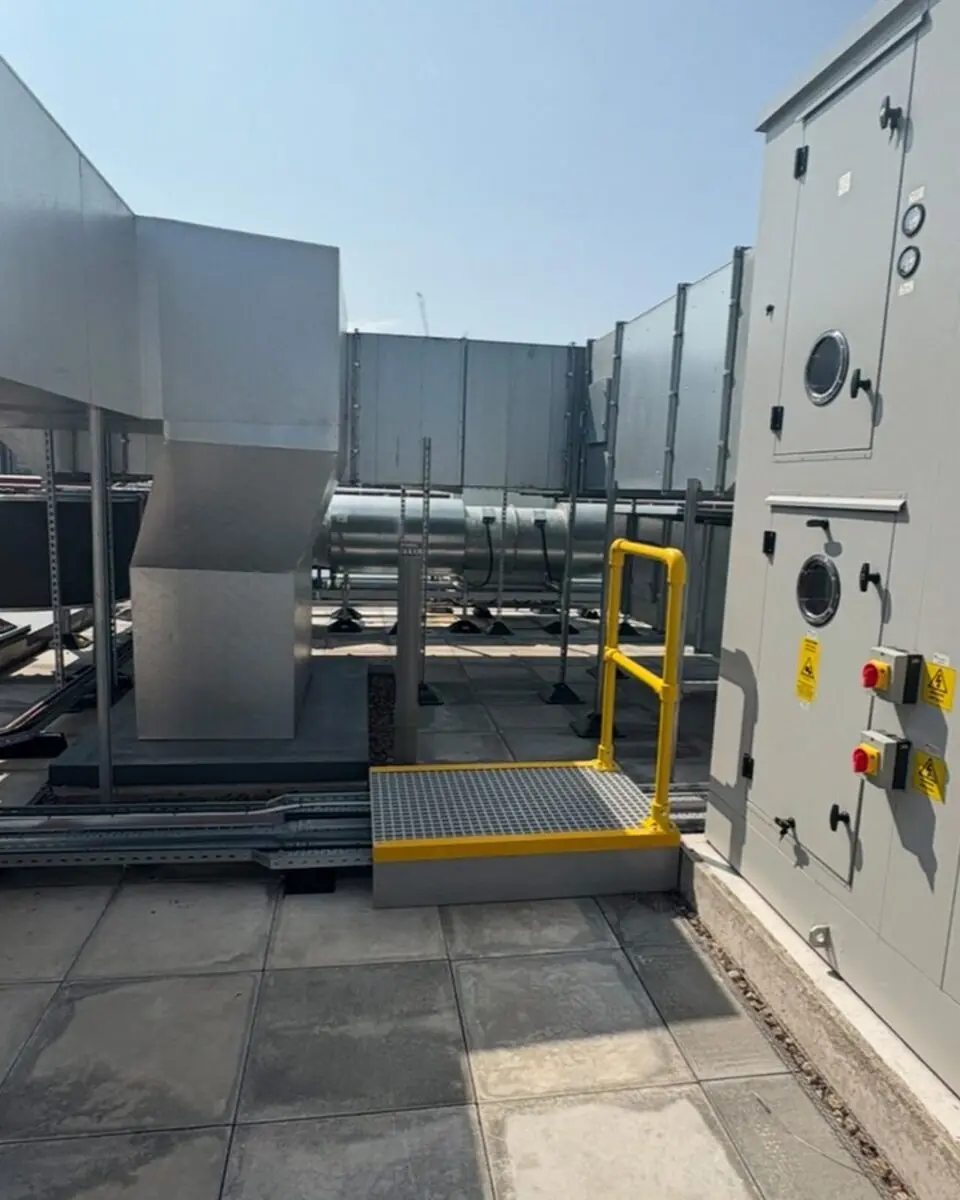
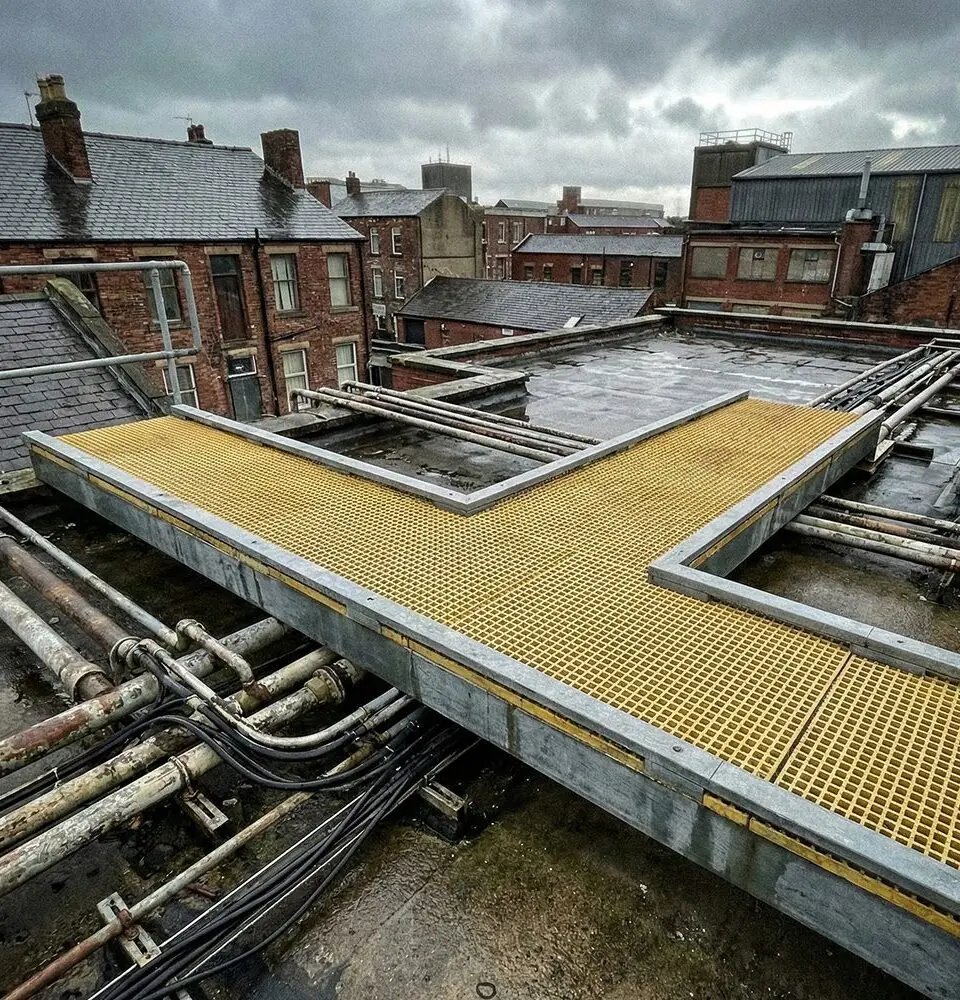
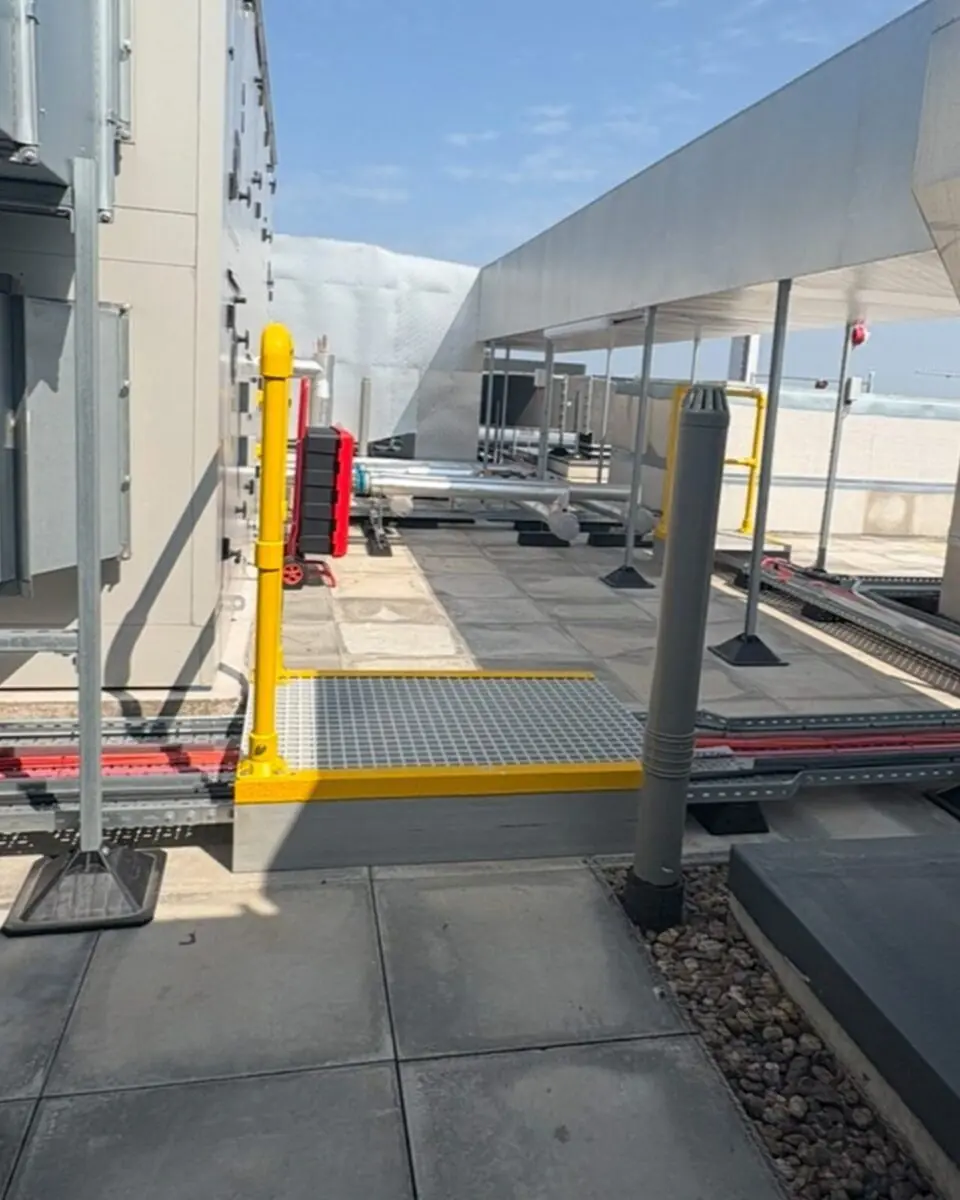
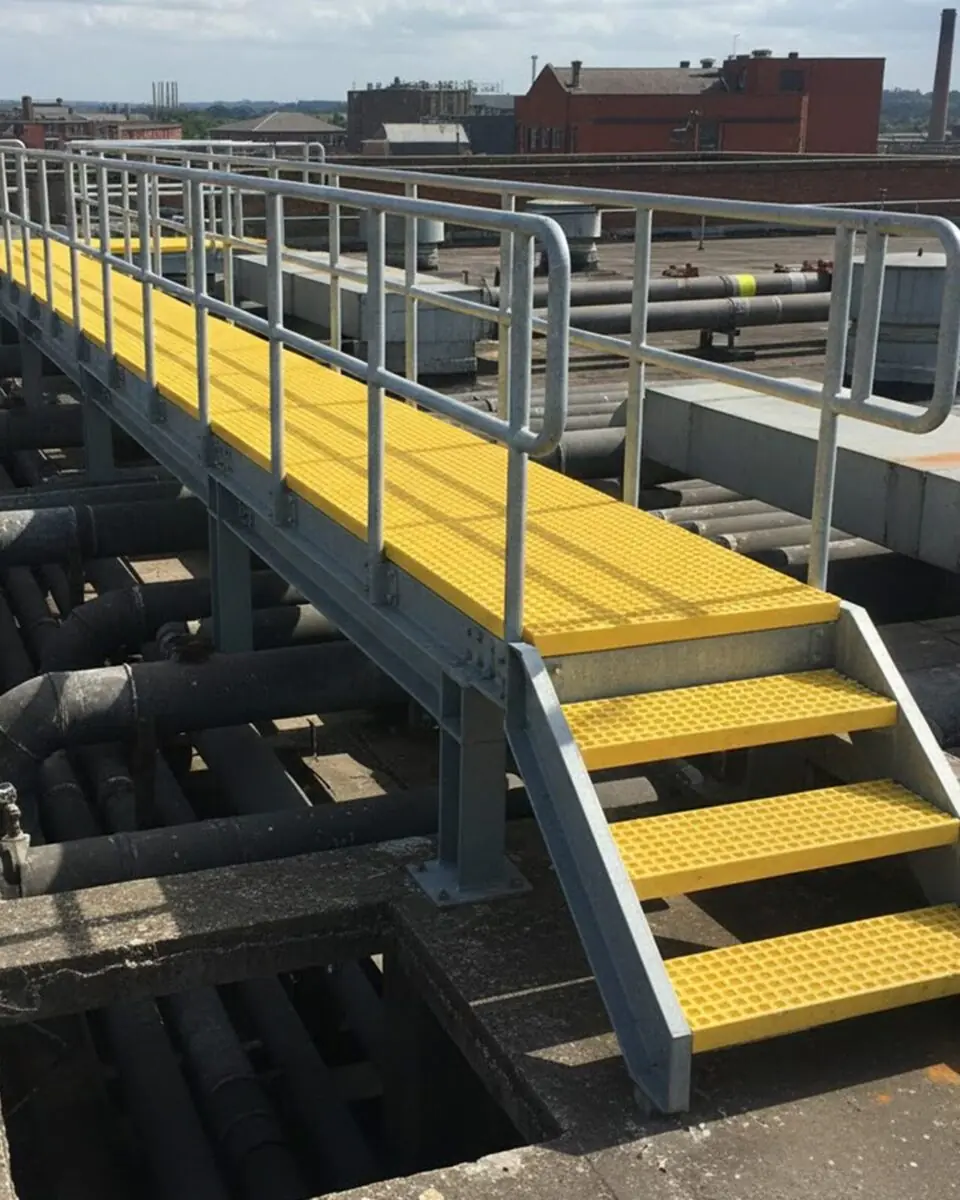
Walkway routes and decks.
← Drag / swipe to browse · click to expand →
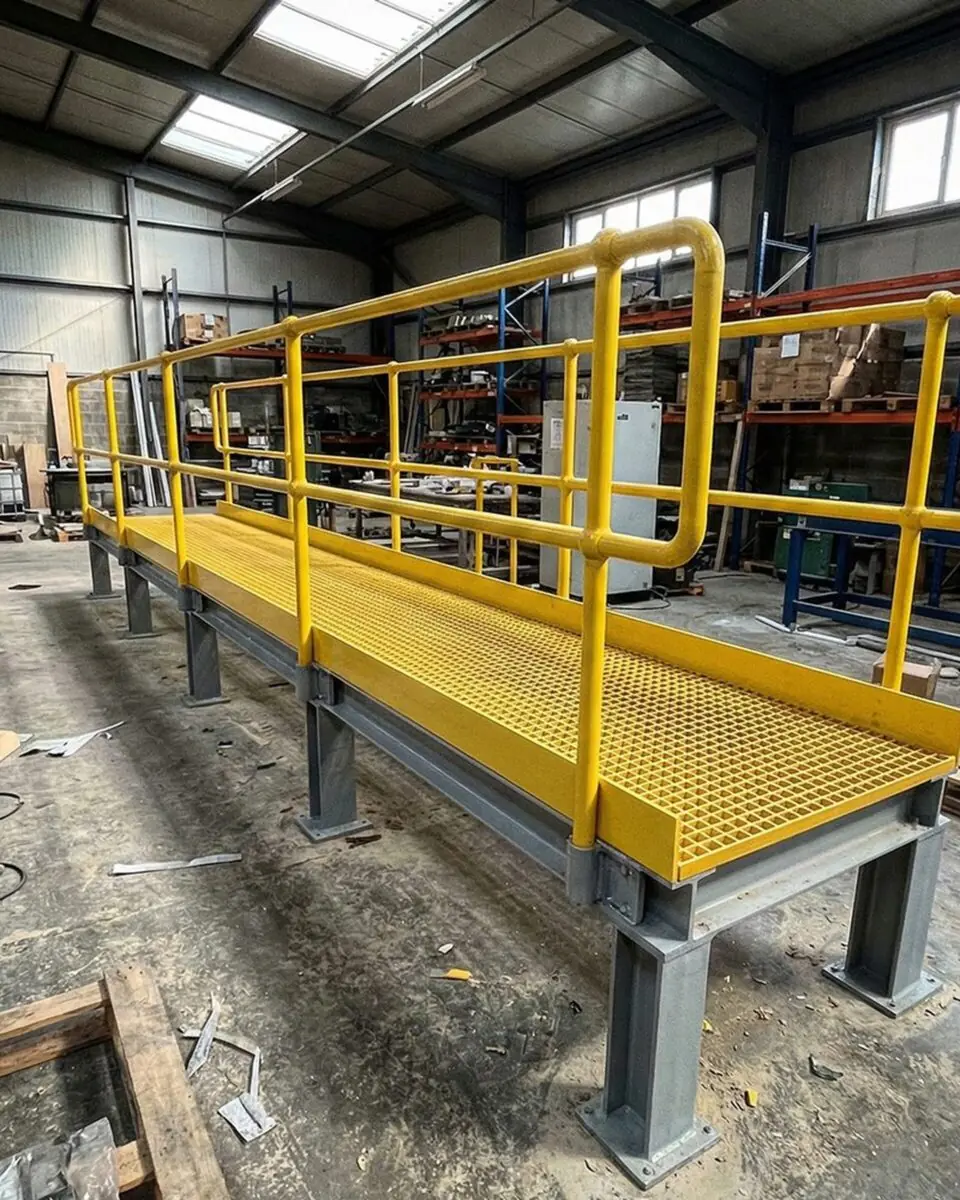
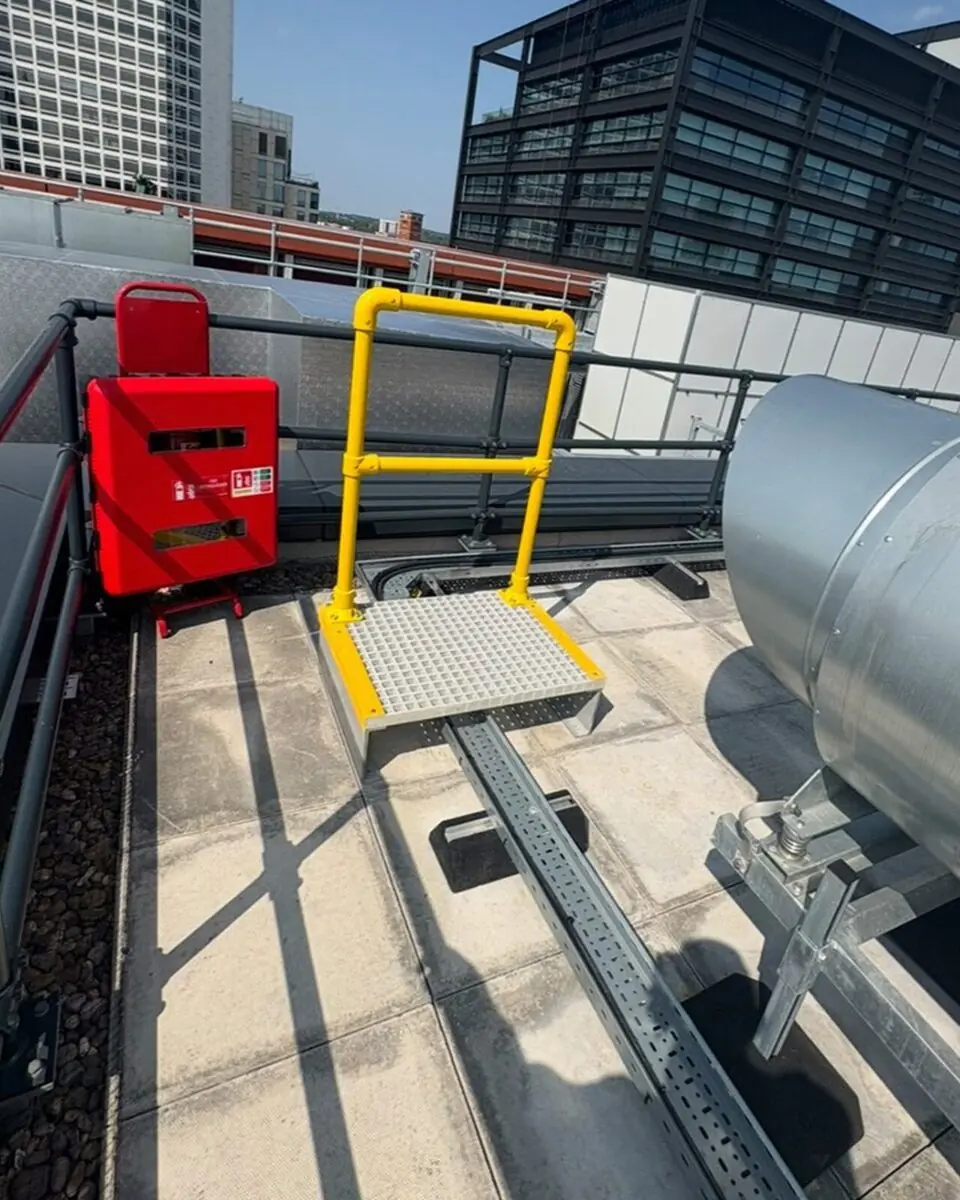
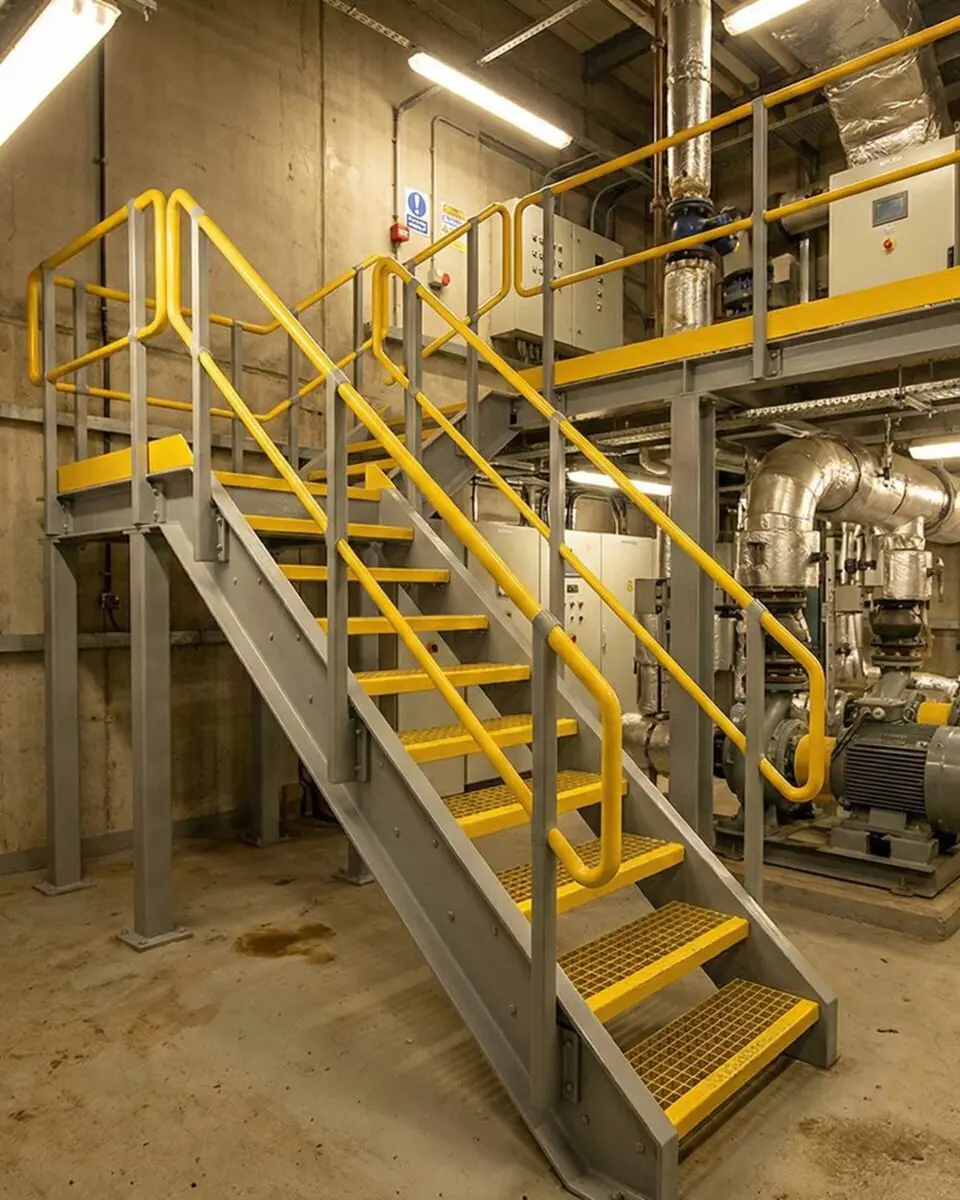
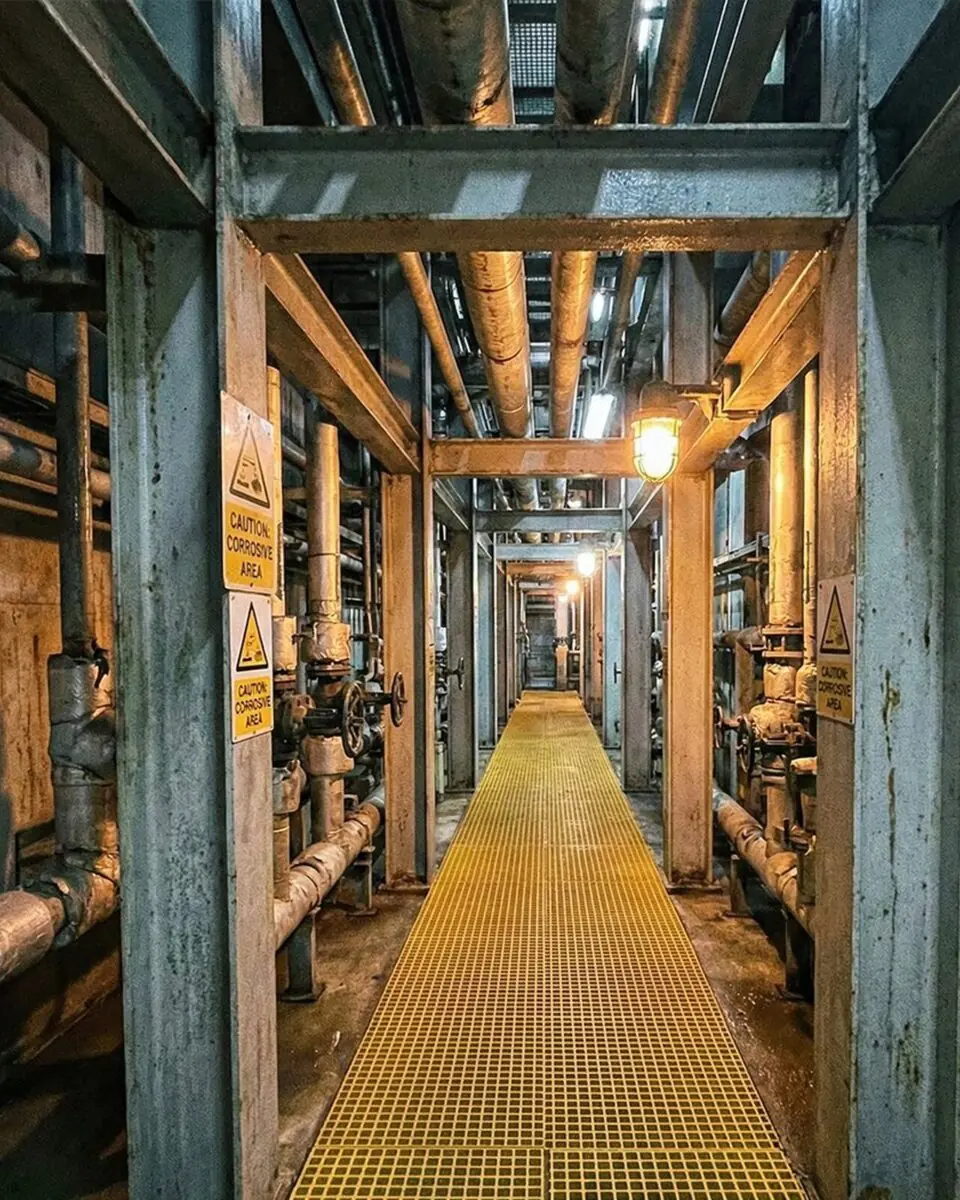
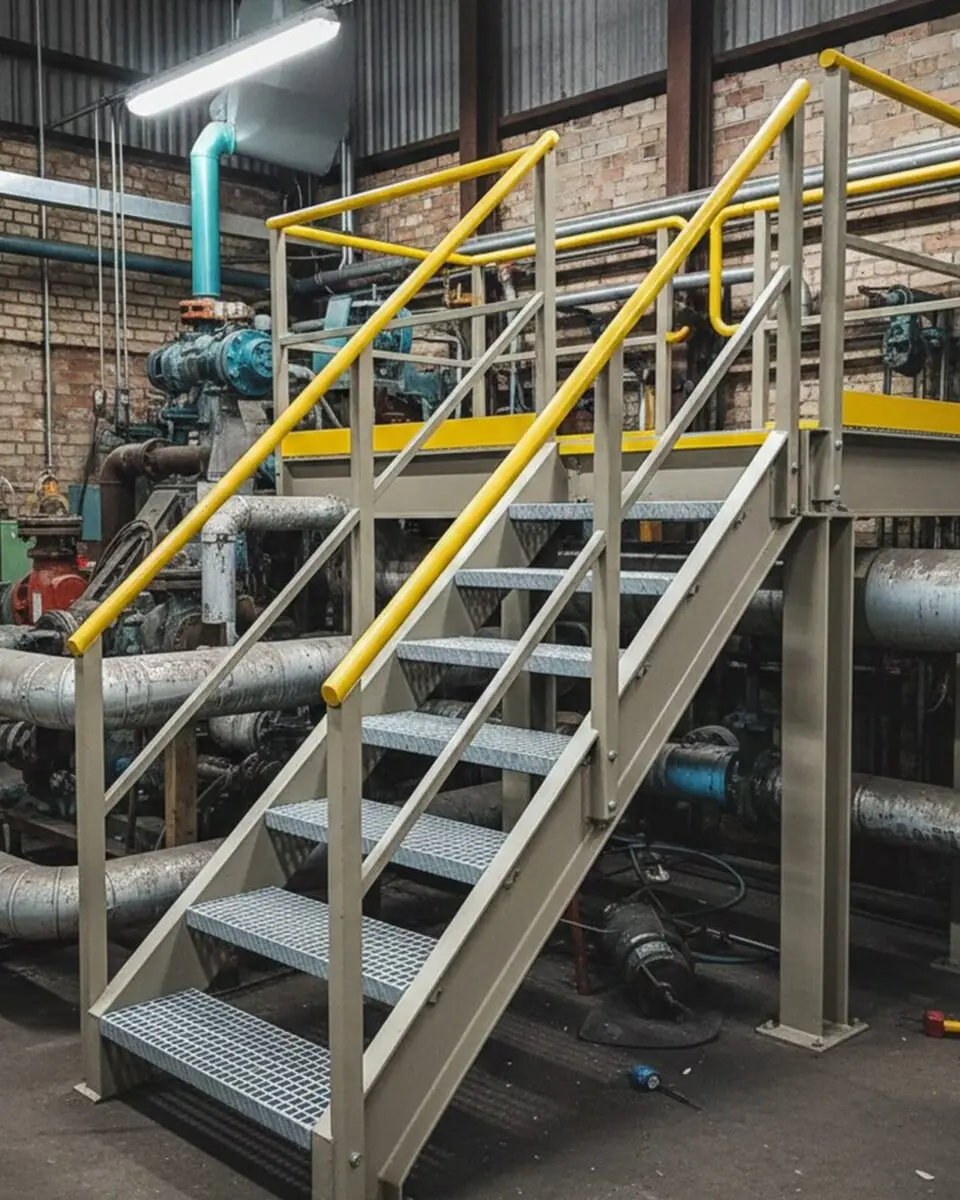
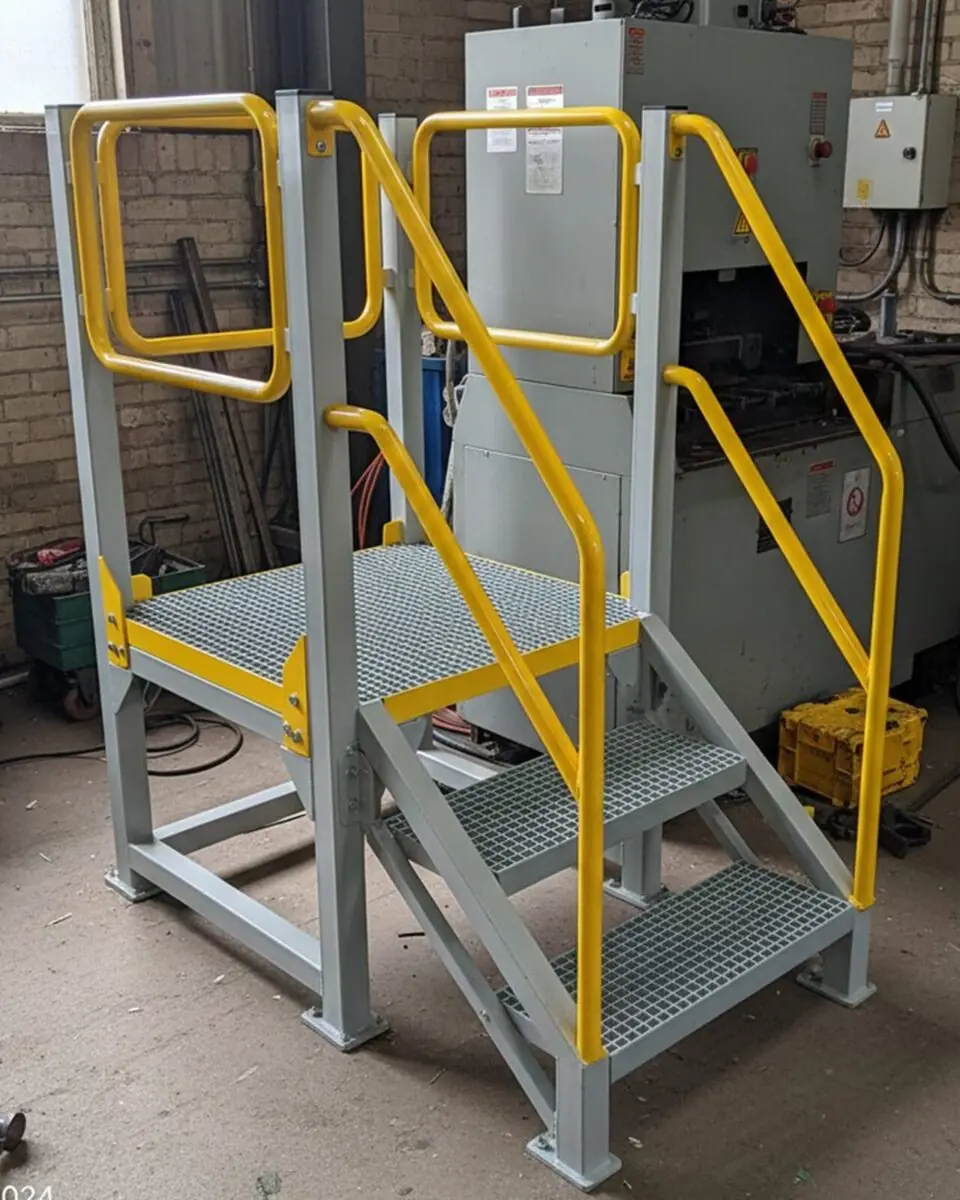

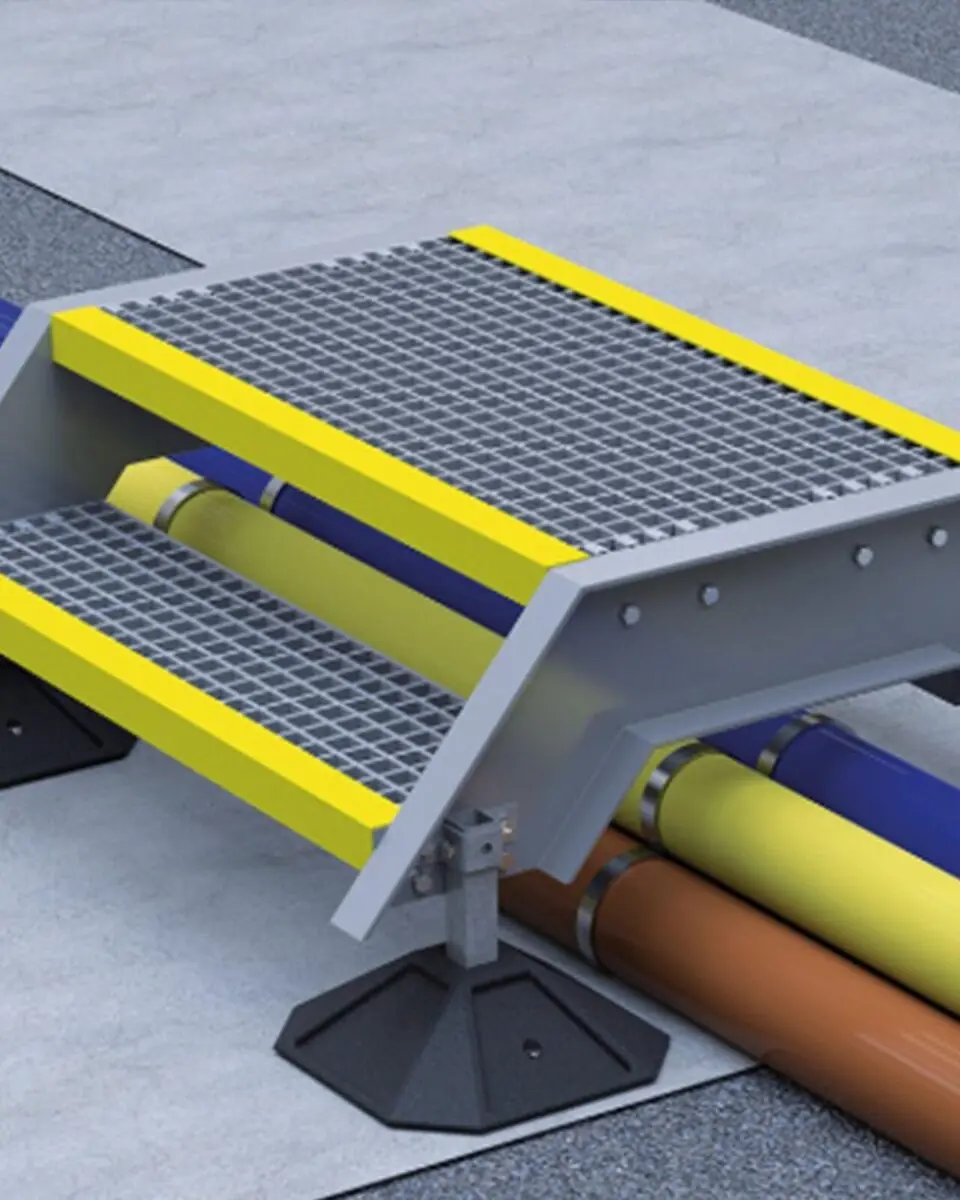
Where we use GRP on a treatment works
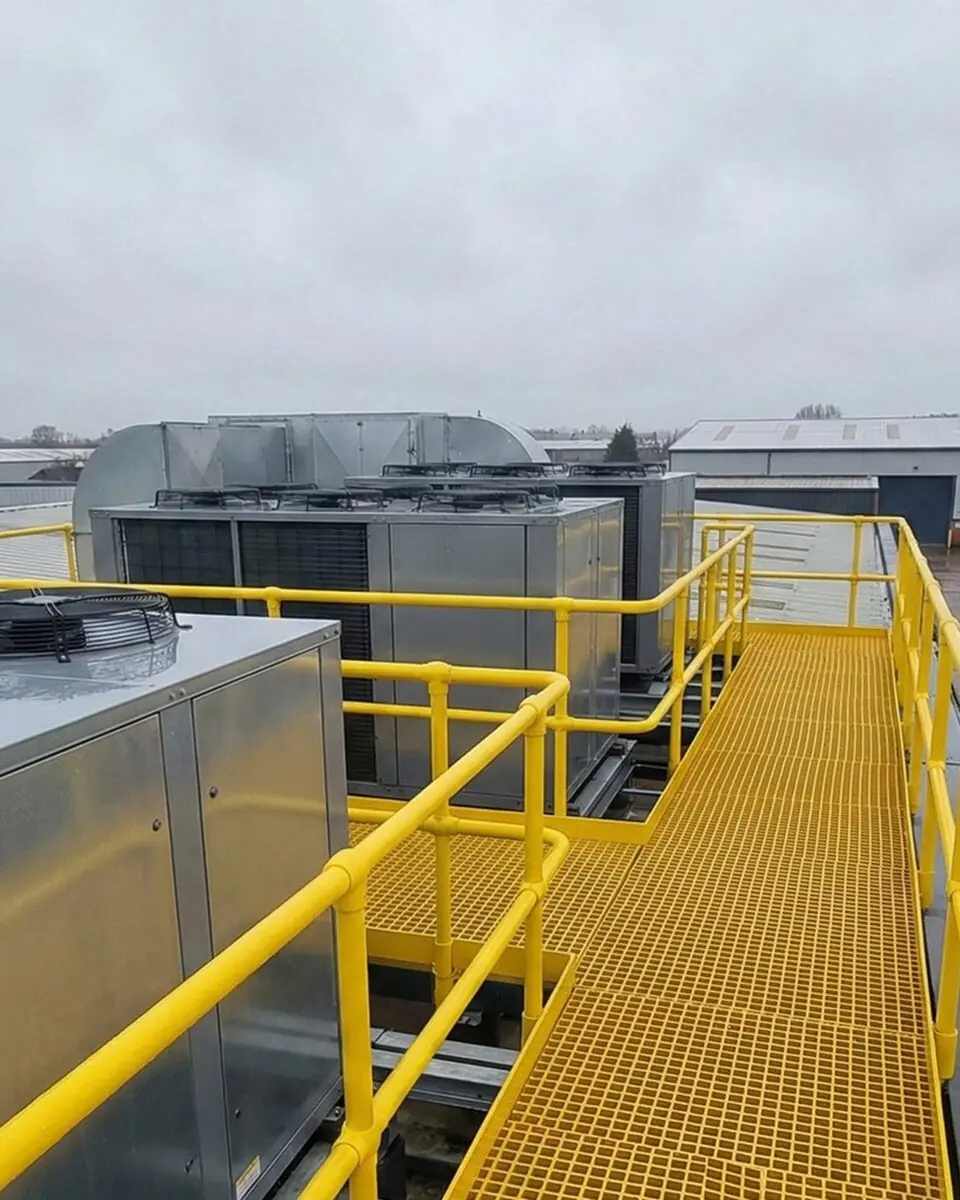
These are the main places GRP goes on a water or wastewater site.
About UIS-
01
Walkways and platforms over tanks and channels
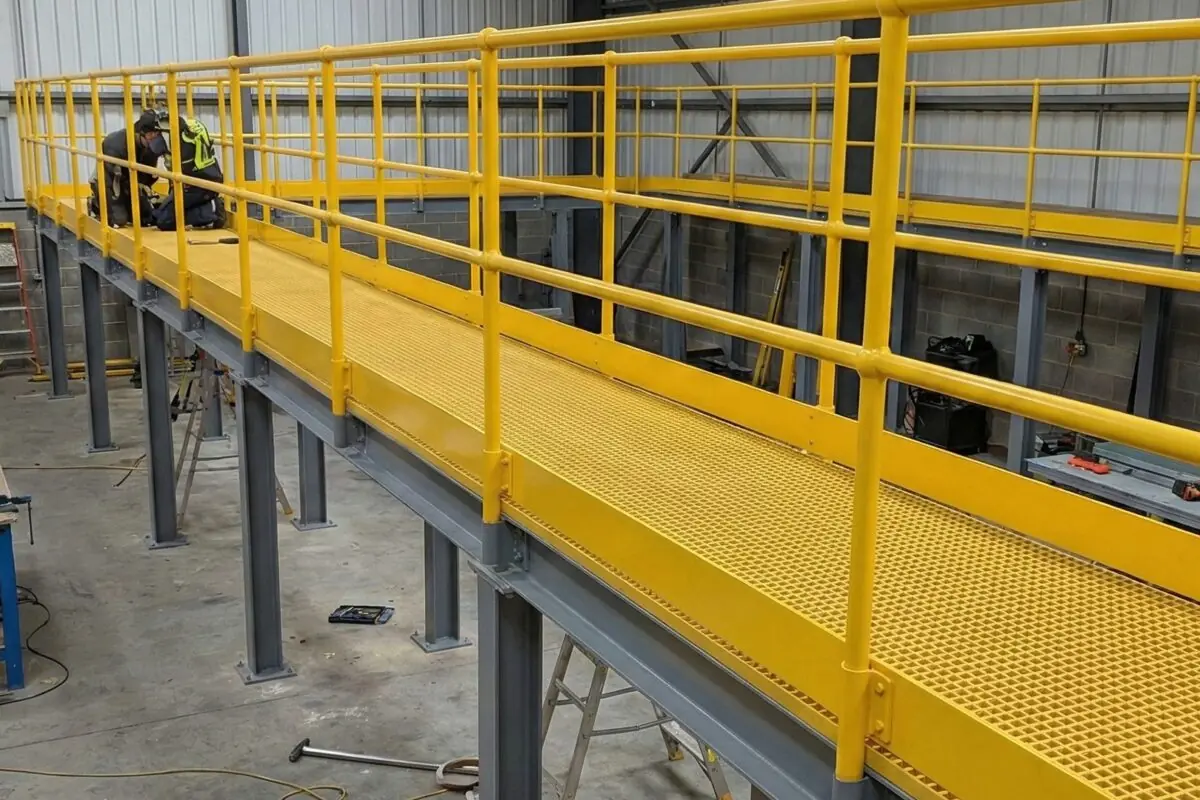
We build open-mesh GRP walkways and platforms across settlement tanks, channels and filter beds, on GRP or steel frames, with guardrails and toe boards on every open edge. The open mesh lets water drain straight through.
-
02
Platforms and step-overs at valves, penstocks and pumps
We build small GRP platforms at valve and penstock heads, step-overs across pipework, and stairs up to raised plant, so your operators can reach the equipment without climbing on it.
-
03
Ladders into chambers and wet wells
We fit fixed GRP ladders and stairs into chambers and wet wells, where steel ladders corrode fastest. Entry into the chamber stays under your own confined-space procedures, and we plan the installation around them.
-
04
Installed by our own site teams
Our own site teams install every job. Each job has an SSSTS-qualified supervisor, every operative holds a CSCS card, and the teams are PASMA and IPAF trained. We write a method statement for each job and plan the work around your site, out of hours where your programme needs it.

"I've worked with UIS for several years on some high profile and very complex projects. Their attitude and work ethic are second to none - providing high quality services and products which are delivered safely and on time every time. Overall they are a pleasure to do business with and wouldn't hesitate recommending UIS for any steelwork or metalwork packages."
Questions we get asked.
GRP does not corrode in the wet, splash and gases of a treatment process, so GRP walkways and handrails do not need recoating, and recoating over open tanks is itself work at height. GRP also weighs roughly a fifth of the steel equivalent, which helps where a crane cannot reach.
Yes. We survey the existing walkways, your engineer confirms whether the support frame can stay, and we replace the grating, handrails and stairs in GRP. We can do it in sections so the plant keeps running.
Yes. We make and fit fixed GRP ladders and stairs into chambers. Entry into the chamber is controlled by your own procedures under the Confined Spaces Regulations 1997, and we plan the installation around them.
The Work at Height Regulations 2005 set the duty. BS EN ISO 14122 covers platforms, walkways, stairs, guardrails and fixed ladders for access to plant. Your engineer and your site standards set the loads and any extra requirements, and we build to them.
Yes. We plan the installation with your site team and work to a method statement under an SSSTS-qualified supervisor. We cut the GRP to size in our workshop, and any trimming on site is done under dust extraction, with no hot-works permit needed.