GRP for Car Parks
GRP is used in car parks for stair treads, roof-deck walkways and pedestrian handrails, because road salt does not rust it. At UIS, we design, fabricate and install GRP for car parks, using our own site teams.
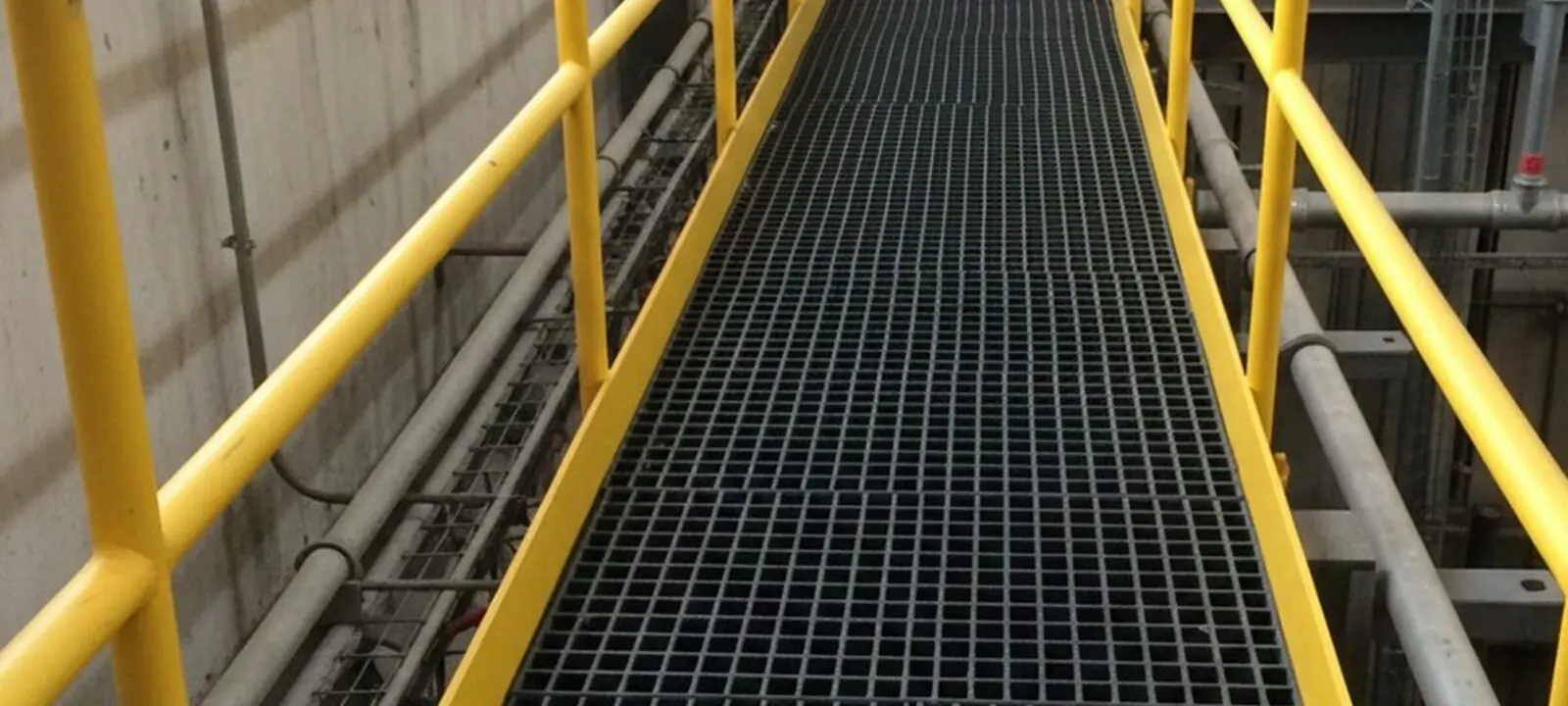


Why use GRP in a car park?
GRP is used in car parks for stair treads, nosings, roof-deck walkways and pedestrian handrails, because road salt does not rust it and the gritted surface grips in the wet.
If your car park stairs are getting slippery, or steel treads and handrails are rusting from the salt, the replacements have to be safe for the public, quick to install, and fitted while the car park stays open.
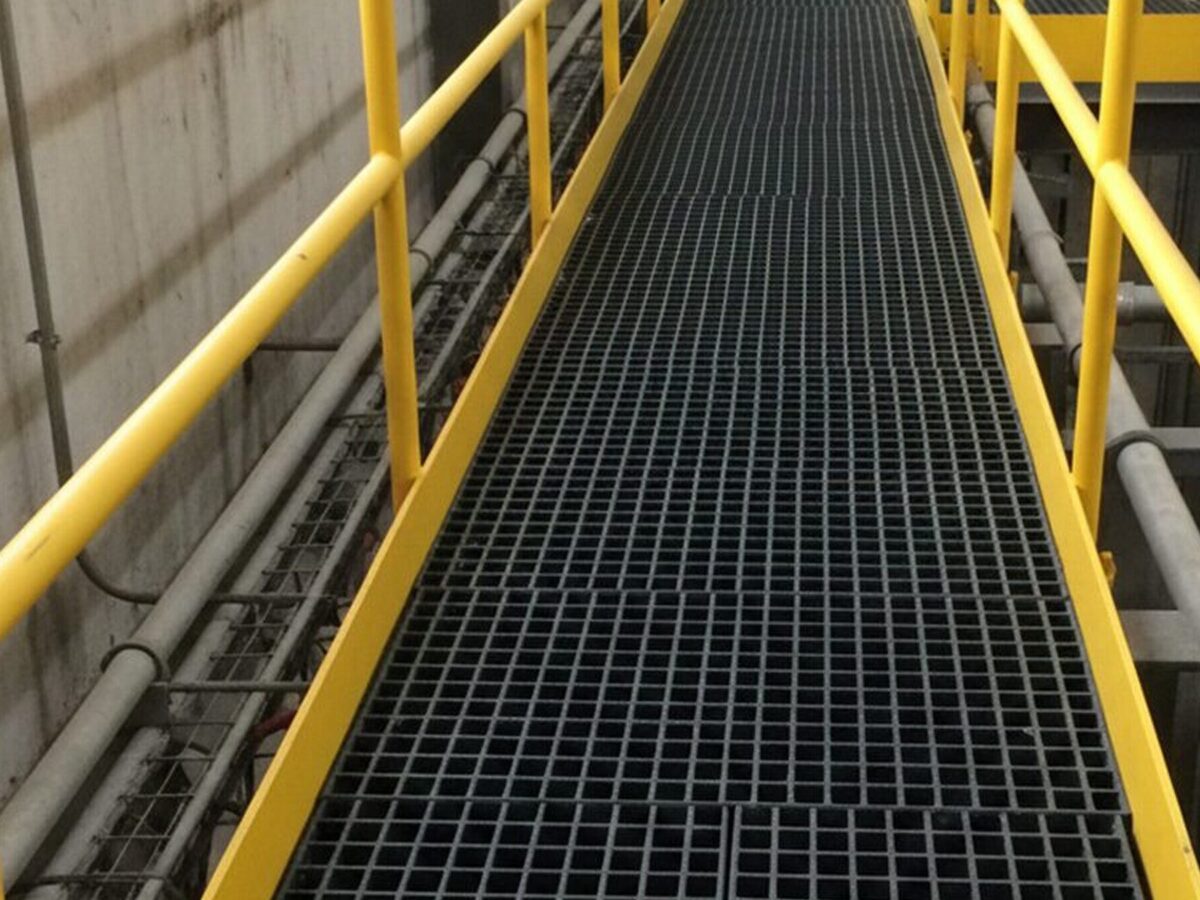
-
Road salt does not rust it
GRP treads and handrails do not corrode, so salt carried in on tyres and footwear does not damage them.
-
Treads fixed over sound stairs
We fix GRP anti-slip treads and nosings over sound stairs, with contrasting nosings where your access standards ask for them.
-
Handrails for pedestrians only
GRP handrails guard pedestrians. Vehicle barriers are made in steel to their own design loads, and we fabricate those as well.
What we install in car parks
What we install, the rules that apply, and where GRP is not the right material.
- Stair treads and nosings
- GRP anti-slip treads and nosings fixed over sound stairs
- Set by: The condition of the stair and the nosing contrast your standards ask for
- Plant walkways
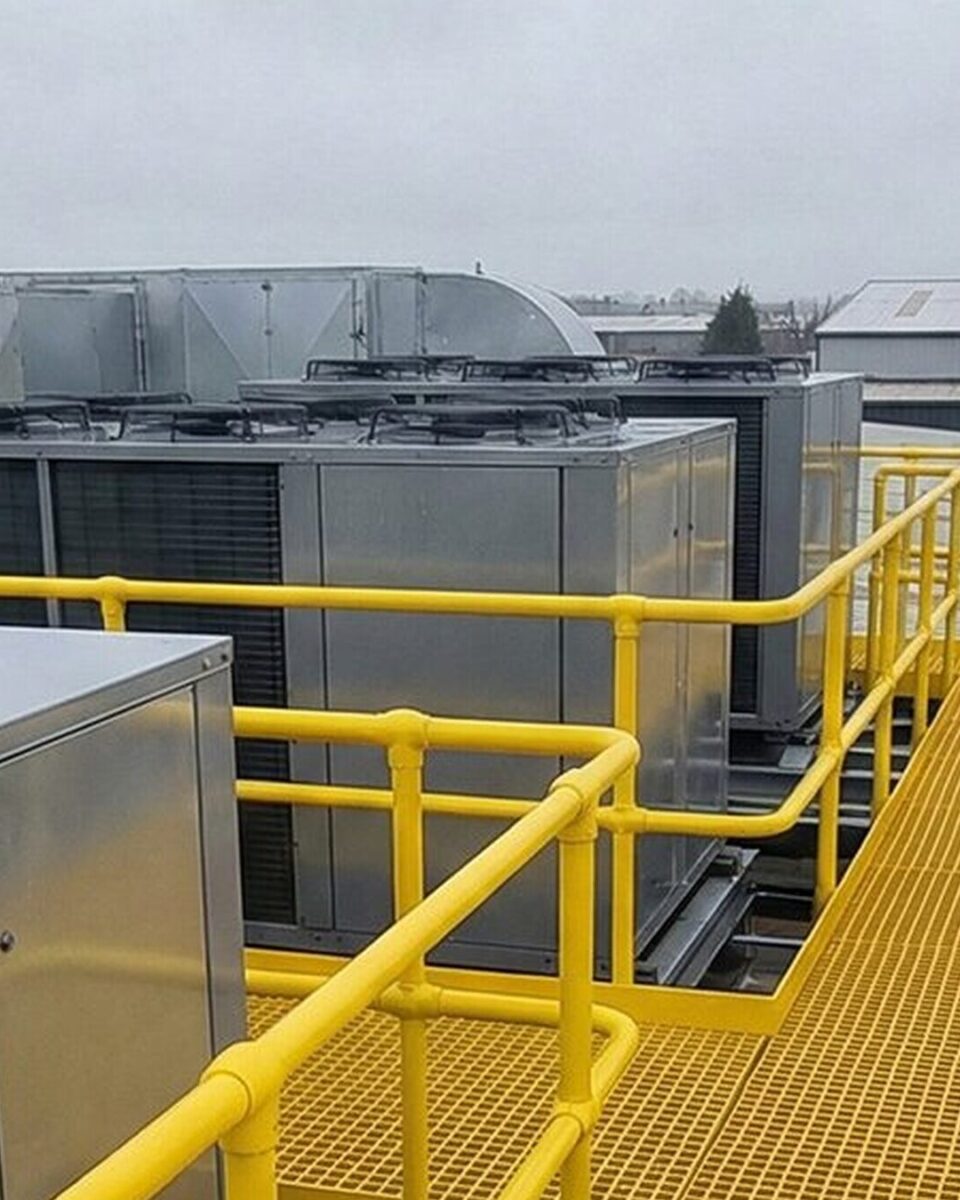
- GRP grating walkways with guardrails on the roof deck
- Set by: The route to the plant
- Pedestrian handrails
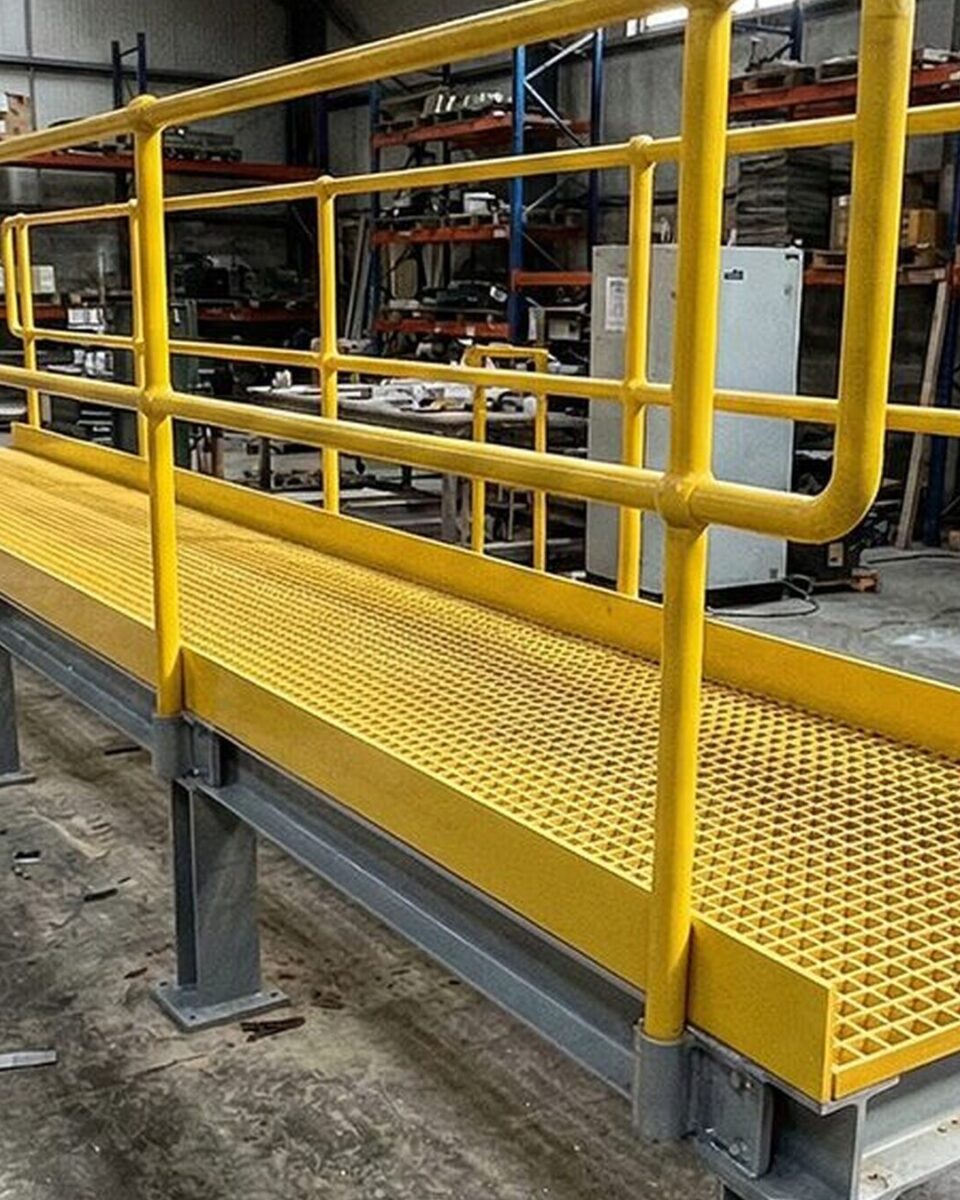
- GRP handrail to the load class for the area
- Set by: The BS 6180 load class
- Vehicle barriers
- Steel, designed to vehicle impact loads, not GRP
- Set by: Your engineer's design
- Approved Document K
- Protection from falling, stair safety and vehicle barriers in buildings
- Source: gov.uk
- Approved Document M
- Access to and use of buildings, including visible nosings and handrails
- Source: gov.uk
- BS 6180
- Barriers in and about buildings, including handrail loads
- Source: BSI
This is general information, not legal advice. Your engineer and building control set the requirements for each structure.
We price car park work from a survey. These are the main things that affect the price:
- the number of stair flights and their condition
- the length of handrail and walkway
- phasing to keep levels and stair cores open
- out-of-hours working
- access for materials
Our GRP product pages
Each of these has its own page with the full specification.
From survey to handover.
We survey, detail, fabricate and install the GRP ourselves, so one company is responsible for the whole job.
Survey and measure
We survey the stair cores, decks and pedestrian routes and agree the phasing with you. On an existing structure we can 3D-scan it, so our drawings match what is on site.
Drawings and quotation
Our draughtsmen detail the GRP and any support steelwork to the loads your structural engineer gives us. We then send an itemised quotation that includes fabrication and installation. On major commercial packages the quotation comes back within 1 to 2 weeks.
Fabrication
We fabricate the support steelwork and cut the GRP panels and sections to size in our Rotherham workshop, so most of the cutting is done before delivery.
Installation
Our own site team installs the GRP under an SSSTS-qualified supervisor, to a method statement written for the job. We cut the GRP to size in our workshop, so there is little cutting on site. Where a panel does need trimming, we cut it with a diamond blade under dust extraction, away from live areas where possible, and no hot-works permit is needed.
Handover
At handover we give you the O&M pack, with the manufacturer's test data for the products we installed. The 12-month defect liability period runs from practical completion, in line with standard JCT terms, unless your contract sets different terms.
Why GRP suits car parks
GRP does not rust from road salt, the gritted surface grips in the wet, and GRP weighs roughly a fifth of the steel equivalent. Stair treads, walkways and handrails go in quickly while the car park stays open.
Request a quote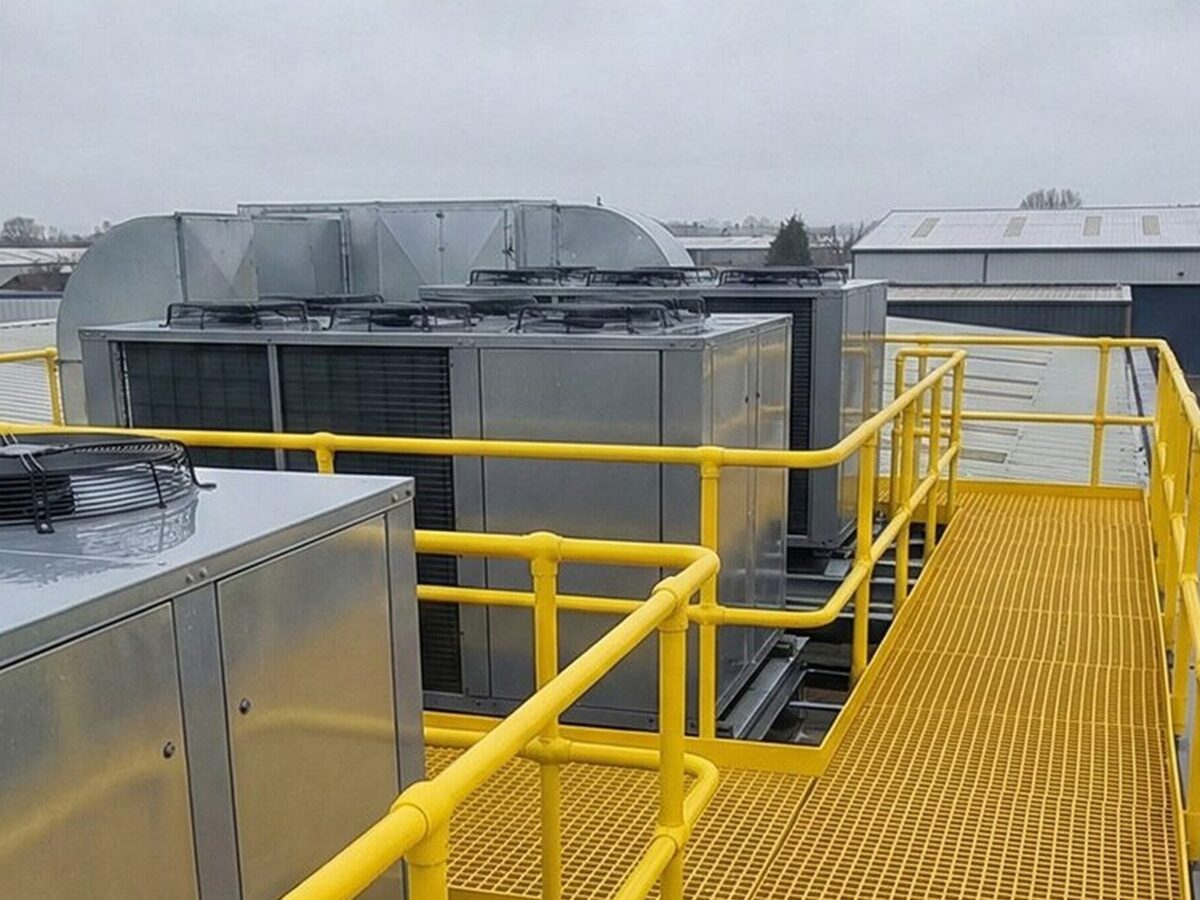
Barrier systems.
← Drag / swipe to browse · click to expand →
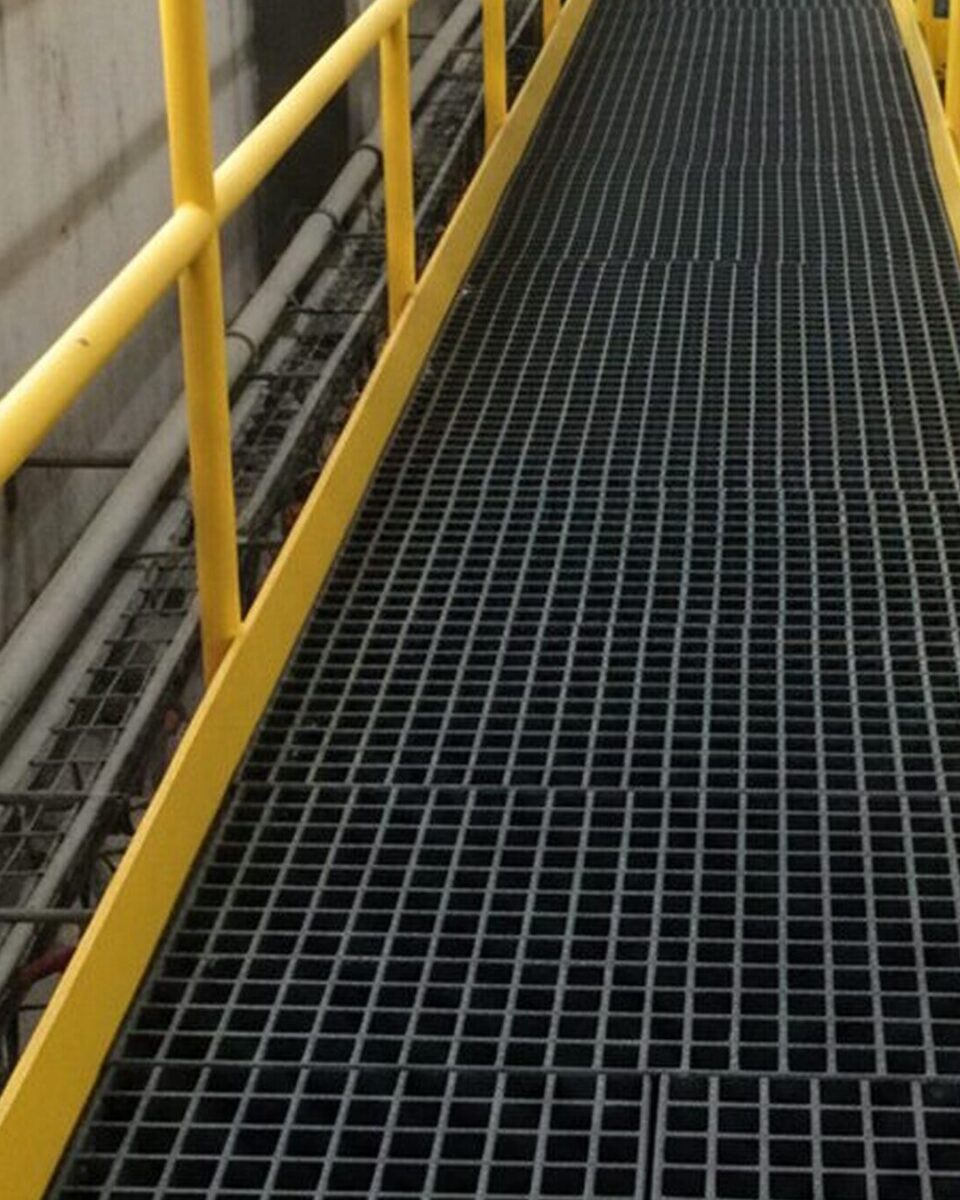
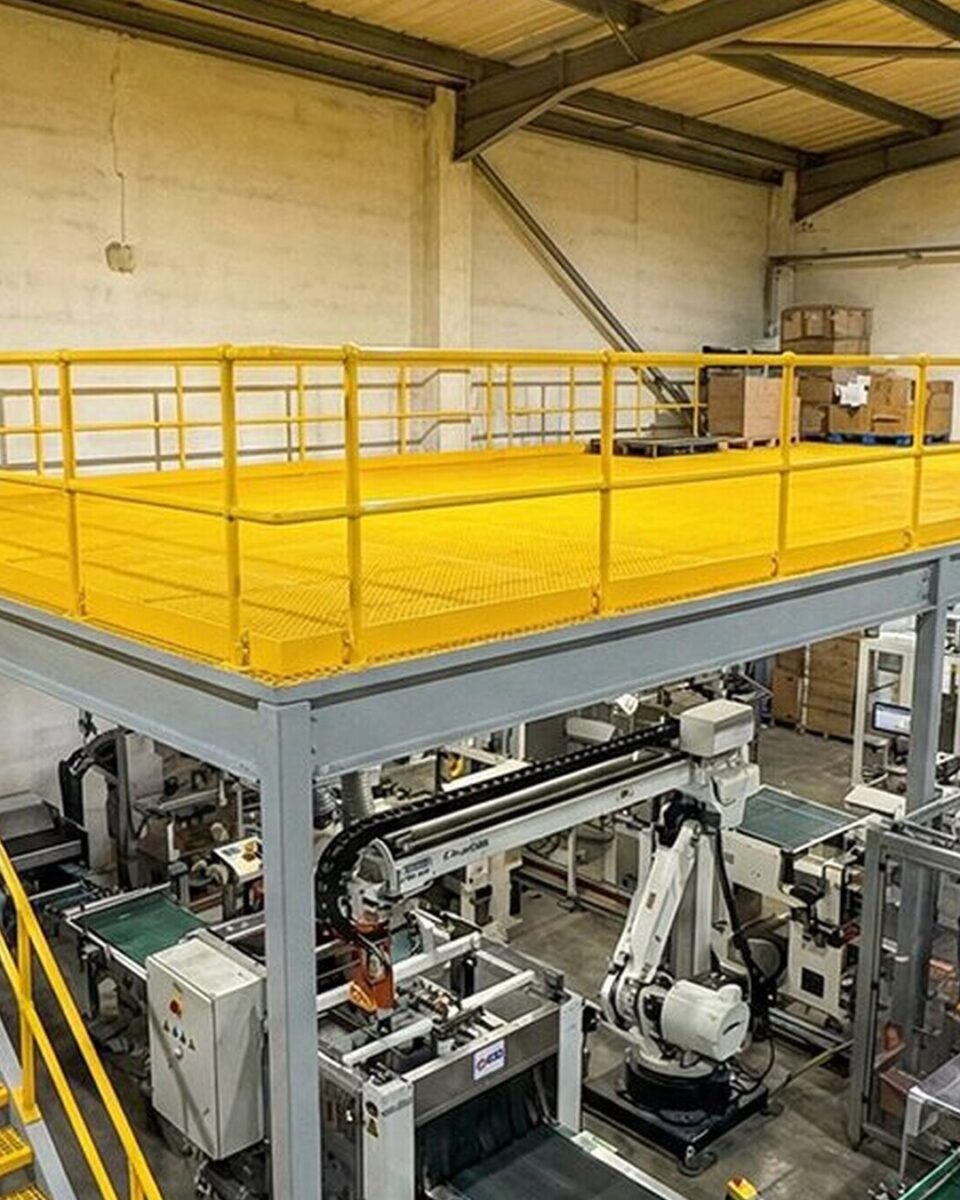
Where we use GRP in a car park
These are the main places GRP goes in a multi-storey or surface car park.
About UIS-
01
Stair treads and nosings
We fix GRP anti-slip treads and nosings over sound concrete or steel stairs in the stair cores. The gritted surface grips under wet footwear, and we fit contrasting nosings where your access standards ask for them.
-
02
Roof-deck plant walkways
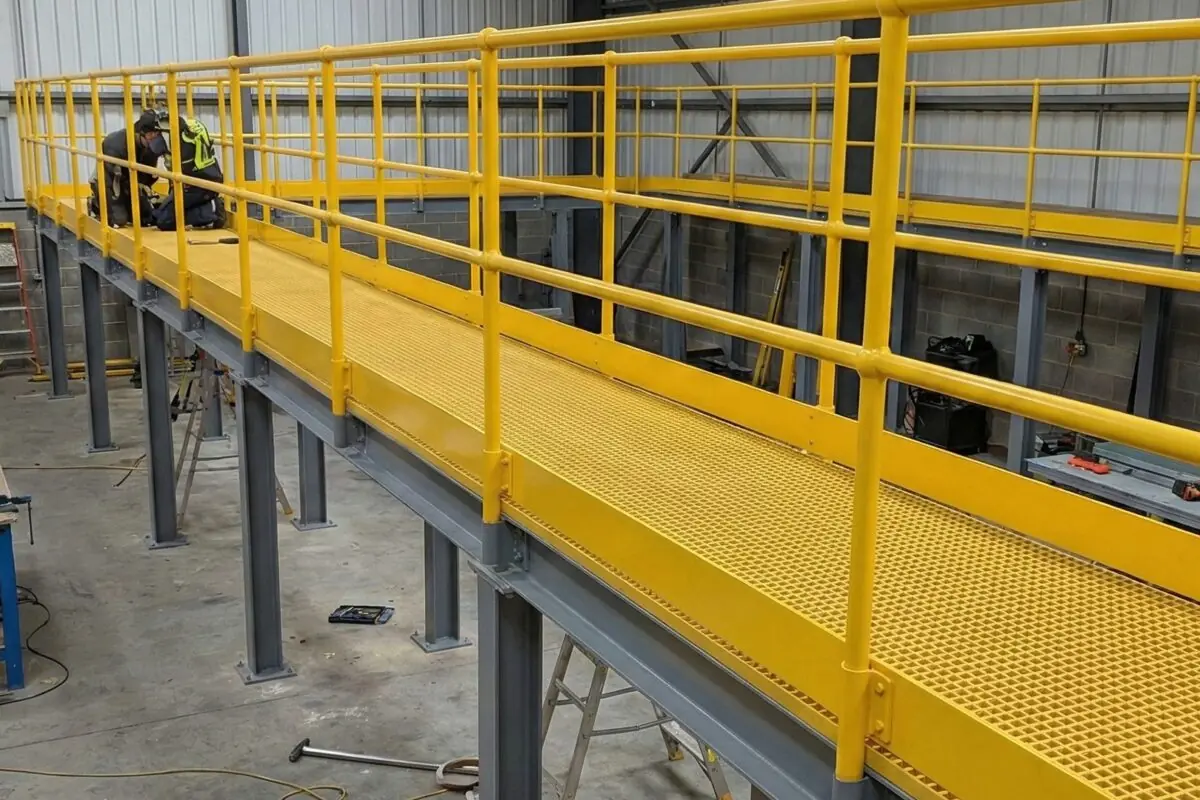
We build GRP walkways and guardrails to lift motor rooms and plant on the roof deck, so maintenance teams have a guarded route.
-
03
Pedestrian handrails
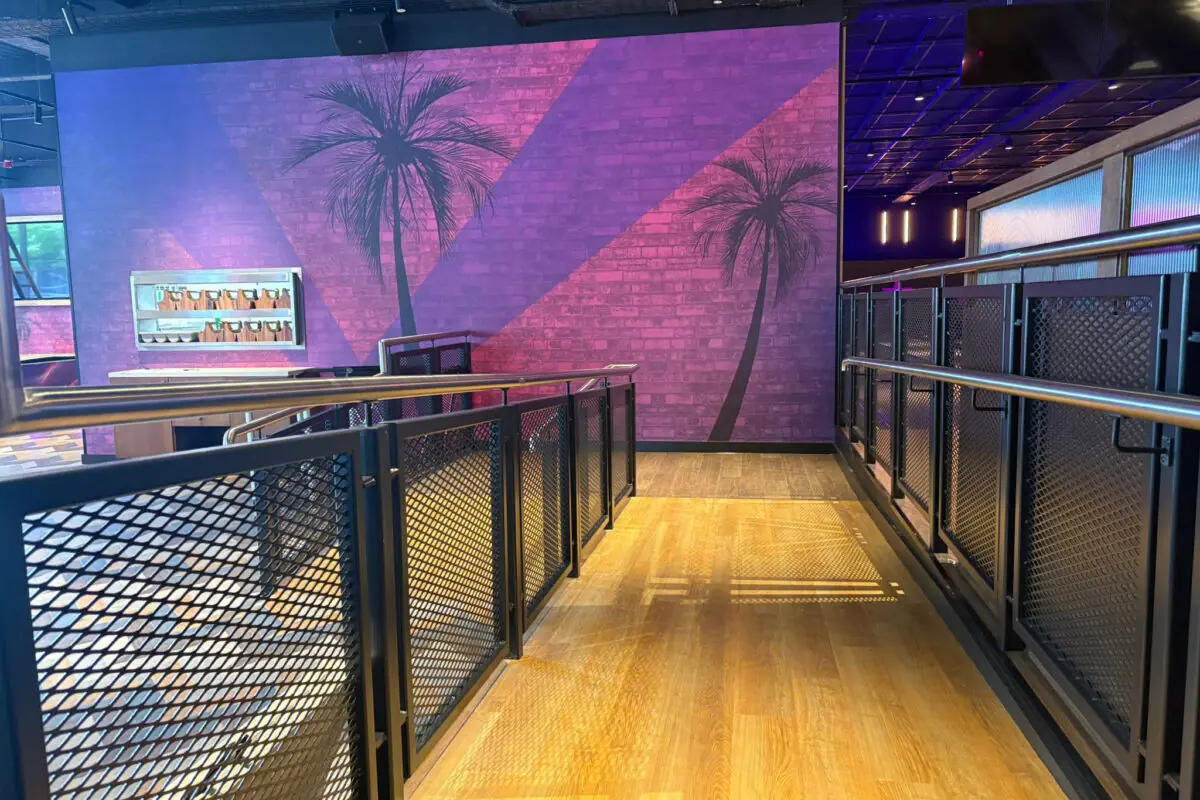
We fit GRP handrails in stair cores and along pedestrian routes, to the load class for the area. Vehicle barriers are a steel job designed to their own loads, which we also fabricate.
-
04
Installed by our own site teams
Our own site teams install every job. Each job has an SSSTS-qualified supervisor, every operative holds a CSCS card, and the teams are PASMA and IPAF trained. We write a method statement for each job and plan the work around your site, out of hours where your programme needs it.

"I've worked with UIS for several years on some high profile and very complex projects. Their attitude and work ethic are second to none - providing high quality services and products which are delivered safely and on time every time. Overall they are a pleasure to do business with and wouldn't hesitate recommending UIS for any steelwork or metalwork packages."
Questions we get asked.
Often, yes, if the stair is sound. We survey each flight, then fix GRP anti-slip treads and nosings over it, with contrasting nosings where your access standards ask for them.
Road salt does not rust GRP, and the gritted surface grips in the wet. Steel treads and handrails in a car park rust from the salt carried in on tyres.
No. Vehicle barriers have to resist vehicle impact loads, so they are designed in steel. We fabricate steel barriers too, so both can be in one package.
Yes. We work one stair core or one level at a time, out of hours where you need it, so the car park keeps running.
Yes. We build GRP walkways and guardrails so maintenance teams have a guarded route to lift motor rooms and plant.